
How to Validate a Marketplace or Two-Sided Platform Idea Before You Build Both Sides
August 20, 2026 · 10 min read
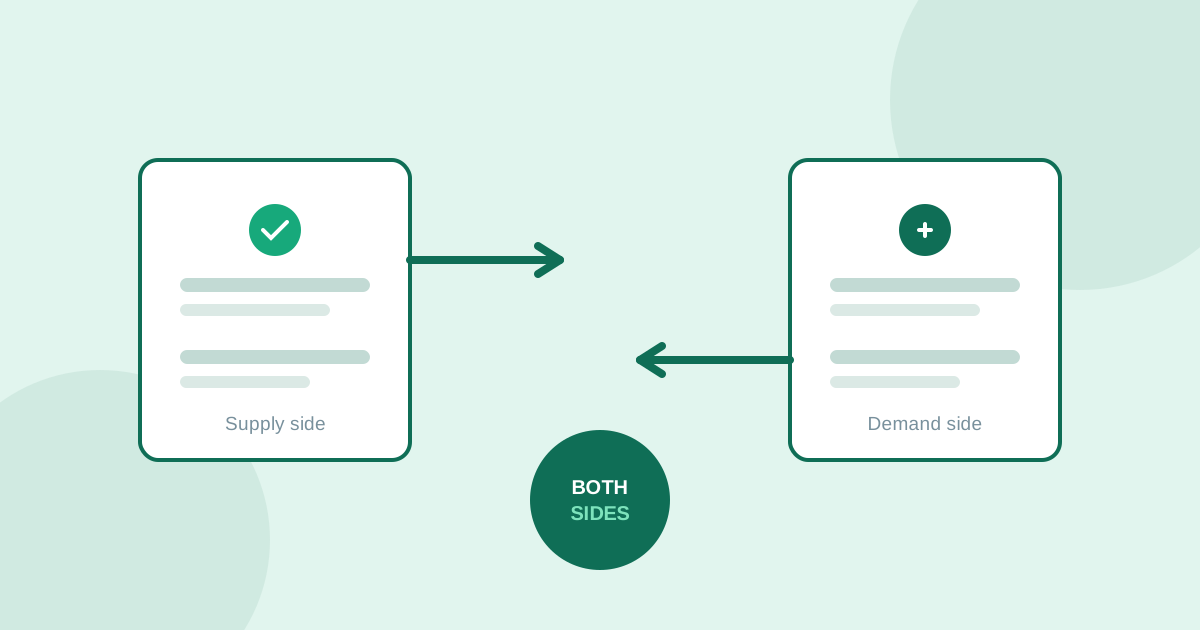
A marketplace does not fail the way a normal product fails. A SaaS tool can launch with a weak feature set and improve it later, one paying customer at a time. A marketplace with a weak supply side has nothing for buyers to buy, and a marketplace with a weak demand side gives sellers no reason to list. Both failures look identical from the outside, an empty platform, but they have different causes and neither one is fixed by writing more code. This is why marketplace ideas need a different validation approach than single-sided products: you are not validating one problem, you are validating two, and you need evidence that both sides exist before you build either.
This guide walks through how to validate a two-sided marketplace idea using public complaints, before you spend months building matching, payments and listings for a platform that only one side actually wants.
Why the chicken-and-egg problem is a research problem, not a launch problem
Most marketplace advice treats the chicken-and-egg problem as a launch tactic: seed the supply side manually, concentrate on one city or niche, fake early inventory. Those tactics work, but only after you already know both sides have a real, independent reason to show up. If either side's pain is weak or invented, no amount of clever seeding fixes it, because you are trying to solve a distribution problem for a product nobody on one side actually wanted. The research question comes first: is there a group of sellers, freelancers, hosts or providers who are actively frustrated with how they currently find customers, and is there a separate group of buyers who are actively frustrated with how they currently find that kind of seller? If you can only find complaints on one side, you do not have a marketplace idea yet. You have a lead-generation idea for one side, which is a different, usually simpler product.
Where to find supply-side complaints
Supply-side pain shows up where the people who would list on your platform already talk about the problem of finding customers or being discovered. Search Reddit communities built around the specific profession or seller type (freelancers, independent contractors, boutique sellers, niche service providers), read what they say about referral fees, unreliable lead sources, no-show clients or being buried under bigger competitors on existing platforms. Search Facebook groups and forums specific to the trade or niche, where sellers often complain more bluntly than on public review sites because the audience is peers, not customers. Look for a recurring, specific complaint about the mechanics of finding and closing customers, not a general complaint about the business being hard.
Where to find demand-side complaints
Demand-side pain is usually easier to find because buyers write reviews. Read one- and three-star reviews of the closest existing way people currently solve this problem, whether that is a general classifieds site, a directory, word of mouth or a clunky incumbent marketplace. Search Reddit and Quora for people asking where to find a specific type of provider or seller, which surfaces both the demand and the specific criteria buyers use to evaluate trust. YouTube comments under reviews or comparison videos in the category often reveal what buyers wish existed: faster response times, verified quality, transparent pricing, no more calling five providers to get one quote. The goal is the same cross-checking discipline as any other validation: a demand complaint that only appears once is an anecdote, and the same complaint appearing independently across two or three sources is a pattern worth building for.
The trust and quality problem every marketplace inherits
Beyond raw demand, marketplace complaints have a third category that single-sided products rarely deal with: trust between strangers. Read reviews and complaints about existing marketplaces in adjacent categories, not just your specific niche, and you will find a recurring set of themes: no-shows, payment disputes, quality that did not match the listing, unresponsive support when something went wrong between two parties instead of one. These complaints tell you what your platform will be blamed for even when the failure happened between two users you never touched. If you cannot articulate, before you build, how your platform will handle a dispute, a no-show or a bad-quality delivery, you have found a real gap in the research, not a detail to figure out later. Trust mechanics are often the actual product in a marketplace, more than the matching algorithm is.
The build-or-skip rule for marketplaces
Before building either side, you should be able to answer four questions with evidence. One: did you find independent, specific supply-side complaints about the cost or unreliability of finding customers today? Two: did you find independent, specific demand-side complaints about the cost, time or trust problem of finding this kind of seller today? Three: can you name the existing way both sides currently solve this problem, whether that is an incumbent platform, referrals or nothing at all? Four: can you describe, in one sentence per side, why each side would switch, not just why the idea sounds useful in general? If either side is missing real complaints, do not start with a marketplace. Build the simpler, single-sided version of the product for whichever side has the stronger validated pain, and add the other side once the first side already has a reason to show up.
A worked example: local equipment rental between neighbors
Public complaints from equipment owners describe tools and gear sitting unused most of the year, alongside a vague sense that renting them out is not worth the hassle of coordinating pickup and worrying about damage. Public complaints from renters, meanwhile, describe paying full retail rental prices at hardware stores for a single weekend project, or buying tools they use once and never again. Both complaints exist independently, in different communities, which is the signal a single-sided version of the idea would miss. The trust gap is also visible directly in the data: renters worry about condition and reliability, owners worry about damage and no-shows, which means a deposit-and-review system is not a nice-to-have feature, it is the part of the product that makes either side willing to participate at all.
After validation: which side to build first
A passing verdict on both sides still leaves a sequencing question, and the answer is almost always to build for whichever side is smaller and easier to concentrate manually. If supply is scarce and specialized, court seventy real providers by hand in one city or niche before opening signups broadly. If demand is scarce and supply is abundant, focus a first landing page on demand generation and hand-match early buyers to sellers yourself, even manually over email, before building a matching engine. The manual version of your marketplace, run by you as the matchmaker for the first handful of transactions, is the cheapest way to confirm the trust and quality assumptions from your research actually hold up with real money changing hands, before you spend months automating a two-sided flow that public complaints have not yet convinced you both sides really want.
Frequently asked questions
How do I validate a marketplace idea before building it?
Research supply-side and demand-side pain separately and independently, using public complaints from each group's own communities (Reddit, Facebook groups, reviews, Quora). You need evidence that both sides are actively frustrated with how they currently find each other today. If you can only find complaints on one side, the idea is not yet a marketplace, it is a simpler single-sided product for whichever side has the real pain.
What is the chicken-and-egg problem in marketplace validation?
It is the challenge of getting both supply and demand to show up at once, since sellers only join if buyers are present and buyers only join if sellers are present. Most advice treats this as a launch tactic to solve with manual seeding, but the underlying research question, whether both sides have independent, real pain, has to be answered first, or no seeding tactic will fix a platform that one side never actually wanted.
How is validating a marketplace different from validating a SaaS idea?
A SaaS idea needs one group of users with a real pain. A marketplace needs two separate groups, each with independent, verifiable pain about finding the other, plus a credible plan for trust and dispute handling between strangers. That third dimension, trust between two parties who do not know each other, rarely appears in single-sided product validation and is often the actual differentiator in a marketplace.
Which side of a marketplace should I build first?
Build for whichever side is smaller or easier to concentrate manually, then hand-match the other side yourself before automating anything. If supply is scarce, court a small group of real providers by hand in one city or niche. If demand is scarce, focus early efforts on generating buyer interest and match sellers to them manually. Running the first transactions by hand is the cheapest way to confirm both sides' pain and the trust mechanics actually hold up with real money involved.
More articles
 SaaS & Tech
How to Validate a SaaS Idea in 48 Hours (With Evidence, Not Opinions)
A step-by-step framework to validate a SaaS idea in one weekend using real customer complaints from 8 sources, with a worked example and a clear build-or-skip verdict.
Read article → SaaS & Tech
How to Validate a Personal Finance App Idea Before You Write Code
Personal finance apps carry trust and regulatory weight that most SaaS ideas don't. Here's how to validate the pain point, the trust gap and the willingness to switch before you build a budgeting, saving or investing app.
Read article →