
How to Validate a Freelance or Agency Business Idea Before You Chase Your First Client
Updated September 3, 2026 · 8 min read

Starting a freelance practice or a small agency feels lower risk than building a product, since there is no inventory to order and no code to ship before the first sale. That feeling is partly an illusion. The real cost of a service business is not capital, it is the months spent positioning around a niche, writing case studies for a portfolio, and pitching prospects who were never actually frustrated enough with their current option to switch. Time spent chasing the wrong niche is just as unrecoverable as money spent on the wrong inventory.
This guide applies the same public complaint mining that works for product validation to a narrower question: is there a specific, recurring frustration with how a service is currently delivered, in a niche you can credibly serve, strong enough that a business would pay a new provider to fix it. That is a different bar than does this industry exist, and it is the one that actually predicts whether a freelance or agency business gets its first five clients without months of cold outreach.
Why service businesses fail for different reasons than products
A product can fail because of bad packaging, a confusing landing page or a weak launch, each of which is fixable after the fact. A service business usually fails more quietly: the founder picked a broad category, web design, social media management, bookkeeping, and then discovered that broad categories are exactly where the most experienced, cheapest and most established competitors already operate. Positioning as a generalist inside a crowded category means competing on price and availability, the two dimensions where an established freelancer or agency almost always wins against someone starting out.
The businesses that get to their first clients fastest are usually the ones that found a specific complaint about how a service is currently delivered to a specific type of client, and positioned entirely around fixing that one complaint. Validation for a service business is the process of finding that complaint before you build a portfolio and a pitch deck around a guess.
The question service validation actually answers
Before choosing a niche, separate two things: a market that needs the service in general, and a segment of that market that is actively unhappy with how it currently gets that service. Every industry needs marketing help, but that fact alone tells you nothing about who to pitch. A segment of local dental practices complaining that agencies never explain results in plain language, bill for work nobody can point to, or disappear after the contract is signed, is a specific, addressable complaint you can build an entire positioning around.
Where to find the complaints before you pick a niche
The same public sources that reveal product pain points reveal service gaps, read for a different signal. Reddit communities for small business owners and specific trades are full of threads asking for recommendations after firing an agency or freelancer, and the reasons given in those threads are the exact complaints your positioning should answer. Review sites and Google Business reviews of existing agencies and freelance providers in your target niche show the same pattern at scale: read the two and three star reviews specifically, since one star reviews are often about a single bad experience while mid-tier reviews describe a structural weakness the provider never fixed. Quora and industry-specific forums often contain business owners describing exactly what they wish an agency understood about their world, which doubles as a positioning statement you can quote back to them later.
A concrete example: bookkeeping for e-commerce sellers
General bookkeeping services are a saturated, commoditized category. Reading complaints in e-commerce seller communities and reviews of general bookkeeping firms surfaces a specific, repeated frustration that generalist bookkeepers rarely solve: sellers on multiple marketplaces struggle to reconcile payouts that arrive net of fees, refunds and advertising spend, and their bookkeeper either does not understand marketplace settlement reports or charges extra to figure them out. That is not a request for cheaper bookkeeping. It is a request for a bookkeeper who already understands marketplace settlement math on day one, which most general practices do not.
A freelancer or small agency that builds its entire pitch around that one complaint, marketplace-aware reconciliation, done by someone who does not need the seller to explain how Amazon payouts work, is competing on a frustration the generalist part of the category has left unaddressed, instead of competing on price against every bookkeeper in the directory.
Turning complaints into a pitch, not just a niche
Every specific complaint you collect becomes raw material for your outreach message and your portfolio framing, not only a niche description. If business owners keep saying their last agency never explained what the money was buying, that sentence becomes the first line of your pitch: you will always know exactly what this spend produced. If reviewers keep mentioning slow response times as the actual reason they left, a stated response time guarantee becomes a differentiator that costs you nothing to offer and directly answers a complaint you can prove is common, not one you invented.
The portfolio trap
A common mistake is spending the first month building a broad portfolio of speculative work before contacting a single prospect. A portfolio built around a specific, validated complaint, three sample deliverables that visibly solve the exact frustration you researched, converts a cold pitch into a recognition moment for a prospect who has lived that frustration. A portfolio built to look impressive in general rarely earns a reply, because it never tells a specific prospect that you understand their specific problem.
Before you build your first pitch deck
Run a small test before committing months to one niche. Message ten businesses that match the profile you researched, referencing the exact complaint in your own outreach, not a generic offer to help. Watch whether people recognize the problem immediately or need it explained to them; immediate recognition is the signal a niche is validated, needing an explanation is the signal it is not specific enough yet. Then cross-check the underlying complaint across two or three of the sources you originally searched. A complaint that only shows up in one Reddit thread might be one bad provider's reputation. The same frustration confirmed independently across Reddit threads, review sites and industry forums is a real, durable niche worth building a service business around, and UserConcern's cross-source search can run that same check across 8 sources in about 60 seconds before you write a single pitch.
Frequently asked questions
How is validating a service business different from validating a product?
A product is validated by whether people would pay for a solution that does not exist yet. A service business is validated by finding a specific, recurring complaint about how an existing service is currently delivered, since prospects already pay for the general category and only switch providers when a specific frustration gets bad enough. That makes complaint specificity, not category size, the signal that predicts whether a niche will convert.
What is the biggest reason freelance and agency businesses fail to get clients?
Positioning as a generalist inside a broad, crowded category, which forces competition on price and availability against established providers. Businesses that find a specific delivery complaint and build their entire pitch around fixing it convert cold outreach far faster, because the pitch matches a frustration the prospect has already lived rather than a generic promise to help.
Where should I look for service business complaints that will actually convert into clients?
Reddit communities where your target client type already asks for provider recommendations after a bad experience, two and three star reviews of existing agencies or freelancers in your niche, and industry forums or Quora threads where business owners describe what they wish a provider understood about their world. Each reveals a different layer of what current providers are failing to deliver.
How many prospects should I contact before deciding if a niche works?
Ten outreach messages referencing the specific complaint you researched is usually enough to see whether the niche has real pull: watch for prospects who recognize the problem immediately versus prospects who need it explained to them. Cross-check the underlying complaint across two or three sources before committing months of positioning and portfolio work to one niche.
More articles
 Strategy
How to Use Competitor Analysis to Find a Market Gap (Not Just a Feature List)
Most competitor analysis produces a feature comparison table nobody acts on. Here's how to run competitor analysis that surfaces an actual gap, an underserved segment or complaint incumbents structurally can't fix, using public reviews and complaints instead of marketing pages.
Read article →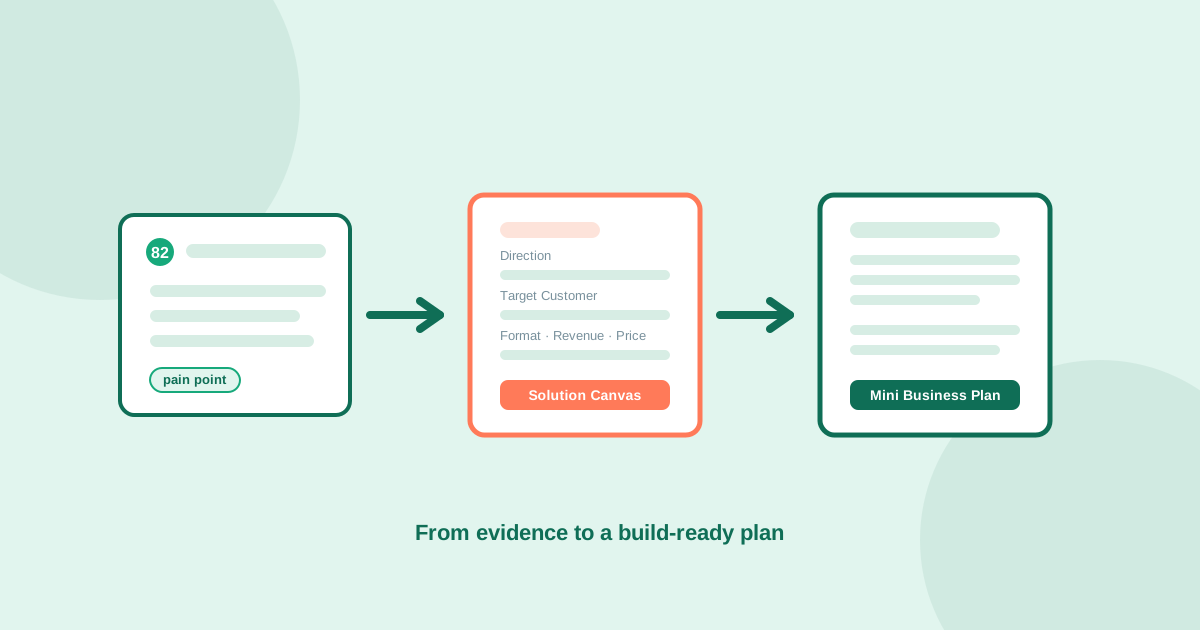 Strategy
From Pain Point to Product Plan: How to Use a Solution Canvas and a Mini Business Plan
Finding a validated pain point is only half the job. Here's how to turn a ranked pain point into a concrete Solution Canvas and a one-page Mini Business Plan you can actually act on, instead of staring at a spreadsheet of quotes wondering what to build.
Read article →