
How to Use Competitor Analysis to Find a Market Gap (Not Just a Feature List)
August 21, 2026 · 10 min read
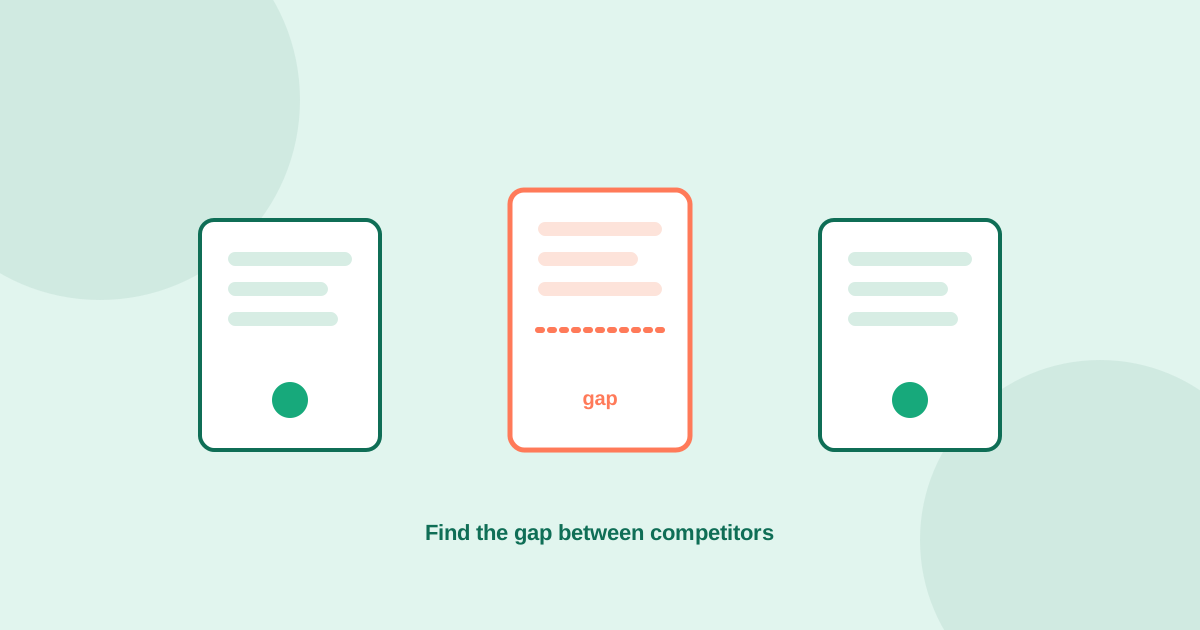
Ask most founders what their competitor analysis turned up, and they will show you a spreadsheet: rows of competitors, columns of features, checkmarks and X's. It is thorough, it took an afternoon, and it almost never changes what gets built. The reason is simple: a feature list tells you what competitors have already decided to ship. It does not tell you what their own customers are unhappy about, which is the only information that actually points at a gap worth building into.
This guide is a different way to run competitor analysis: instead of starting from competitors' marketing pages, start from their customers' complaints. The output is not a checkmark table. It is a short list of specific, recurring frustrations that incumbents have not fixed, and a read on whether that gap is big enough, and painful enough, to build a wedge around.
Why feature-matrix competitor analysis rarely finds anything
A feature comparison answers the question every competitor wants you to ask: what do we offer that you don't? That is the vendor's framing, not the customer's, and it steers you toward matching or exceeding a list the incumbent controls. It also tends to produce a flattering picture of the competitive landscape, because a company's pricing page and feature list are written by people whose job is to make the product look complete. None of that tells you where real users, the ones already paying for the product, are frustrated enough to complain in public. A gap in the feature list is a guess about what might matter. A recurring complaint from paying customers is evidence about what already does.
Where competitor gaps actually show up
The complaints that reveal a real gap live in the places competitors do not control: G2 and Capterra reviews, especially the three-star ones, which tend to come from people who use the product daily and have specific, unglamorous frustrations rather than the extreme praise or fury of one-star and five-star reviews. Reddit threads that mention a competitor by name alongside words like 'switching from,' 'alternative to' or 'frustrated with' surface exactly the users actively looking for something else, and why. Amazon reviews, for physical or hybrid products, do the same job for competitors that sell through that channel. YouTube comments under competitor demo videos and comparison content often contain the most specific complaints of all, because commenters are reacting to a concrete workflow they just watched, not a marketing claim. Twitter/X and Quora threads asking 'is there an alternative to [competitor]' are a direct signal of unmet need, phrased by the exact people who would switch.
A tool like UserConcern's Competitor Analysis feature is built to run this search directly: point it at a named competitor, and it pulls complaints, comparison requests and dissatisfaction signals about that specific product across Reddit, review sites, YouTube and other public sources in one pass, instead of requiring a separate manual search per platform.
A concrete example: project management software for freelancers
Take an established project management tool built for teams. Its marketing page lists dozens of features: Gantt charts, time tracking, client portals, integrations. A feature matrix against it would either try to match all of it, which is expensive and slow, or concede the whole category is too crowded to enter. Reading its own users' complaints tells a different story: reviewers who are solo freelancers repeatedly describe the tool as built for teams of ten, with per-seat pricing that punishes a one-person business, an onboarding flow that assumes a project manager exists to configure it, and invoicing that is either absent or bolted on as an afterthought. None of that appears in a feature comparison, because the incumbent does technically have most of the features. What it does not have is a product designed around the reality of one person doing everything.
That is a gap a feature matrix cannot see and a complaint search finds directly: not a missing checkbox, but a mismatch between who the incumbent's product is built for and who a meaningful share of its own users actually are. A challenger built specifically for solo freelancers, with per-project rather than per-seat pricing and invoicing as a first-class feature, is not competing on the feature list at all. It is competing on a segment the incumbent's own reviewers say it ignores.
Turning a competitor gap into a positioning decision
Once you have a list of specific, recurring complaints about a named competitor, sort them into two categories before deciding anything. Fixable-by-them complaints are ones the incumbent could plausibly address in a future release: a missing integration, a confusing menu, a slow mobile app. Treat these cautiously as wedges, because a large, well-funded competitor can close a feature gap faster than a small team can build a company around it. Structural complaints are the ones that come from the incumbent's core positioning, pricing model, or target customer, the things they cannot fix without becoming a different company: per-seat pricing that only works for teams, an enterprise sales motion that ignores solo users, a workflow built around an assumption that does not hold for your segment. These are the gaps worth building a business around, because closing them would require the incumbent to abandon the customers it already has.
Once you have identified a structural gap, cross-check it the same way you would any other pain point: does the same specific frustration show up independently in reviews, in Reddit threads and in video comments, described by more than one type of user? A single dissatisfied review is an anecdote. The same specific complaint, about the same specific mismatch, appearing across three independent sources is a market signal you can build a wedge and a mini business plan around with real confidence.
Before you position against a gap
Confirm the gap is a segment problem, not a preference: a handful of loud complaints from users who are clearly outside the incumbent's intended market says less than the same complaint from users who look exactly like the incumbent's stated target customer. Check whether other, smaller competitors have already tried to fill the same gap and failed, and read their reviews too; a gap with a graveyard of failed attempts around it is not automatically a bad idea, but it means execution, not discovery, will decide the outcome. And write the positioning sentence directly from the complaint language you found, not from your own paraphrase of it, because the words real users already use to describe the mismatch are the same words that will make your landing page and ad copy sound like it was written for them specifically, because it was.
Frequently asked questions
What is the difference between competitor analysis and a market gap analysis?
Competitor analysis, done the common way, catalogs what competitors already offer: features, pricing, positioning. A market gap analysis goes a step further and asks what those competitors' own customers are unhappy about, using public reviews, forum threads and video comments instead of the competitor's marketing pages. The first tells you what exists. The second tells you what is missing.
Where do I find real complaints about a specific competitor?
G2 and Capterra reviews (especially three-star ones), Reddit threads mentioning the competitor by name alongside phrases like 'switching from' or 'alternative to,' YouTube comments under demo and comparison videos, and Amazon reviews for physical products all surface specific, unfiltered frustration that a competitor's own marketing will never mention. Cross-checking the same complaint across two or three of these sources turns an anecdote into a signal.
How do I know if a competitor gap is worth building a business around?
Sort complaints into fixable and structural. A fixable complaint, like a missing integration or a confusing menu, can be closed by the incumbent in a future release, which makes it a weak wedge. A structural complaint rooted in the incumbent's pricing model, target customer or core workflow assumption is one they cannot fix without becoming a different company, which is what makes it worth building a business around.
Can I do competitor gap analysis without expensive tools?
Yes, manually, by reading review sites, Reddit threads and YouTube comments about a specific named competitor and noting which complaints repeat across sources. It takes longer than a single search. Tools built for this, like UserConcern's Competitor Analysis feature, compress that same cross-source search for one named competitor into a single pass with the original quotes linked.
Should I run competitor gap analysis before or after finding a pain point?
Either order works, and they reinforce each other. If you already found a pain point through general research, competitor gap analysis confirms whether existing players have already solved it well, which changes how you position. If you started from a competitor you already know is dominant in a space, gap analysis is often the fastest way to find the pain point in the first place, since a large incumbent's own dissatisfied reviewers are already telling you what to fix.
More articles
 Strategy
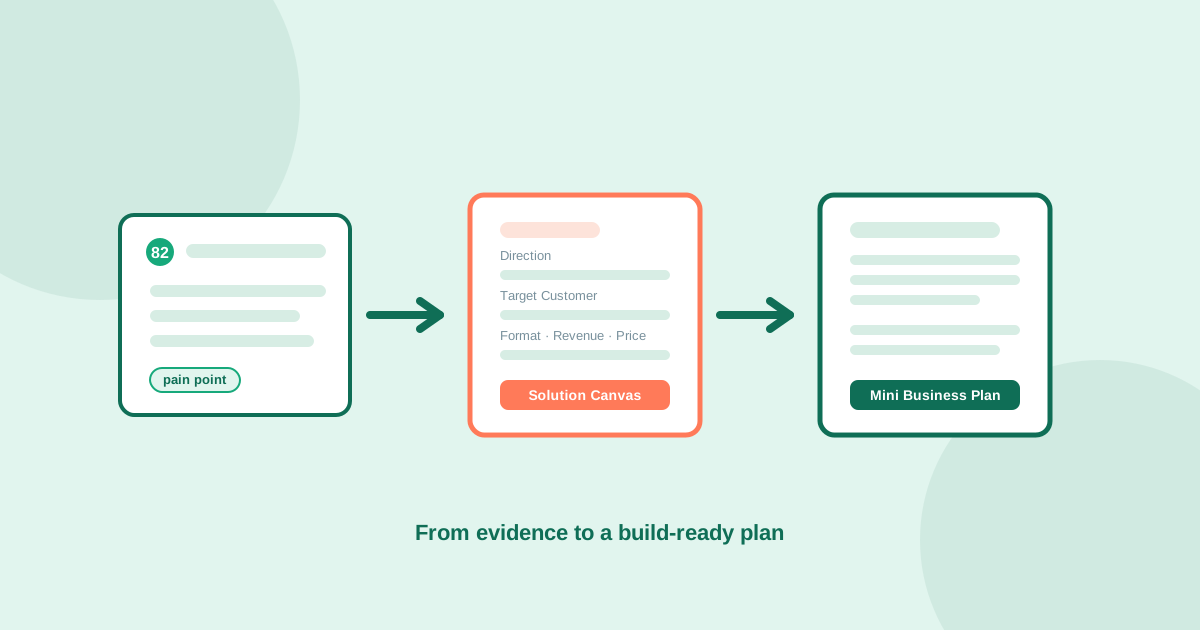
From Pain Point to Product Plan: How to Use a Solution Canvas and a Mini Business Plan
Finding a validated pain point is only half the job. Here's how to turn a ranked pain point into a concrete Solution Canvas and a one-page Mini Business Plan you can actually act on, instead of staring at a spreadsheet of quotes wondering what to build.
Read article → Strategy
How to Validate a Local Service Business Idea Before You Quit Your Job
Local service businesses, cleaning, tutoring, pet sitting, home repair, live or die on demand in a specific area, not global search volume. Here is how to check real local demand and unmet complaints before you invest savings or notice.
Read article →