
How to Validate a Restaurant or Food & Beverage Business Idea Before You Sign a Lease
September 14, 2026 · 9 min read
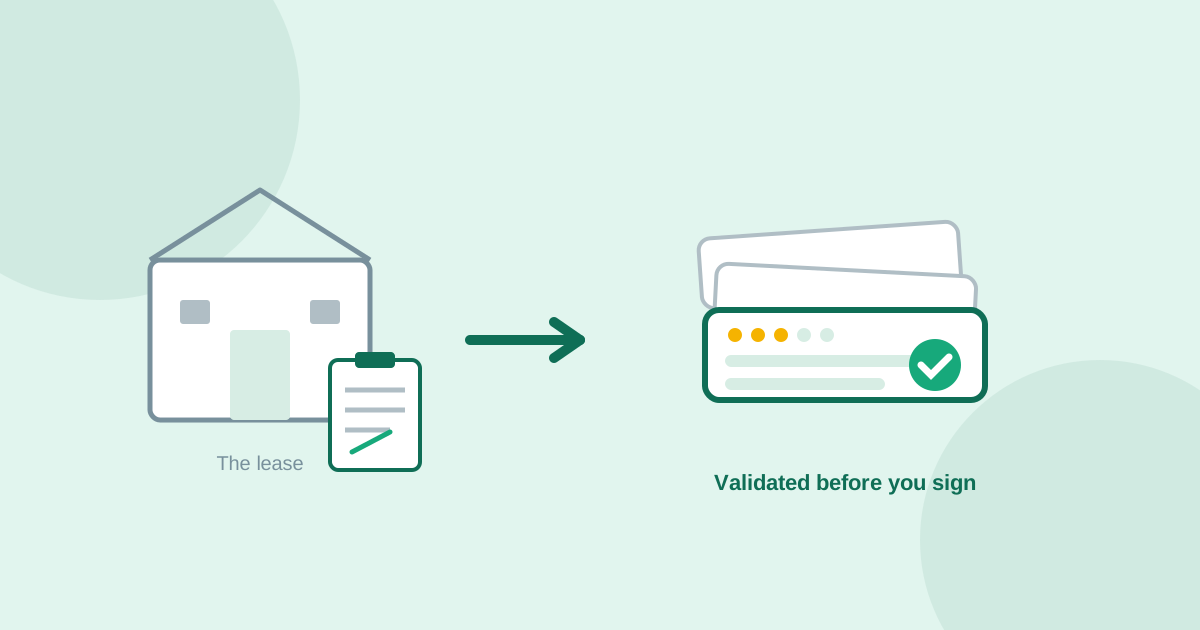
A software idea that turns out wrong costs you a few wasted weekends. A restaurant or food business idea that turns out wrong costs you a multi-year lease, a build-out, kitchen equipment, licensing, and a food and labor cost structure that starts running the day the doors open, whether or not customers show up. Most first-time food entrepreneurs validate the one thing that's easiest to validate, the food is genuinely good, and skip the two things that actually determine whether the business survives: whether an underserved gap really exists at this location, and whether the price point that gap demands can cover the fixed costs of running it.
This guide covers why physical hospitality validation is a different exercise from validating a digital product, where diners actually voice the complaints worth building around, how to mine competitor reviews before you finalize a menu, why the margin math has to happen before the concept is locked rather than after, a worked example, and a build-or-skip rule calibrated for a business you can't easily walk away from once the lease is signed.
Why 'the food is good' is not validation
Friends and family telling you the food is great is real feedback, but it answers the wrong question. It doesn't tell you whether there's a genuine, underserved gap in what your target neighborhood can currently get, and it doesn't tell you whether this specific concept, at this specific price, in this specific location, can capture that gap profitably enough to cover rent, labor and food cost with margin left over. Those are two separate questions, and a restaurant idea needs real evidence for both before a lease is worth signing, not just confidence that the recipe works.
Where diners actually complain, not where they praise
Five-star reviews are marketing, and a single one-star review is often a one-off service disaster rather than a pattern. The reviews worth reading closely are the two- and three-star ones, because that's where a customer explains exactly what almost worked: great food but a 40-minute wait with no way to know it was coming, portion size that didn't match the price, nothing on the menu for a kid's allergy, a vegetarian option that turned out to be a side salad. Read every direct competitor within your realistic delivery or drive radius this way, not just the concept you think you're competing with. Beyond reviews, Reddit communities carry both sides of the story: operator-side threads in communities like r/KitchenConfidential, and diner-side complaints buried in local city subreddits asking where to eat for a specific need. TikTok and Instagram comments under local food content, and posts in local Facebook groups or on Nextdoor, round out the picture with real-time, hyper-local sentiment that review sites miss.
Mining competitor reviews before you write a menu
Treat a structured review pass as due-diligence step zero, before the menu is finalized, not after. Run every direct competitor in your radius through the same read, and look specifically for the same operational or menu gap repeating across multiple, unrelated businesses independently. One cafe with a complaint about slow service is that cafe's problem. Five separate cafes in the same two-mile radius all drawing the same complaint about no seating after 8am, or no dairy-free option that isn't an afterthought, is a structural gap in the local market, and it's a far stronger foundation for a concept than 'our coffee tastes better.' UserConcern's Review Intelligence feature automates exactly this pass, pulling review patterns across a set of competitors so the repeated gap surfaces without reading every review by hand.
Why the margin math has to come before the concept, not after
Most restaurant failures aren't a lack of demand, they're correct demand paired with a price structure that can't cover food cost, labor and rent. It's common to see a beloved local spot close and hear diners say they don't understand why, it was always full, when the real cause was a menu priced below what the food and labor cost actually required to hit a sustainable margin. Before locking a concept, run realistic food cost, labor cost and rent numbers through a margin calculator against the price point your review research says diners in that specific area actually expect to pay. If the reviews point to a price ceiling of $12 to $15 for an entree in that neighborhood, but your food and labor costs require $18 to hit a workable margin, that's a concept problem, a smaller footprint, a tighter menu, a different format, to solve before the lease, not a surprise to discover after the first slow month.
A worked example: an allergen-friendly bakery-cafe
Consider a concept built around a gluten-free and allergen-friendly bakery-cafe. Reviews of existing bakeries in the target area repeatedly mention the same specific gap: the only gluten-free option is a single muffin with a $2 upcharge, and there's nowhere to actually sit and eat without cross-contamination anxiety. A local Reddit thread asks whether anyone knows a bakery in the city that's actually safe for celiac diets, and Instagram comments under a local baker's occasional allergy-friendly post ask when they'll do it again. The same specific complaint, showing up independently across reviews of four different bakeries, a Reddit thread, and social comments, is cross-source confirmation that the gap is real and location-specific, not one person's frustration, which is exactly the kind of evidence that justifies moving forward with the concept.
The build-or-skip rule for a business you can't easily walk away from
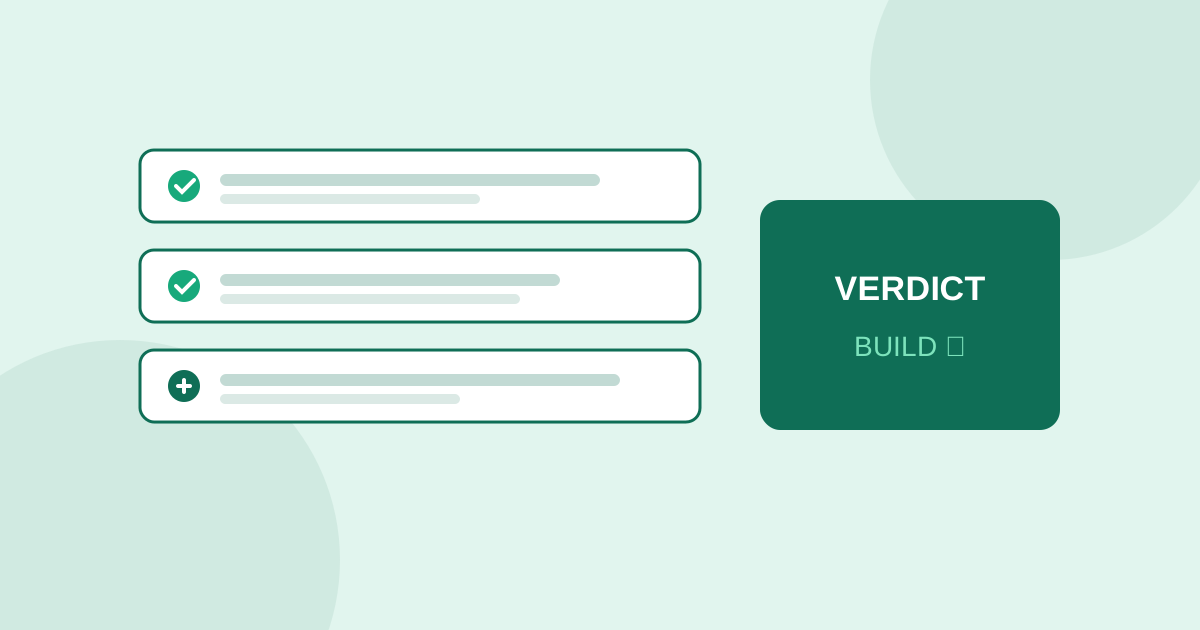
Because a food business carries fixed costs from day one, lease, equipment, licensing, regardless of how right the concept turns out to be, the evidence bar needs to be higher than for a digital product you can iterate on for free. Answer four questions before signing anything. One: did the same specific gap, not 'better food' in general but a specific missing option or operational failure, show up independently across at least three sources tied to your actual location and radius? Two: does the review evidence establish a real price point diners already say they'd accept, and does that price clear your food, labor and rent math with margin to spare, not just break even? Three: is the gap something an existing competitor could close with a quick menu tweak or a location change, or is it structural, something they'd have to become a different kind of restaurant to fix? Four: can you test the core claim, that people will pay this price for this thing, with a pop-up, a farmers market stall, or a delivery-only soft launch before signing anything with a personal guarantee attached? Three or four yes answers is a strong enough case to move to a small live test. Fewer than that means the concept needs more evidence, or a cheaper way to test it, before a lease is on the table.
After validation: test before the lease
A pop-up night at a shared kitchen, a farmers market stall, a delivery-only soft launch out of a ghost kitchen, or a pre-sale of a tasting menu or a short subscription run, all let you charge the real price to real strangers, not friends and family, before fixed costs start accumulating. Watch whether the specific gap you validated in the reviews is actually what people show up and pay for, not just what they said in a star rating. A concept that survives a real pop-up weekend, at the real price, to real strangers, has cleared a bar that no amount of review reading alone can substitute for, and it's a far cheaper place to discover a problem than three months into a lease.
Frequently asked questions
How do I validate a restaurant idea before signing a lease?
Read the two- and three-star reviews of every direct competitor in your realistic radius, looking for the same specific gap repeating across multiple businesses independently. Confirm the price point diners already accept clears your food, labor and rent math with margin to spare, then test the concept with a pop-up, market stall or delivery-only soft launch before signing a lease.
What's the biggest mistake people make when validating a food business idea?
Validating that the food tastes good to friends and family, which doesn't answer whether an underserved gap exists in the target area or whether the price point that gap demands can cover fixed costs. Those are two separate questions that need independent evidence before a lease is worth signing.
Where do I find real complaints about local restaurants and food businesses?
Two- and three-star Google and Yelp reviews of existing competitors are the richest source, since they describe what almost worked rather than a five-star endorsement or a one-off disaster. Reddit communities like r/KitchenConfidential and local city subreddits, TikTok and Instagram comments under local food content, and local Facebook groups or Nextdoor add real-time, hyper-local sentiment.
How much should margin math matter before I commit to a restaurant concept?
It should come before the concept is finalized, not after. Most restaurant failures trace back to correct demand paired with a price structure that can't cover food cost, labor and rent, not a lack of customers. Run real food, labor and rent numbers against the price point your review research says the area will actually accept before locking the concept.
What's a cheap way to test a restaurant concept before signing a lease?
A pop-up night at a shared kitchen, a farmers market stall, a delivery-only soft launch through a ghost kitchen, or a pre-sale of a tasting menu or short subscription run all let you charge the real price to real strangers before fixed costs start. UserConcern's Review Intelligence and Calculator tools help confirm the gap and the margin math before you commit to any of them.
More articles
 SaaS & Tech
How to Validate a SaaS Idea in 48 Hours (With Evidence, Not Opinions)
A step-by-step framework to validate a SaaS idea in one weekend using real customer complaints from 8 sources, with a worked example and a clear build-or-skip verdict.
Read article →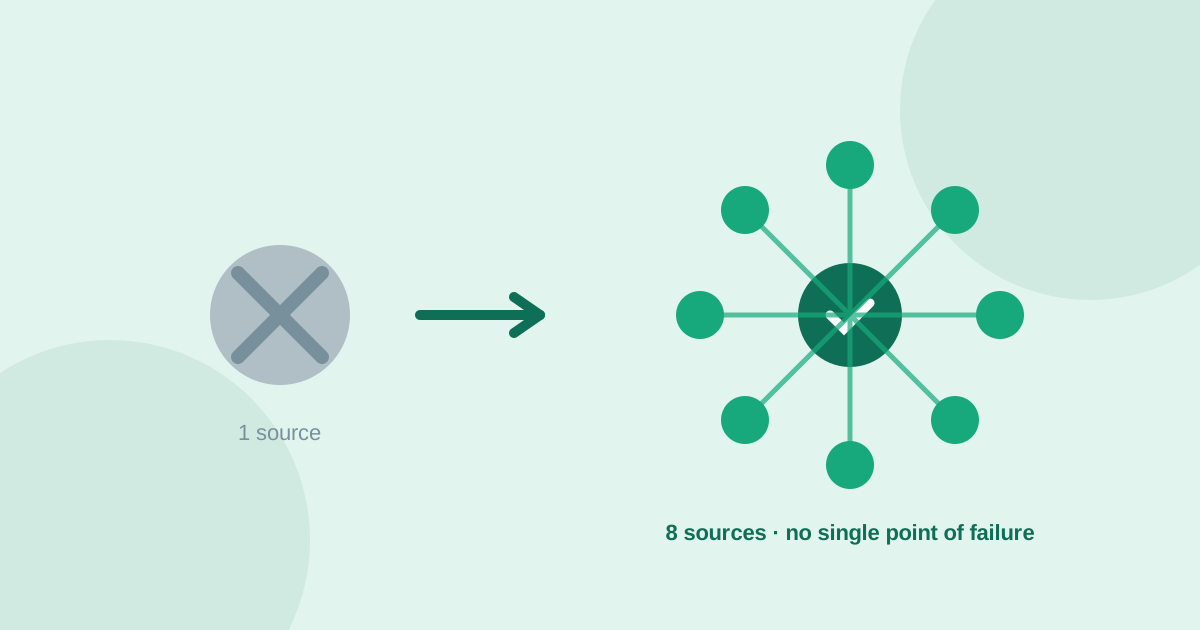 Market Research
Best GummySearch Alternatives in 2026 (Access Ends 30 November)
GummySearch closed to new customers in November 2025, and existing users lose access on 30 November 2026 with all data deleted the next day. Eight alternatives compared on real pricing, real sources, and which half of the job each one actually replaces.
Read article →