
How to Validate an Online Course or Coaching Idea Before You Build the Curriculum
August 10, 2026 · 8 min read
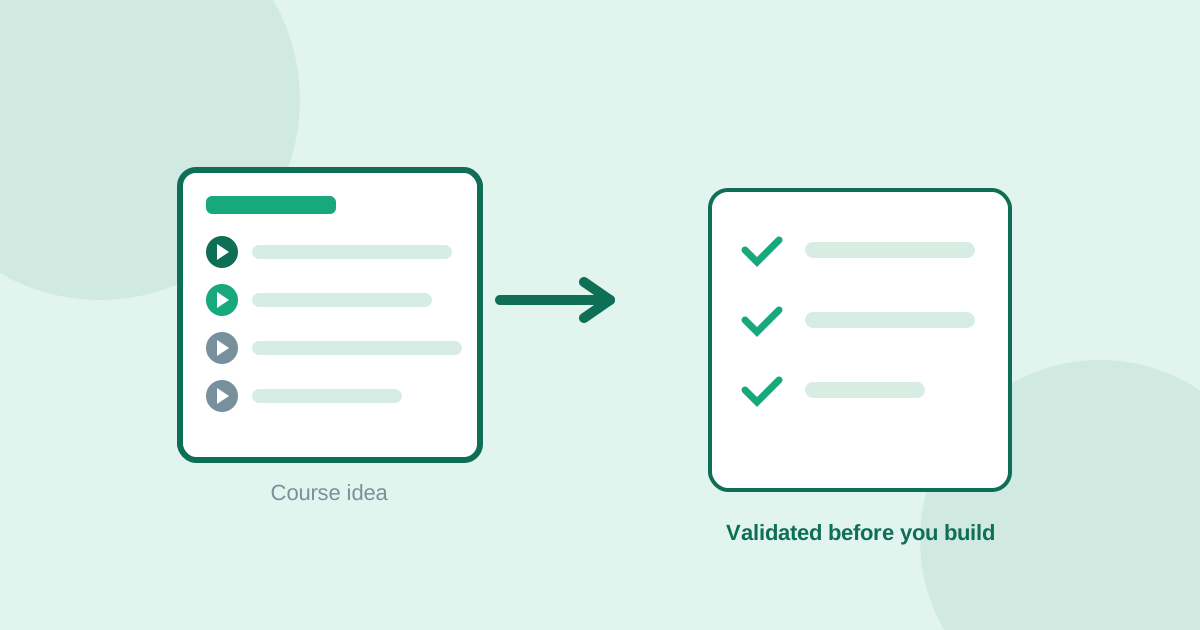
A blog post or a YouTube video asks nothing of a stranger except a few minutes of attention. A course or coaching program asks for money, in advance, for a transformation that has not happened yet. That difference changes what validation has to prove. Free content only needs to be interesting enough to read or watch. A paid course needs someone to believe, before they have any evidence beyond your sales page, that a specific problem they have will actually be solved by working through your material.
That is a much narrower bar than would people find this useful, and most course creators never test for it directly. They validate the topic (people are clearly interested in productivity, or watercolor painting, or freelance pricing) without validating the much sharper question a purchase decision actually depends on: is there a specific, recurring failure point in this topic that people have already tried and failed to fix on their own, badly enough that they would pay a stranger to walk them through it. This guide is about finding evidence for that sharper question before you write a single module.
Why course validation is different from general content validation
A newsletter or YouTube channel can be validated by finding a frustration that content alone can resolve: better information, presented more clearly, in a format people did not have access to before. A course or coaching program has to clear a higher bar, because information alone is rarely why someone pays for structured learning. People do not usually lack access to information about how to lose weight, price freelance work or learn a language; they lack the accountability, sequencing, feedback or motivation to act on information they already have. If a topic's core problem is genuinely an information gap, a well-written free guide solves it, and a paid course will struggle to justify its price. If the core problem is that people already know what to do and still cannot make themselves do it consistently, or keep getting stuck on an ambiguous edge case with no one to ask, that is a problem structure, accountability and feedback can solve, which is exactly what a paid course or coaching program sells.
The question course validation actually answers
Before picking a curriculum, separate two very different kinds of learner complaint. The first is I don't understand this topic, which is an information gap a free resource can usually close. The second is I understood the theory and still failed when I tried to apply it, which is a structure, feedback and accountability gap, and it is the complaint that predicts someone will pay. Search for phrases like I know I'm supposed to but, I've read every guide and still, I keep starting over, and why does nobody explain what to do when. Those phrases describe the moment free information stopped being enough, which is precisely the moment a paid program earns its price.
Where to find the complaints before you build a curriculum
Public complaint sources for course validation split across a few distinct layers, and each reveals something different. Reddit communities built around your topic contain learners describing exactly where they got stuck after trying to teach themselves, often including which free resources they already tried and found insufficient. Reviews of existing courses on platforms like Udemy, Skillshare or a competitor's own site, especially the three-star ones, describe a course that was not bad enough to demand a refund but also did not deliver the promised outcome; that gap between the sales page's promise and the reviewer's actual result is a direct map of what to fix. YouTube comment sections under free tutorials in your topic are unusually revealing, because viewers frequently say, in public, I tried this and still couldn't get X to work, which is a paid-program prospect describing their own problem for free. Quora and forum threads asking how do I actually stick with, or what's the difference between knowing this and doing it, are close to a direct request for structure, which is the product a course or coaching offer actually sells.
A concrete example: freelance pricing courses
Freelance pricing is a heavily covered topic with no shortage of free content, which makes it a useful test case for the difference between an information gap and a structure gap. Reading Reddit freelancer communities and comment sections under popular freelance-advice videos surfaces a consistent pattern: people can recite the standard advice (charge for value, not time; know your minimum viable rate) and still describe freezing during the actual pricing conversation with a client, undercutting themselves out of fear of losing the deal, or reverting to their old low rate the moment a client pushes back. That is not a request for another explainer on value-based pricing. It is a request for practice, scripts for the specific moment of pushback, and someone to say try this rate on your next call and report back, which is a coaching structure, not an information product.
A course or coaching offer built around that specific gap, live pricing role-play, a script library for common objections, accountability check-ins after each client negotiation, is competing on a need the free content in the category has already left unmet, rather than repackaging advice that a five-minute article already gives away.
Turning complaints into a curriculum outline
Once you have real complaints, sequence your curriculum around the specific point where people got stuck, not around a logical topic outline written from a blank page. If learners repeatedly describe understanding the concept but failing at a particular applied step, that step deserves a disproportionate share of your curriculum, live practice time, or coaching check-ins, even if it looks small next to the rest of the topic on paper. If complaints describe motivation collapsing at a predictable point (week two, after the first setback, once the free trial of some related tool expires), build a check-in or milestone precisely there rather than spreading accountability evenly across the whole program. A curriculum built from where people actually got stuck converts and retains better than one built from a logical table of contents, because it matches the exact moment a prospect is already frustrated enough to search for help.
Before you build the full course
Validate demand with a small paid pilot, five to ten people at a reduced price or in exchange for detailed feedback, before recording a full curriculum, since a genuine payment, even a small one, is a far stronger signal than a waitlist signup or a poll about interest. Run the pilot live or semi-live if the format allows it, so you can watch in real time where participants actually get stuck, which will not perfectly match what public complaints predicted and should reshape the curriculum before you invest in full production. And cross-check the core pain point behind your course across at least two or three independent sources before committing real production time: a single Reddit thread describing a stuck point is a hypothesis, and the same specific stuck point confirmed independently across Reddit, existing course reviews and YouTube comments is a much stronger reason to build a program around it. UserConcern's cross-source search can run that check across 8 sources in about 60 seconds before you script a single module.
Frequently asked questions
How is validating a course idea different from validating a blog or newsletter idea?
Free content only needs to be interesting enough to read. A paid course needs someone to believe, before they've seen the material, that a specific problem will actually be solved by it, which is a narrower bar. Course validation should look for complaints where people already understood the information and still failed to apply it, since that structure-and-accountability gap is what predicts a purchase, not general topic interest.
What kind of complaint predicts someone will pay for a course?
Phrases like I know I'm supposed to but, I've read every guide and still, or I keep starting over describe the moment free information stopped being enough. That is different from I don't understand this topic, which a free resource can usually resolve. The first kind of complaint points to a structure, feedback or accountability gap, which is what a paid course or coaching program actually sells.
Where should I look for course validation complaints?
Reddit communities in your topic, three-star reviews of existing courses on platforms like Udemy or Skillshare (which describe a course that didn't fail outright but also didn't deliver), YouTube comments under free tutorials where viewers describe trying the advice and still getting stuck, and Quora or forum threads asking how to actually stick with something rather than just understand it.
How many people should be in a course validation pilot?
Five to ten people at a reduced price or in exchange for detailed feedback is usually enough to test both demand and curriculum structure. Running the pilot live lets you watch in real time where participants actually get stuck, which often differs from what public complaints predicted, and that gap should reshape the curriculum before you invest in full production.
Is high search volume for a topic enough to validate a course?
No. High search volume shows information demand, which a free guide can often satisfy just as well. Course validation needs a sharper signal: evidence that people already have the information and still fail to apply it consistently, which points to a demand for structure and accountability that only a paid, guided program addresses.
More articles
 SaaS & Tech
How to Validate a SaaS Idea in 48 Hours (With Evidence, Not Opinions)
A step-by-step framework to validate a SaaS idea in one weekend using real customer complaints from 8 sources, with a worked example and a clear build-or-skip verdict.
Read article →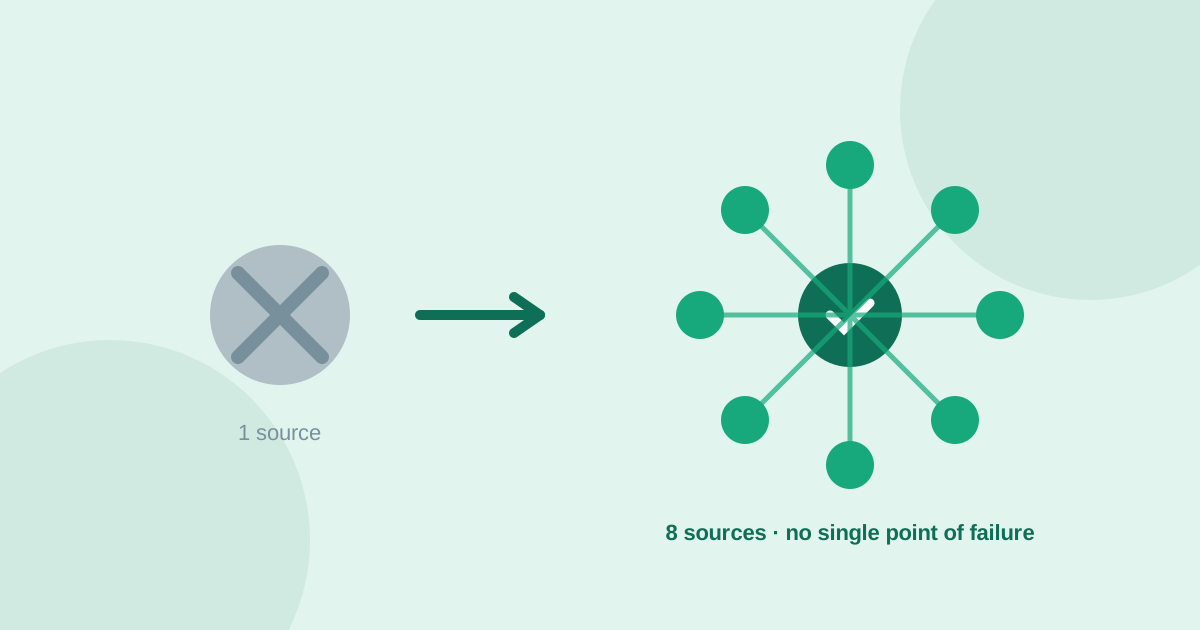 Market Research
Best GummySearch Alternatives in 2026 (Access Ends 30 November)
GummySearch closed to new customers in November 2025, and existing users lose access on 30 November 2026 with all data deleted the next day. Eight alternatives compared on real pricing, real sources, and which half of the job each one actually replaces.
Read article →