
How to Validate an EdTech Idea in 2026 (When the User, the Chooser and the Buyer Are Three Different People)
October 10, 2026 · 9 min read
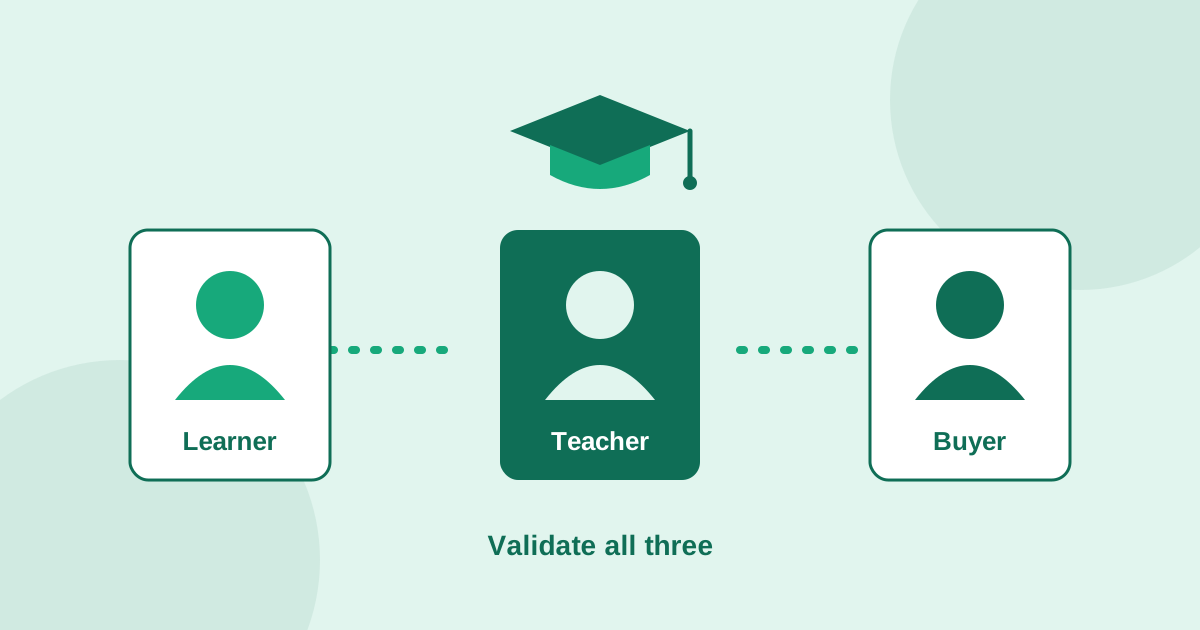
Education looks like an easy market to validate. Everyone has been a student, most founders know a teacher, and the problems seem obvious: homework is tedious, grading takes too long, kids are bored. That familiarity is the trap. Edtech ideas rarely fail because the problem was imaginary. They fail because the founder validated it with the wrong person. The student who would love the tool has no say in whether it is used. The teacher who would choose it has no budget. The administrator or parent who holds the budget never feels the problem directly. A product has to survive all three, and most validation only checks one.
This guide walks through a way to test an education idea against each of those people using evidence that is already public, before you write code or book a single school visit.
Start by naming your three people
Before any research, write down three names for your specific idea: who uses it, who decides it gets used, and who pays. The answers change completely by segment, and each segment is close to a separate market.
In a school product for younger students, the user is the child, the chooser is usually the teacher or a curriculum lead, and the payer is the school or district, sometimes the teacher out of pocket. In a consumer learning app for children, the user is the child and the chooser and payer are both the parent, which is simpler but means the product is judged by someone who never uses it. In test prep and tutoring, the payer is a parent with a deadline and a clear outcome in mind. In higher education the student may be all three for a study tool, or none of them for something the institution mandates. In adult and professional learning the learner often chooses, and an employer sometimes pays.
If you cannot fill in all three names with confidence, that is your first finding. An idea described as a tool for schools is not yet specific enough to validate.
Mine each person's complaints where they actually talk
The three groups complain in different places, about different things, in different language. Reading only one of them gives a confident and wrong picture.
Teachers are unusually candid in public. Teacher communities on Reddit, comment sections on teacher YouTube channels and teacher-focused corners of TikTok and X are full of specific, detailed posts about the tools they are told to use. The recurring shape is worth learning to recognise: a new platform arrives by mandate, it duplicates something an existing tool already did, it requires entering the same data twice, and it is quietly abandoned by spring. Posts like that tell you more about adoption risk than any feature comparison.
Parents talk in app store reviews, parenting forums, Facebook groups and Amazon reviews of learning products. Their complaints cluster around trust and value: a subscription that was hard to cancel, a child who lost interest after a week, progress reports that say nothing useful, screen time that looks like learning and is not.
Students, especially older ones, talk in subject and university communities and under study-related videos. They are blunt about what they actually use versus what they are assigned, and the gap between the two is often where the opportunity sits.
Doing this by hand means separate searches on each platform for each group. A cross-source search in UserConcern covers Reddit, YouTube, TikTok, Quora, X/Twitter and Amazon reviews for the same topic at once and returns the ranked pain points with the original quotes linked, so you can read who is speaking and sort the complaints by person rather than by platform.
Sort what you find: user pain, chooser pain, payer pain
Take every complaint you collect and put it in one of three columns according to who is speaking. Then look at the shape.
Pain only in the user column is the classic edtech mirage. Students find the textbook dull and the platform ugly. True, and almost never sufficient, because the people who decide do not experience it and are not measured on it.
Pain only in the payer column produces products that get bought and not used. An administrator wants a dashboard for a reporting requirement, purchases one, and teachers experience it as one more login. Sales happen once. Renewals do not.
The strongest signal is the same underlying problem appearing in two or three columns in different words. A teacher writes about spending Sunday evenings re-entering marks into a second system. A parent complains that they only find out about a missing assignment weeks later. An administrator, in a different thread, describes inconsistent records. Those are one problem seen from three chairs, and a product that fixes it has a reason to be chosen, used and paid for.
Give extra weight to complaints that include a workaround someone is already paying for or maintaining: a teacher buying resources with their own money, a parent paying a tutor to cover what an app was supposed to teach, a department keeping a shared spreadsheet beside the official system. Effort and money already being spent is the best public proxy for willingness to pay.
Check the constraints that kill edtech products after launch
Some risks are specific enough to education that they deserve their own pass before you commit.
The calendar. Schools buy and adopt on an annual rhythm. Arrive at the wrong moment and the honest answer is ask us next year. If your idea depends on institutional sales, find out when your target segment makes decisions, and plan runway for a sales cycle measured in terms rather than weeks.
Privacy and compliance. Products used by children fall under child-data and student-record rules that vary by country and region, and many institutions will not consider a tool that cannot answer basic questions about where data is stored and who can see it. Buyer-side complaints about vague answers on data handling are common, and they tell you this is a requirement, not a nice-to-have. Get proper advice for the markets you plan to sell in.
Integration. Complaints about one more login and entering the same thing twice are among the most repeated in teacher communities. If your tool does not fit into the systems a school already runs, the burden lands on the teacher, and teachers have very little spare time to give.
The free alternative. Education has an unusually strong supply of free tools and free content. For each pain point you plan to solve, look at what people already use for it and read the complaints about that specifically. UserConcern's Competitor Analysis and Review Intelligence features are built for this step: they pull out what users praise and criticise about existing products so you can see whether the free option is failing people or merely unglamorous.
AI. If your idea is an AI tutor, grader or content generator, check the AI answers source as well as the forums. Learners and teachers can already get a great deal from a general-purpose assistant, so the question to validate is what your product does for this specific classroom, syllabus or exam that a general tool does not.
Turn the evidence into a small test
Research narrows the idea. It does not replace a test with real money or real usage. Once you have a problem that appears in more than one column and survives the constraint check, write it up in one page before building anything: the specific segment, the three people, the problem in their words, what they use today and why it falls short, and what you would charge whom. The Solution Canvas and Mini Business Plan in UserConcern generate a first draft of that from your search results, which is quicker than starting from a blank document, and the pricing calculator is worth a few minutes if any part of your model involves per-seat or per-student pricing.
Then pick the smallest test that involves the chooser and the payer, not just the user. For a classroom tool that is typically three to five teachers in the segment using a rough version for a few weeks, followed by a direct question about who would need to approve paying for it. For a parent-paid product it is a simple landing page with a real price and a pre-order or waitlist with a deposit. For professional learning it is selling the first cohort before the material is finished.
A reasonable bar to continue: the problem showed up independently in at least three sources, it appears in at least two of your three columns, you found people already paying or working around it, and at least a few choosers were willing to take a concrete next step. Fewer than that is not a reason to abandon education. It is a reason to narrow the segment and look again, which costs an afternoon rather than a year.
Frequently asked questions
Why is validating an edtech idea harder than validating other software?
Because the person who uses the product, the person who decides it gets used and the person who pays are often three different people with different problems. Enthusiasm from students or even from individual teachers does not predict a purchase, and a purchase by an administrator does not predict real usage. Validation has to cover all three.
Where do teachers talk honestly about the tools they use?
Teacher communities on Reddit, comments on teacher-run YouTube channels, and teacher circles on TikTok and X are the most candid public sources. Look for specific stories about tools that were mandated and then abandoned, duplicate data entry and extra logins, since those describe the adoption problems that sink most classroom products.
What is the strongest validation signal for an education product?
The same underlying problem described independently by more than one of the three groups, for example a teacher, a parent and an administrator each complaining about a different symptom of the same broken process, combined with evidence that someone already spends money or regular effort on a workaround.
Should I sell to schools or directly to parents and learners?
It depends on who feels the problem and who can pay quickly. Selling to parents or adult learners gives faster feedback and shorter sales cycles but higher churn risk. Selling to schools can bring larger, stickier contracts but follows an annual buying calendar and raises privacy and integration requirements. Validate which group describes the problem most intensely before choosing.
How can I validate an edtech idea before talking to any schools?
Start with public evidence: read what teachers, parents and students say about the problem and the existing tools across forums, video comments and product reviews, and sort the complaints by who is speaking. UserConcern automates the collection across 8 sources in about 60 seconds and links each pain point to its original quote. Then run a small test that includes the person who would choose the tool and the person who would pay for it.
More articles
 SaaS & Tech
How to Validate a SaaS Idea in 48 Hours (With Evidence, Not Opinions)
A step-by-step framework to validate a SaaS idea in one weekend using real customer complaints from 8 sources, with a worked example and a clear build-or-skip verdict.
Read article →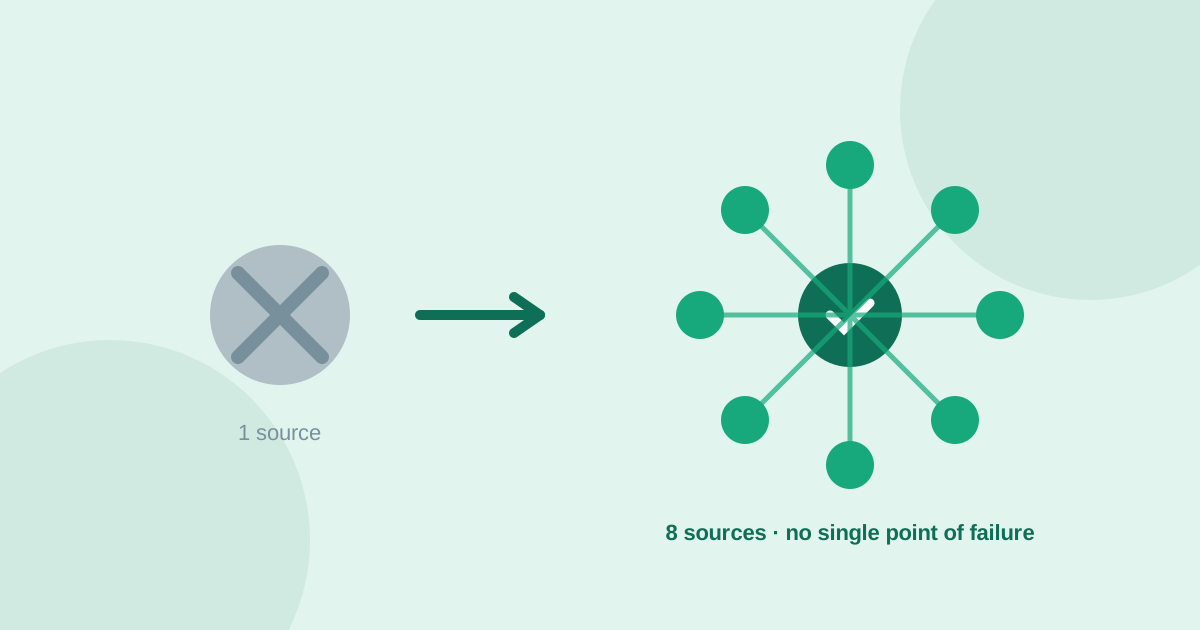 Market Research
Best GummySearch Alternatives in 2026 (Access Ends 30 November)
GummySearch closed to new customers in November 2025, and existing users lose access on 30 November 2026 with all data deleted the next day. Eight alternatives compared on real pricing, real sources, and which half of the job each one actually replaces.
Read article →