
How to Validate a Content Business or Newsletter Idea Before You Write a Single Post
August 3, 2026 · 8 min read
Newsletters, YouTube channels, blogs and podcasts get pitched as the safest businesses to start, because publishing costs nothing but time. That framing hides the real risk: time is the one resource you cannot refund, and every issue, video or post you publish to an audience that was never actually waiting for it is time spent on a bet nobody validated. A failed product wastes inventory. A failed content business wastes months of a publishing schedule before the numbers admit the topic never had pull.
This guide applies the same complaint-mining approach that works for validating a product to a different, more specific question: not would people buy this, but is there a recurring, unresolved frustration in this space that current content fails to address, strong enough that a stranger would subscribe, follow or come back for more. That is a narrower bar than would people read one article, and it is the one that actually predicts whether a content business survives past its first twenty posts.
Why content businesses fail differently than products
A product can fail because it was overpriced, poorly made, or badly marketed, and each of those is fixable after launch. A content business usually fails for a quieter reason: the topic itself never had an audience frustrated enough to keep showing up. Good writing and good production do not rescue a topic nobody was searching for an answer to. The audience is not paying with money on the first visit, they are paying with attention and, eventually, trust, and both of those are harder to win back once spent on content that answered a question nobody actually had.
There is also a saturation trap specific to content: a topic can look validated because a hundred creators already cover it, and still be a bad bet, because those existing creators have already answered the easy version of the question and left only the hard, narrow, unresolved version for a newcomer to find. Popularity of a topic and openness of a gap inside that topic are two different measurements, and content validation has to check both.
The question content validation actually answers
Before picking a topic, separate two kinds of content: information people can already get easily, and frustration nobody currently resolves well. A newsletter that explains what a Roth IRA is competes with a thousand identical explainers and a search engine that already answers the question for free. A newsletter that addresses why freelancers keep filing taxes wrong despite reading the explainers is answering a frustration, not repeating information, and frustration is what makes someone subscribe instead of closing the tab after one search.
Where to find the complaints before you pick a topic
The same public sources that reveal product pain points reveal content gaps, read slightly differently. Reddit threads in your niche often contain a specific, recognizable complaint: I've read ten articles on this and none of them explain the actual edge case I'm stuck on. YouTube comment sections under the existing top videos in your topic are especially valuable, because viewers frequently say, in public, exactly what the video failed to cover, or ask a follow-up question the creator never addressed. Quora questions with hundreds of followers but thin, generic answers are a direct map of demand that current content has not satisfied. Reviews of books, courses and paid guides in the space reveal where even people who paid for an answer still felt let down.
A concrete example: personal finance content for freelancers
Personal finance is one of the most saturated content categories that exists, which makes it a useful test case. Reading comments under popular personal finance channels and Reddit freelancer communities surfaces a specific, repeated frustration that generic personal finance content skips entirely: freelancers with irregular monthly income cannot use budgeting advice built around a steady paycheck, and quarterly estimated tax guidance written for W-2 employees confuses more than it helps. That is not a request for more personal finance content. It is a request for personal finance content that assumes income arrives unevenly, which almost none of the existing top creators address directly, because most of them built their audience answering the easier, steadier-income version of the question.
A creator who builds an editorial calendar around that specific gap (irregular income budgeting, quarterly tax estimates for inconsistent earners, pricing for cash flow instead of pricing for margin) is competing on a frustration the saturated part of the category has left untouched, rather than competing head-on with every generic finance channel for the same broad keyword.
Turning complaints into an editorial angle
Every specific complaint you collect becomes raw material for a headline, an episode title or a lead magnet, not just a topic idea. If freelancers keep saying nobody explains quarterly taxes for inconsistent income in plain language, that sentence is close to a title already. If YouTube commenters keep asking a follow-up question a popular video never answered, that unanswered follow-up is your next video's whole premise. Content built from a complaint you can quote back nearly word for word converts better than content built from a topic you guessed people wanted to read about, because the headline already matches the exact words someone used when frustrated enough to search.
The audience-size trap
A common mistake is chasing the topic with the largest search volume rather than the topic with the clearest unresolved frustration. Broad, high-volume topics are almost always already dominated by creators with years of head start, better production budgets and existing trust. A narrower topic with a smaller but genuinely underserved audience, the kind that shows up as a repeated, specific complaint rather than a generic keyword, is a more realistic starting point for a new content business, because there is real room to become the obvious answer instead of one more voice in an already crowded feed.
Before you commit to a publishing schedule
Run a small pilot before building a full content calendar around any topic. Publish two or three pieces addressing the specific frustration you found, referencing the exact language people used, and watch what actually happens: do comments reference the same pain you researched, do people share it into the communities where you first found the complaint, does anyone ask a follow-up that confirms the topic has more depth than one post can cover. Then cross-check the pain across at least two or three of the sources you searched originally. A complaint that only shows up in one Reddit thread might be one person's bad week. The same frustration confirmed independently on Reddit, in YouTube comments and on Quora is a real, durable content angle worth building a publishing schedule around, and UserConcern's cross-source search can run that same check across 8 sources in about 60 seconds before you write a single post.
Frequently asked questions
How is validating a content business different from validating a product?
A product is validated by whether people would pay money for it. A content business is validated by whether people are frustrated enough by an unresolved question to keep paying attention, issue after issue or video after video. That makes recurring, specific frustration a better signal than general topic popularity, since an audience has to keep choosing to come back, not just decide once.
What is the biggest reason content businesses fail?
Picking a topic that is either not frustrating enough to earn repeat attention, or one where existing creators have already answered the easy version of the question and left nothing but a hard, narrow gap for a newcomer. Good writing or production quality rarely rescues a topic that never had a real, recurring frustration behind it.
Where should I look for content ideas that will actually resonate?
Reddit threads in your niche, YouTube comment sections under the existing top videos (especially unanswered follow-up questions), Quora questions with many followers but thin answers, and reviews of paid books or courses in the space. Each reveals a slightly different layer of what current content is failing to address.
How many pieces should I publish before deciding if a topic works?
A pilot of two or three pieces addressing one specific, well-researched frustration is usually enough to see whether the topic has real pull: watch for comments that echo the pain you researched, shares back into the communities you found it in, and follow-up questions that suggest the topic has more depth. Cross-check the underlying pain across two or three sources before committing to a full publishing schedule.
More articles
 SaaS & Tech
How to Validate a SaaS Idea in 48 Hours (With Evidence, Not Opinions)
A step-by-step framework to validate a SaaS idea in one weekend using real customer complaints from 8 sources, with a worked example and a clear build-or-skip verdict.
Read article →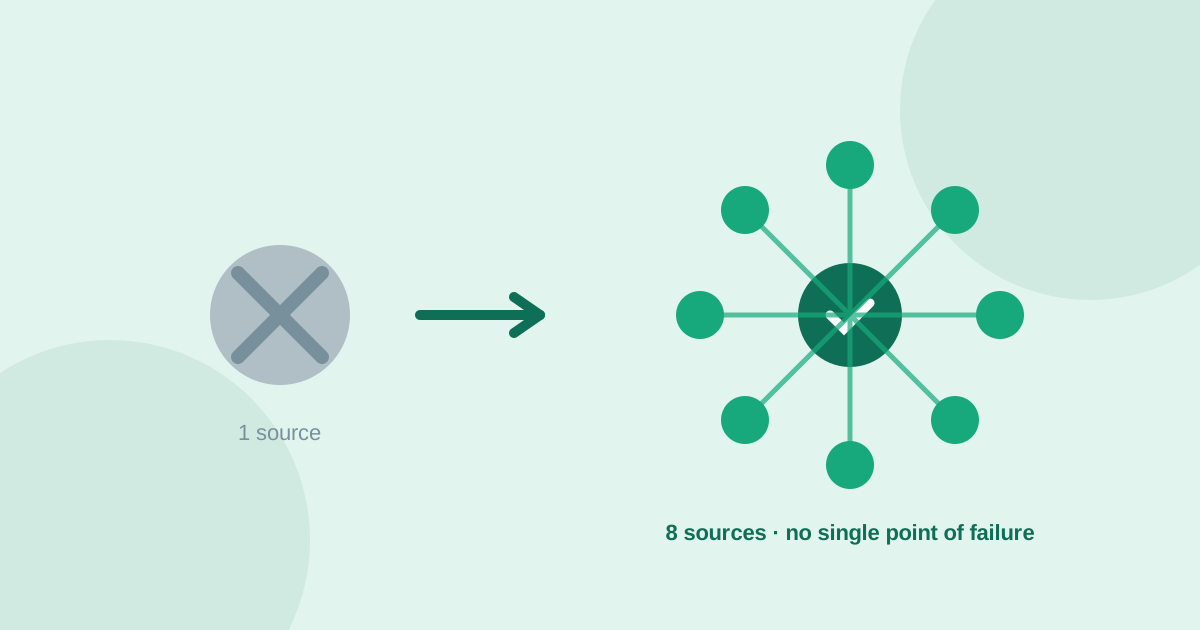 Market Research
Best GummySearch Alternatives in 2026 (Access Ends 30 November)
GummySearch closed to new customers in November 2025, and existing users lose access on 30 November 2026 with all data deleted the next day. Eight alternatives compared on real pricing, real sources, and which half of the job each one actually replaces.
Read article →