
Best Trend Seeker Alternatives in 2026 (Pre-Built Idea Database vs. Live Cross-Source Search)
August 10, 2026 · 8 min read
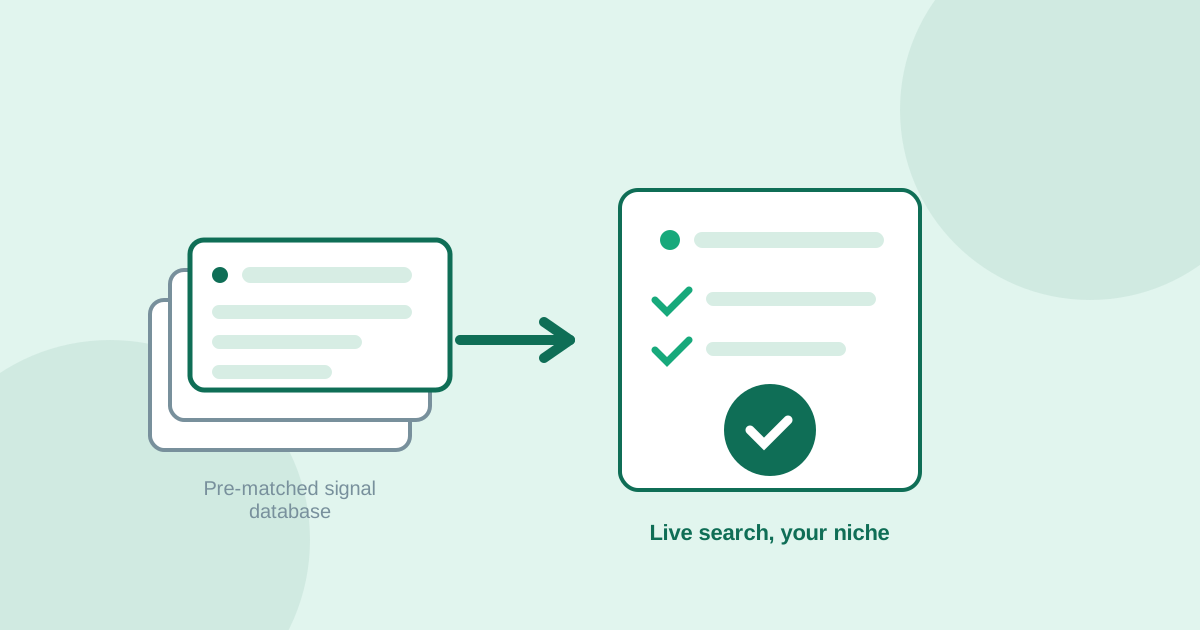
Most tools in the pain-point research category pick one platform and go deep. Trend Seeker is a more interesting comparison because it deliberately does not: it pulls from Reddit, job ads, podcasts, Google Trends and product launch directories, which is a genuinely unusual signal mix in this category. That makes this comparison less about single-source risk, which is the problem that sank tools like GummySearch, and more about two different product shapes built for two different moments in your research process.
Anyone who came here from GummySearch has a deadline worth noting: access ends on 30 November 2026. The full alternatives comparison lists eight options with the prices each vendor publishes today.
This guide explains what Trend Seeker actually does, where its signal mix gives it a real edge over Reddit-only tools, and where its architecture, a browsable database of pre-matched ideas refreshed on its own schedule, answers a different question than a live search run against your specific niche, language or region.
What Trend Seeker actually does
Trend Seeker describes itself as a market intelligence platform that converts unmet needs expressed by real users into categorized, evidence-scored business ideas. According to its own about page, the processing pipeline runs in five stages: collection from Reddit, job ads, podcasts and online communities; natural language processing to extract specific requests and pain points; deduplication of similar requests across different threads; scoring based on volume, recency and growth rate; and categorization into verticals like SaaS, e-commerce, mobile apps and developer tools. Its Product Hunt listing puts the current scale at roughly 7,400 curated business ideas built from more than 140,000 signals, including close to 170,000 job ads analyzed for hiring trends. The team reports processing tens of thousands of new posts weekly to keep the corpus current.
On top of the browsable database sits a free Idea Validator: you describe your idea, the tool converts it into a semantic embedding, and matches it against the existing signal corpus. Results are split by source so you can inspect the matches, and a 0-100 score combines post volume and idea similarity in roughly equal weight. Trend Seeker is upfront that this score is a research shortcut, not a promise, which is a more honest framing than some competitors offer. The free tier includes the validation score, matching signals and market context; a paid Pro tier unlocks full idea details, deeper analysis and unlimited saved trends.
Where it's genuinely useful
The signal mix is the real differentiator here, and it is worth taking seriously rather than dismissing as a features list. Job ad data is a genuinely novel input for this category: when companies are actively hiring to solve a problem manually, that is a revealed, budgeted willingness to pay for a fix, which is a stronger signal than a Reddit complaint alone. Podcast transcripts and product launch directories add another layer most competitors skip entirely, catching demand language that never makes it into a subreddit or a review. For someone specifically browsing for a SaaS or micro-SaaS idea and comfortable starting from a pre-built shortlist rather than their own niche, that combination of sources and the transparent, inspectable scoring methodology make Trend Seeker a legitimately strong first stop, and the free validator costs nothing to try before deciding whether to dig further.
Where a pre-built signal database hits a ceiling
The limitation is not the source mix, which is genuinely broader than most of the field. It is the shape of the product: a database of pre-matched ideas, collected and scored on the company's own weekly cycle, is answering the question "what has already been swept up in our corpus," not "is my specific idea, in my specific niche, validated right now." The Idea Validator makes this explicit by design, since it works by matching your description against signals that were already collected before you ever typed your idea in. If your niche is narrow, local, or simply has not generated enough Reddit, job-ad or podcast chatter to register in a weekly crawl, a low similarity score tells you almost nothing about whether the market exists, only that the corpus has not seen it yet.
There is also a coverage gap worth naming plainly. None of Trend Seeker's public pages make claims about multilingual or multi-region coverage, and its core sources, Reddit, English-language podcasts and U.S.-weighted job ad platforms, skew heavily toward an English-speaking, U.S.-centric audience. A founder validating a niche outside that demographic, or in a market where the target buyers do not post on Reddit or apply for English-language jobs describing their frustration, is unlikely to find much signal in the corpus, not because the pain does not exist, but because the collection pipeline was never pointed at where it lives.
What to use instead, depending on the job
If your job is browsing for a SaaS or micro-SaaS idea and you want a wide, inspectable, already-scored shortlist backed by an unusually broad signal mix including job ads and podcasts, Trend Seeker's database is a legitimately strong starting point, and it costs nothing to explore before deciding whether to go deeper. If your job is validating a specific idea you already have, especially one in a narrow niche, a non-English market, or a category that generates little Reddit or job-ad chatter, matching against a pre-collected corpus is a narrower and different question than running a fresh search built around your exact wording, right now.
Where UserConcern fits
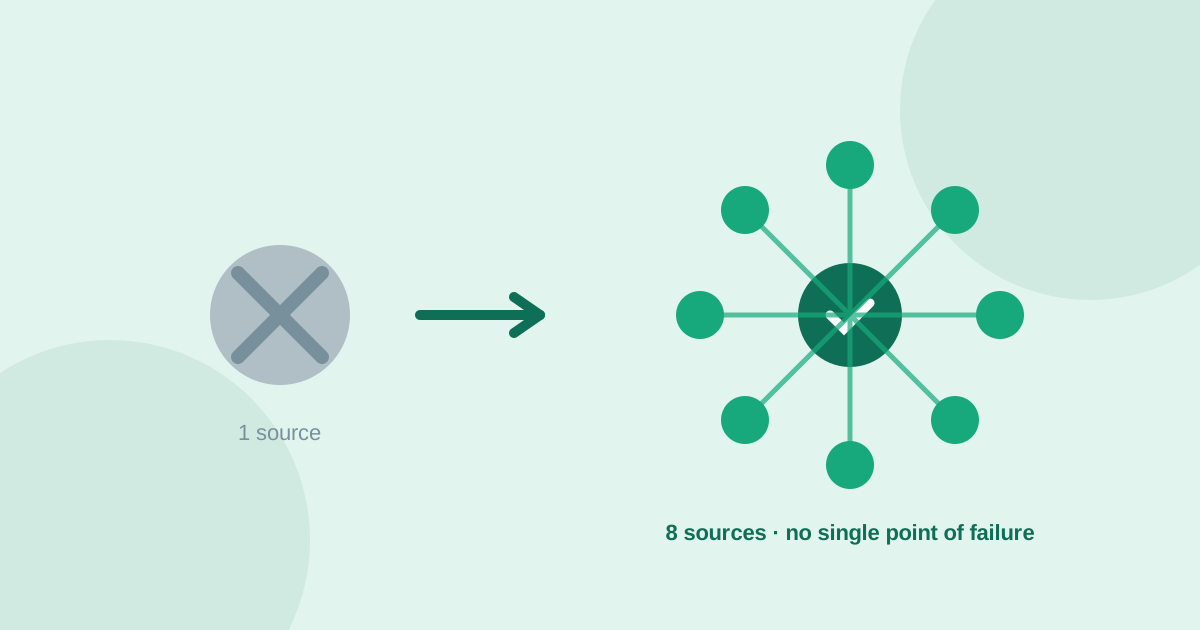
UserConcern runs a live search against your specific idea or niche, in real time, cross-checking 8 sources at once: Reddit, Amazon reviews, YouTube, TikTok, Twitter/X, Quora, Google Trends and AI answers, in 9 languages across 16 regions. It returns ranked pain points with the original quotes linked back to their source, an opportunity score, and a build-or-skip verdict, in about 60 seconds. Where Trend Seeker's strength is a large, pre-scored corpus weighted toward Reddit, job ads and podcasts, UserConcern's strength is running a fresh, cross-source check on whatever specific idea you bring to it, in whatever language your target market actually speaks, rather than checking whether someone else's crawl happened to already catch it.
The honest way to choose: if you want inspiration from a broad, already-scored database with an unusually wide signal mix, Trend Seeker's free validator and browsable ideas are worth a look before you commit to anything narrower. If you already have an idea and need to know whether it holds up against fresh evidence from the specific people who would buy it, including consumer platforms and non-English markets a Reddit-and-job-ads corpus is unlikely to cover, a live cross-source search answers that more directly than matching against a pre-built database ever can. Some founders reasonably use both: Trend Seeker to browse for candidate ideas, then a fresh cross-source search to pressure-test the one they actually want to build.
Frequently asked questions
What is Trend Seeker?
Trend Seeker is a market intelligence platform that turns demand signals from Reddit, job ads, podcasts, Google Trends and product launch directories into a browsable database of business ideas, each scored by signal volume, recency and growth. It also offers a free Idea Validator that matches a typed idea description against its existing signal corpus and returns a 0-100 score. According to its Product Hunt listing, the database includes roughly 7,400 ideas built from 140,000+ signals.
How does Trend Seeker's Idea Validator work?
You describe your idea, and the tool converts it into a semantic embedding that it matches against signals already collected in its database, split by source (Reddit, job ads, podcasts and more) for inspection. The 0-100 score combines post volume and idea similarity in roughly equal weight. Trend Seeker itself describes the score as a research shortcut rather than a guarantee, since it only checks what has already been collected, not the live market.
What is the main difference between Trend Seeker and UserConcern?
Trend Seeker matches your idea against a pre-collected corpus of Reddit, job ad, podcast and launch-platform signals, refreshed on its own weekly schedule. UserConcern runs a live search across 8 sources, including consumer-facing platforms like Amazon reviews, YouTube and TikTok, in real time and in 9 languages across 16 regions, so it is not limited to whatever a prior crawl happened to already catch.
Is Trend Seeker good for validating a narrow, local or non-English niche?
It is likely to show limited signal there. Trend Seeker's core sources, Reddit, podcasts and job ad platforms, skew English-speaking and U.S.-centric, and its public pages make no claims about multilingual or multi-region coverage. A low match score in a narrow or non-English niche may mean the corpus has not collected that signal yet, not that the underlying market does not exist.
More articles
 Market Research
Best GummySearch Alternatives in 2026 (Access Ends 30 November)
GummySearch closed to new customers in November 2025, and existing users lose access on 30 November 2026 with all data deleted the next day. Eight alternatives compared on real pricing, real sources, and which half of the job each one actually replaces.
Read article → Market Research
How to Identify Customer Pain Points: 7 Methods That Actually Work
Customer pain points are the raw material of every successful product. Here are 7 practical methods to find them, from free manual research to AI-powered analysis.
Read article →