
How to Identify Customer Pain Points: 7 Methods That Actually Work
July 12, 2026 · 9 min read

Every product that sells solves a pain. Every product that flops solves a pain nobody had, or one too mild to pay for. That makes identifying customer pain points the single highest-leverage research activity for founders, product managers and marketers, and also one of the most poorly executed.
The problem is not a lack of methods. It is that most teams use exactly one method, usually surveys or a few interviews, and mistake its output for the truth. Real pain point research triangulates: multiple methods, multiple sources, and a bias toward what people say when nobody is asking them.
What counts as a real pain point
A pain point is a recurring, costly friction that people actively try to remove. Three tests separate real pain from noise. Frequency: does it happen weekly or daily, not once a year? Cost: does it burn money, time or emotional energy, expressed in words like losing clients, wasted hours, or embarrassing? Effort: are people already hacking together workarounds, spreadsheets, or paying for partial fixes? A frustration that passes all three tests is a business opportunity. One that passes none is a shrug.
Method 1: mine unprompted public complaints
The highest-signal source is what people say without being asked. Reddit threads, Amazon reviews, YouTube comments, Quora questions and X posts are full of spontaneous frustration, written for peers rather than for researchers. Because nobody is being interviewed, nobody is being polite. The language is specific, emotional and quotable. The manual version costs hours per niche; a tool like UserConcern automates it by scanning 8 sources in one search and clustering the complaints into ranked pain points with the original quotes attached.
Method 2: read negative and mid-tier reviews
One-star reviews reveal deal-breakers. Three-star reviews are even better: they come from people who wanted to love the product and were let down by something fixable. Read reviews of your competitors, and of adjacent products your audience already buys. Note repeated nouns (the lid, the export button, the onboarding) and repeated feelings (confusing, flimsy, ignored by support). Repetition across many reviewers is the pattern you are hunting.
Method 3: interview customers, but ask about the past
Interviews still matter, if you run them correctly. Never ask would you use this. Ask what people did the last time the problem occurred: what they tried, what it cost, what they searched for, what they gave up on. Past behavior is evidence; hypothetical enthusiasm is theater. Five interviews grounded in real incidents beat fifty opinions about the future.
Method 4: mine support tickets and sales calls
If you already have customers, your inbox is a pain point database. Cluster support tickets by theme, not by feature. Listen to sales call recordings for the moment prospects describe their current workaround; the workaround is the pain made visible. Churned customer exit notes are the most honest documents your company owns.
Method 5: watch search behavior
Google autocomplete, People Also Ask boxes and Google Trends show what people privately type when stuck. Searches beginning with how to fix, alternative to, or why does X keep are pain expressed as a query. Pair the volume signal with complaint mining: search data tells you how many, complaints tell you how much it hurts.
Method 6: observe communities over time
Join the three or four communities where your audience lives, and read for two weeks before concluding anything. Notice which questions get asked every single week despite being answered before; recurring questions mean existing answers do not work. Notice which posts get unusual engagement; upvotes on a complaint are votes for a solution.
Method 7: cross-check everything across sources
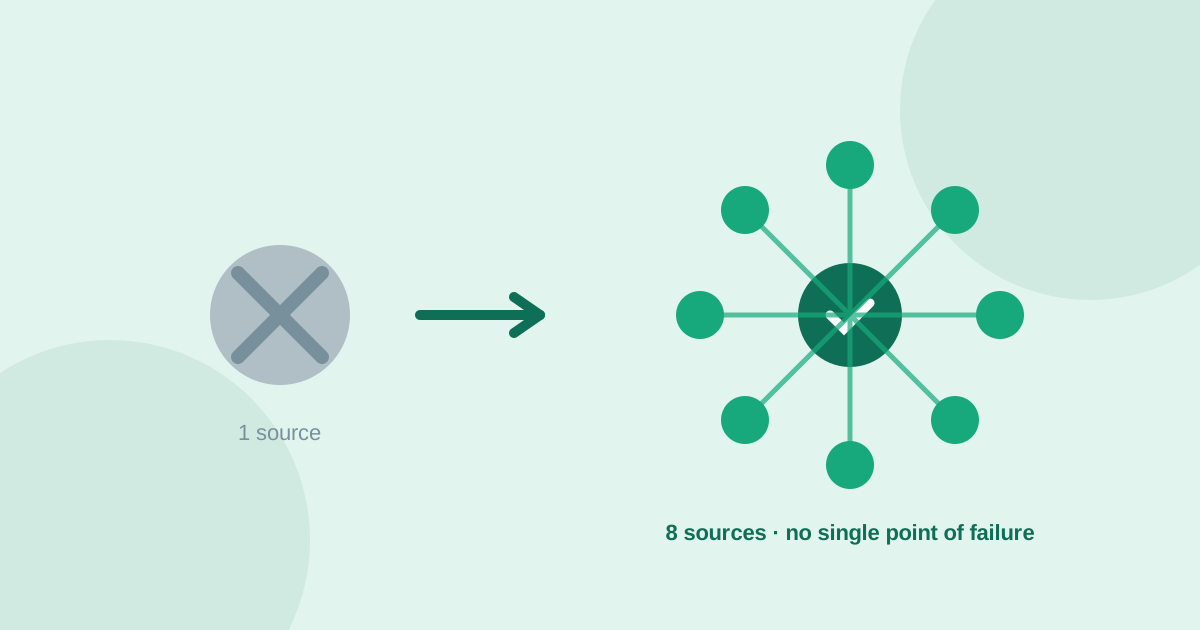
This is the method that makes the other six trustworthy. A pain that appears only in one community, one survey or one interview batch may be an artifact of that source. A pain that shows up independently on Reddit, in Amazon reviews and under YouTube videos, phrased by different people in different words, is validated demand. Cross-source confirmation is the core idea behind UserConcern: one search checks 8 sources so a single loud forum cannot mislead you.
From pain points to product decisions
Once you have a ranked list, resist building for the top item automatically. Score each pain on intensity, frequency, reachability of the audience, and weakness of current solutions. The best opportunity is often the second or third loudest pain, the one incumbents structurally ignore because it belongs to a segment they consider too small. Small segments with burning pain beat large segments with mild irritation, every time.
Frequently asked questions
What are customer pain points?
Customer pain points are recurring, costly frictions that people actively try to remove: problems that burn money, time or emotional energy often enough that someone would pay for a better solution. They differ from mild complaints by frequency, cost and the presence of workarounds people already use.
What is the fastest way to identify customer pain points?
Mining unprompted public complaints is the fastest high-signal method: Reddit threads, Amazon reviews, YouTube comments and Quora questions contain honest frustration written without a researcher in the room. UserConcern automates this by scanning 8 sources in about 60 seconds and returning ranked pain points with real quotes.
How many sources do I need to confirm a pain point?
Three independent sources is a practical minimum. A complaint confirmed on Reddit, in product reviews and on YouTube by different people in different words is validated demand. A complaint that exists in only one community may be a quirk of that community rather than a market.
Are surveys a good way to find pain points?
Surveys are useful for sizing a pain you already discovered, but weak for discovering pain: people forget frictions, rationalize workarounds and answer politely. Discovery works better through unprompted complaints, past-behavior interviews and support ticket analysis; surveys then quantify what you found.
More articles
 Market Research
Best GummySearch Alternatives in 2026 (Access Ends 30 November)
GummySearch closed to new customers in November 2025, and existing users lose access on 30 November 2026 with all data deleted the next day. Eight alternatives compared on real pricing, real sources, and which half of the job each one actually replaces.
Read article → Market Research
How to Find Customer Pain Points on Reddit (Step-by-Step Guide)
Reddit is the largest honest focus group on earth. Here's a step-by-step method to extract real customer pain points from it, plus the trap that catches most researchers.
Read article →