
How to Mine TikTok for Real Customer Pain Points (Step-by-Step Guide)
August 10, 2026 · 8 min read
TikTok gets dismissed as a research source more often than any other platform in this list, usually with some version of it's just dance videos and pranks. That reputation is out of date. Product review clips, Amazon and TikTok Shop haul videos, this hack changed my life demos and did not work for me duets now make up a huge share of the platform, and the comment section under each one is a live, unfiltered reaction feed from people who just watched a claim get tested in real time.
What makes TikTok different from Reddit, Quora or YouTube is not the content, it is the format. A viral hack video makes a specific, visual claim in fifteen to sixty seconds, and the comments underneath either confirm it worked or explain exactly how it fell apart when a real person with a real kitchen, a real car or a real body tried it. That before and after gap, promise versus lived result, is one of the sharpest pain point signals available, and almost nobody mines it systematically.
Step 1: search content types, not just your niche's hashtag
Searching your niche's obvious hashtag returns mostly polished brand content and influencer posts optimized to look good, not comment sections full of honest reaction. Instead, search the format that attracts testing and reaction: hacks that don't work, amazon finds fail, things I wish I knew before buying, and X review after 30 days. These formats specifically attract commenters who tried something and are reporting back, which is a fundamentally different audience than one scrolling past a polished ad.
Step 2: search pain language inside captions and pinned comments
Once you're in a promising video, check the caption and the creator's pinned comment first, since creators often pin a correction or a caveat after the video blew up and viewers pointed out a flaw. Then scan the comments themselves for pain language: does this actually, mine broke after, waste of money, or does anyone know a version that actually. These phrases surface the specific moment a product or method failed to live up to its fifteen-second promise.
Step 3: read for the moment a viral hack fell apart
The highest-value comments are not the ones agreeing enthusiastically, they are the ones politely correcting the video: this only works if your fabric is cotton, mine did this too until week three then it stopped, or I tried this and it just made a mess. Each of these describes a specific edge case or failure mode the original video did not mention, which is exactly the kind of narrow, concrete gap a focused product or service can be built to close.
Step 4: watch stitches and duets for public disagreement
TikTok's stitch and duet formats let one creator respond directly to another, and a wave of stitches disagreeing with a popular claim is one of the clearest gap signals the platform produces. Search your niche's top video plus the word stitch or duet to find these reaction chains. A cluster of independent creators, not just commenters, stitching a popular product review to say it did not work for them is a stronger and more visible signal than a single comment, because each stitch is itself a small piece of original content someone chose to make.
Step 5: collect quotes with a link and a rough view-count sanity check
Copy comment text verbatim along with a link to the video, and note the video's view count next to any comment you save. A complaint under a video with eleven million views carries more weight than the same complaint under a video with four hundred views, simply because more people had the chance to see it and react, and a high view count with a large volume of similar complaints underneath is a genuinely large, addressable pattern rather than a niche reaction.
The trap: TikTok's algorithm shows you agreement, not the whole market
TikTok's For You feed is tuned to show each viewer more of what they already engage with, which means the comment section under any given video skews toward people the algorithm already decided would react to it, not a representative sample of your whole market. TikTok also leans younger and more visual than Reddit or Quora, so a pain point that dominates TikTok comments can be a genuine trend or a demographic quirk of who the algorithm served that specific video to. The fix is the same discipline every single-source method needs: before treating a TikTok pattern as validated demand, check whether the same complaint shows up independently on Reddit, in Amazon reviews or in YouTube comments, where the audience and the ranking logic are both different.
Putting it together
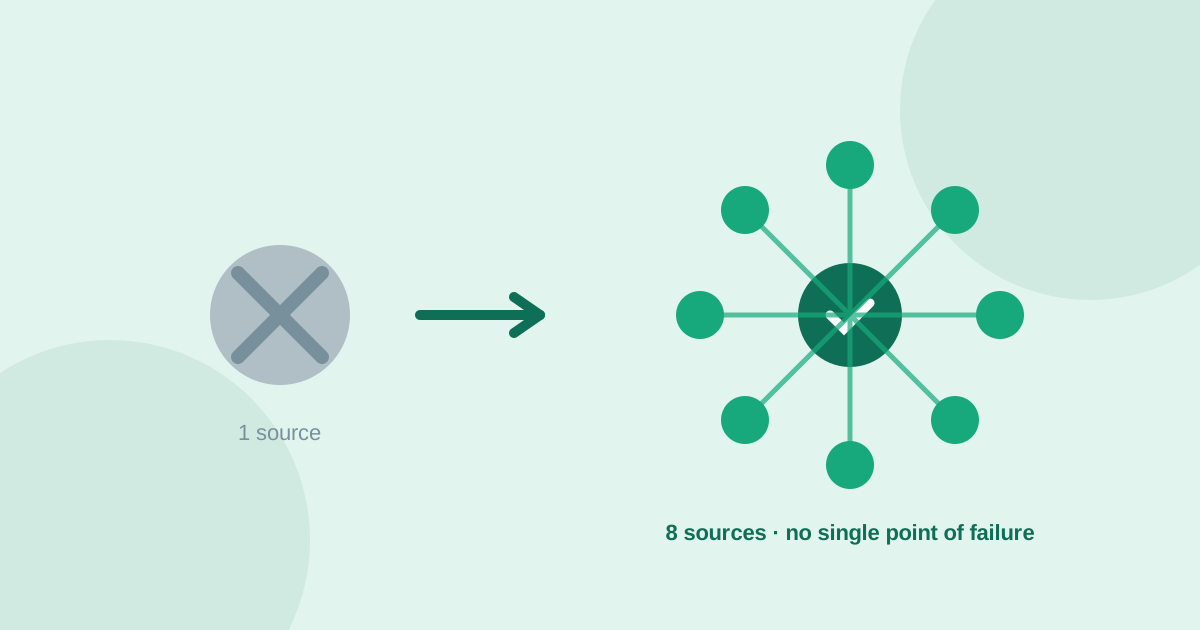
A focused TikTok research session looks like this: twenty minutes searching hack fail and review format videos in your niche, forty minutes reading comments and stitches for specific failure language, and twenty minutes collecting the strongest quotes with links and view counts attached. Then cross-check the top two or three patterns against at least one other source before acting on them. UserConcern automates this entire workflow, scanning TikTok alongside Reddit, Amazon reviews, YouTube, Quora, X, Google Trends and AI answers in one search, so a comment that looks like a trend on one video only counts once it is confirmed outside that video too.
Frequently asked questions
Is TikTok good for finding customer pain points?
Yes, particularly under hack, review and did-not-work-for-me style videos, where commenters are actively reporting back on whether a specific claim held up in real use. The visual, before-and-after nature of TikTok content often surfaces failure modes that a text-only review would never mention.
What should I search on TikTok to find pain points?
Search formats that attract honest reaction rather than your niche's polished hashtag: phrases like hacks that don't work, amazon finds fail, review after 30 days, and things I wish I knew before buying. Then read the comments and any stitches or duets responding to the video for specific failure language.
Why can TikTok research be misleading?
TikTok's algorithm shows each viewer more of what they already engage with, so a comment section reflects the audience the algorithm chose for that video, not the whole market, and the platform skews younger and more visual than Reddit or Quora. A pattern that looks huge on TikTok should be checked against at least one other source before you treat it as validated demand.
How do I mine TikTok comments faster than scrolling manually?
Manual scanning across dozens of videos and their stitches takes hours per niche. UserConcern automates it: one search scans TikTok alongside 7 other sources and clusters the complaints into ranked pain points with the original quotes linked, so a TikTok pattern gets cross-checked automatically instead of by hand.
More articles
 Market Research
Best GummySearch Alternatives in 2026 (Access Ends 30 November)
GummySearch closed to new customers in November 2025, and existing users lose access on 30 November 2026 with all data deleted the next day. Eight alternatives compared on real pricing, real sources, and which half of the job each one actually replaces.
Read article → Market Research
How to Identify Customer Pain Points: 7 Methods That Actually Work
Customer pain points are the raw material of every successful product. Here are 7 practical methods to find them, from free manual research to AI-powered analysis.
Read article →