
Best SparkToro Alternatives in 2026 (Where Your Audience Is vs. What They Need)
October 12, 2026 · 9 min read
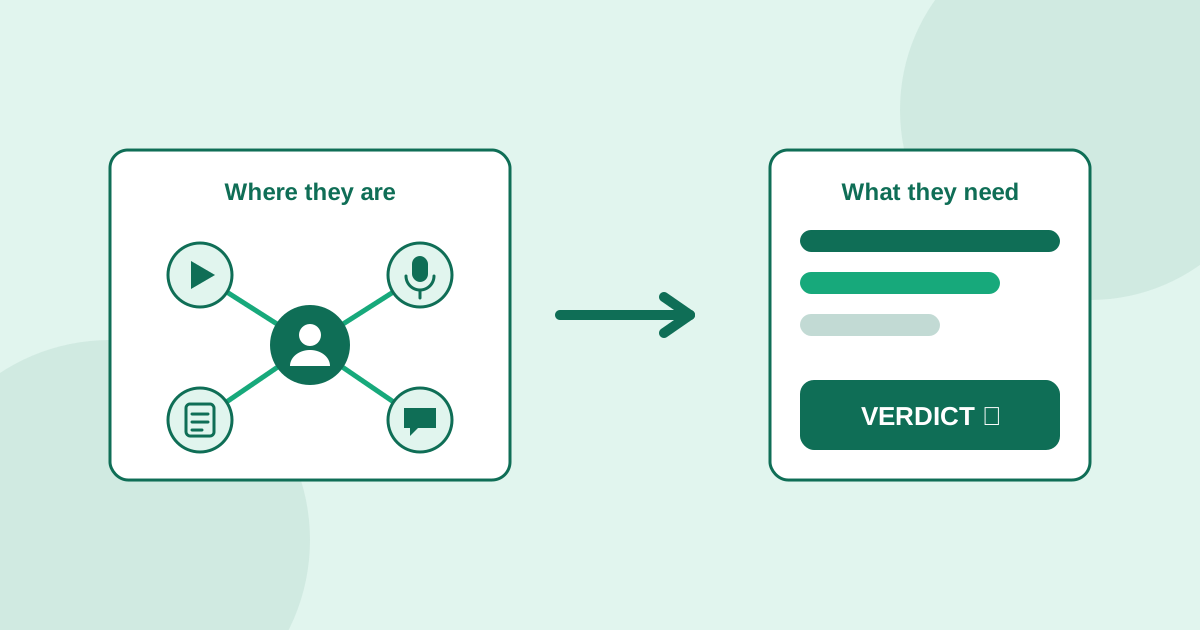
SparkToro is one of the better-known names in audience research, and people look for alternatives to it for two quite different reasons. Some want another audience intelligence tool, usually because of report limits or price. Others picked it up at the idea stage, hoping it would tell them whether a market was worth entering, and came away with a detailed picture of which podcasts and websites their audience likes and no clearer idea of what to build. This article is mainly for the second group. It tries to be fair to SparkToro throughout, because for the job it was designed for it is a strong product.
What SparkToro actually does
SparkToro describes itself as audience research software. Its site frames the problem in one line: your customers will not tell you where they go online. You describe an audience, for example by a keyword they search for, a website they visit or a job they hold, and it returns a report on that audience's behaviour and attention.
According to its own marketing, a report covers the websites, podcasts, YouTube channels and social accounts the audience engages with far more than average, which social networks they use compared with the average person, the keywords they search for, the AI tools they use, the subreddits they subscribe to and demographic details such as age, gender, job titles and skills. Higher plans add a Persona Builder and a feature called Take Action that turns the research into marketing tasks such as headline ideas and positioning frameworks.
At the time of writing its pricing page lists a free tier limited to a few report previews a month, a Personal plan sold on annual billing, a Business plan at $150 a month and an Agency plan at $300 a month, with usage measured in reports per month. Plans and limits change, so check the page yourself before you buy.
What it does well
The question SparkToro answers is genuinely hard to answer any other way. Ask customers in a survey which newsletters they read and you get the three they remember, not the twenty that actually shape their opinions. Guess, and you end up advertising where every competitor already advertises. An affinity-ranked list of the specific podcasts, YouTube channels, sites and accounts an audience over-indexes on is exactly what you need to decide where to pitch a guest appearance, which newsletter to sponsor, who to approach for a partnership or which subreddits are worth showing up in.
It is also useful for positioning. Knowing the job titles, skills and vocabulary of the people who search for a term helps you write for the audience you actually have rather than the one you imagined. If your job is a media plan, a PR list, an influencer shortlist or a go-to-market channel strategy, audience research is the right category, and swapping it for a validation tool would be a mistake.
Where audience research stops being validation
The limit is not a missing feature. Audience research and idea validation answer different questions, and knowing a great deal about the first tells you surprisingly little about the second.
First, attention is not pain. Learning that home baristas follow certain YouTube channels and subscribe to certain subreddits tells you where they are. It does not tell you what frustrates them. A large, engaged, easy-to-reach audience can be perfectly well served already, and nothing in an attention map distinguishes a satisfied audience from a frustrated one.
Second, an audience report describes people, not their experiences. The raw material of a build decision is a described experience: I bought this, it failed in this specific way, and now I do this awkward workaround instead. That sentence names the incumbent, the gap and the effort already being spent. It lives in reviews, forum threads and comment sections. It does not appear in a list of affinities or a demographic breakdown.
Third, search keywords show interest without the story. Seeing which terms an audience searches for is helpful, but a keyword cannot tell you whether the person was mildly curious or desperate, what they had already tried, or whether the first result solved the problem.
Fourth, reach comes after the product, not before it. Knowing exactly where to find an audience is valuable once you have something they want. Before that point it mostly makes it easier to launch the wrong thing efficiently. The order matters: confirm the problem, then plan the channels.
The alternatives, by the job you actually have
If the job is audience and channel research for marketing, stay in the audience intelligence category. Tools in it differ in where their data comes from, how many reports you get and how the results are presented, and the right choice depends on those details and on your budget. For that job a pain-point tool is the wrong answer, including ours.
If the job is hearing what people say about a brand or a keyword as it happens, a social listening or keyword alert tool fits better. Those are built around a continuous feed of mentions rather than a profile of an audience.
If the job is spotting what is rising before it peaks, you want a trend-discovery tool. An audience profile is a snapshot of who people are and what they follow. It says little about direction of travel.
If the job is deciding whether an idea is worth building, you need the material audience research leaves out: the complaints, the failed purchases and the workarounds, in the customer's own words, from more than one place. You can gather that by hand, and an audience report is a good map for doing it. Take the subreddits and YouTube channels it lists, sort the threads by top for the past year, read the comments under the most-watched videos, then read the two- and three-star reviews on the leading products in the category. It works, and it takes most of a weekend per idea.
Where UserConcern fits
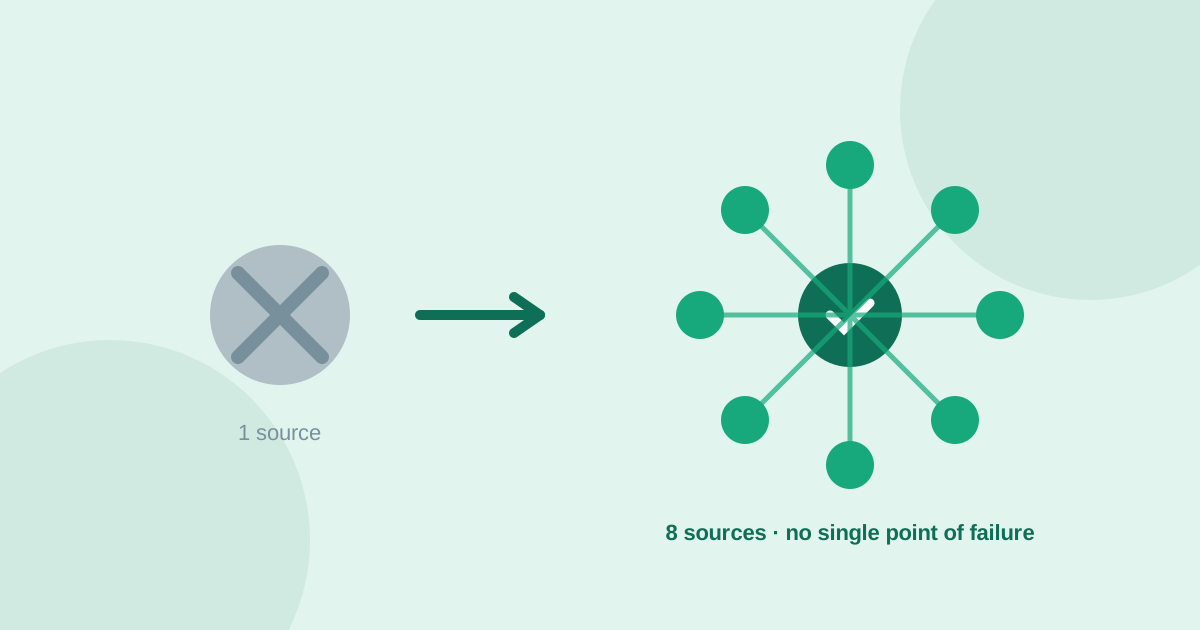
UserConcern automates that last job. One search cross-checks 8 sources, Reddit, Amazon reviews, YouTube, TikTok, Quora, X/Twitter, Google Trends and AI answers, in about 60 seconds, and returns ranked pain points with the original quotes linked back to where they were posted, an opportunity score and a build-or-skip verdict, in 9 languages. From there, Competitor Analysis and Review Intelligence show what users praise and criticise about the products already in the space, and the Solution Canvas and Mini Business Plan turn a surviving pain point into a one-page draft you can test.
It is worth being equally clear about what it does not do. UserConcern does not tell you which podcasts your audience listens to, which accounts they follow or what their job titles are. It does not build a media list or a persona. If those are what you need, it is not a substitute for an audience research tool.
The reason for cross-checking sources is that every single source has its own bias. Reddit skews toward people who enjoy arguing. Amazon reviews only cover products that already exist. Search data hides the story. A complaint that shows up independently in a forum thread, a product review and a video comment section is much harder to dismiss as a quirk of one platform, and that independence is what makes a pain point safe to build on.
Using both together
The two kinds of tool are sequential rather than competing, and the strongest workflow uses both, in a specific order. Start with pain-point research to decide whether there is a problem worth solving at all. Most ideas will not survive that step, which is the point: it costs minutes rather than months. For the ones that do, you now know the problem in the customer's own words, which products are failing them and how.
Then bring in audience research to answer the next question, which is how to reach the people who have that problem. This is where an affinity-ranked list of channels earns its price. You already know what to say, because the complaints told you. The audience report tells you where to say it: which podcasts to pitch, which newsletters to sponsor, which communities to join and contribute to before you ever mention a product.
Used the other way around, the combination is weaker. Starting from an audience and looking for something to sell them is a reasonable way to find ideas, but only if the next step is checking whether that audience is actually unhappy with what it already has. An audience you can reach is an asset. An audience with an unsolved, costly, repeatedly described problem is a business.
Frequently asked questions
Is SparkToro good for validating a business idea?
It is useful background and a weak final test. It shows who an audience is and where they spend attention online, which helps you understand a market and plan how to reach it. It does not show what those people are frustrated by, what they already tried or what the problem costs them, and those are the facts a build decision depends on.
What is the difference between SparkToro and UserConcern?
SparkToro is audience research software: it reports the websites, podcasts, YouTube channels, social accounts, search keywords and demographics associated with an audience, mainly for marketing, PR and channel planning. UserConcern cross-checks an idea against 8 sources of real complaints and discussions (Reddit, Amazon reviews, YouTube, TikTok, Quora, X/Twitter, Google Trends and AI answers) and returns ranked pain points with source quotes and a build-or-skip verdict. One maps where an audience is, the other tests whether they have an unsolved problem.
Can I use SparkToro and a pain-point tool together?
Yes, and the order matters. Use pain-point research first to confirm there is a real, repeated, costly problem. Then use audience research to find the specific channels, communities and publications where the people with that problem can be reached. Validating first means you only pay for channel research on ideas that deserve it.
What should I use instead of SparkToro for audience research?
Another audience intelligence tool, not a validation tool. If your goal is a media plan, a PR or influencer list, or a persona, compare tools in that category on data sources, report limits and price. UserConcern is not built for that job.
Does a large, reachable audience mean there is demand for a new product?
No. Audience size and reachability tell you how easy marketing will be, not whether anyone needs something new. Many large audiences are already well served. Demand shows up as specific complaints about existing options, workarounds people maintain and money already being spent on partial fixes, ideally described independently in more than one place.
More articles
 Market Research
Best GummySearch Alternatives in 2026 (Access Ends 30 November)
GummySearch closed to new customers in November 2025, and existing users lose access on 30 November 2026 with all data deleted the next day. Eight alternatives compared on real pricing, real sources, and which half of the job each one actually replaces.
Read article → Market Research
How to Identify Customer Pain Points: 7 Methods That Actually Work
Customer pain points are the raw material of every successful product. Here are 7 practical methods to find them, from free manual research to AI-powered analysis.
Read article →