
What Family Caregivers and Aging-in-Place Shoppers Are Really Complaining About in 2026 (Senior Care Market Analysis)
September 7, 2026 · 8 min read
Senior care sits at an uncomfortable intersection: the people making the buying decisions are often not the people using the product. Adult children research and pay for medical alert systems, medication organizers and care-coordination apps on behalf of a parent who may resist the whole idea, resent the implication of decline, or simply find the product too confusing to use. That mismatch between buyer and user shows up constantly in the complaints, and it is exactly the kind of gap that surface-level market research misses.
We ran a UserConcern analysis across caregiver communities on Reddit (r/CaregiverSupport, r/AgingParents and similar), Amazon reviews of medical alert devices, medication management tools and mobility aids, and app store reviews of caregiving-coordination apps, to see what caregivers and older adults themselves keep describing once the initial purchase excitement wears off. Five patterns stood out clearly enough to be worth sharing.
Pain point one: medical alert devices seniors quietly stop wearing
Reviews of fall-detection pendants and wearable alert buttons describe a consistent arc: the adult child buys the device, is relieved for the first few weeks, and then discovers months later that the parent stopped wearing it, because it looked medical, felt stigmatizing, triggered false alarms during normal movement, or was simply annoying enough to leave in a drawer. The complaint is rarely about whether the technology works when worn. It is about the gap between purchase and consistent daily use, a gap most product pages and reviews never address because they are written from the buyer's side of the transaction, not the wearer's.
Pain point two: care coordination across siblings with no shared source of truth
Adult siblings splitting caregiving duties for a parent describe a specific, repeated frustration: no shared, simple place to track medication changes, doctor appointments, care notes and who is covering what, so information gets lost in group texts and nobody has a full picture. Existing caregiving apps draw complaints for being either too clinical and built for professional home-health agencies, or too simple to track more than a single to-do list. Families ask for something built specifically for the informal, unpaid, multi-sibling coordination problem, not for professional caregivers or for a solo caregiver managing everything alone.
Pain point three: medication management that assumes one prescriber and one pharmacy
Caregivers managing a parent on five, eight, or more medications from multiple specialists describe pill organizers, reminder apps and pharmacy sync tools that break down as soon as prescriptions change, a specialist adjusts a dosage, or a new medication gets added mid-month. Reviews repeatedly mention manually re-entering the same medication list into multiple apps because none of them talk to each other or to the pharmacy directly, and several describe reverting to a paper list taped to the refrigerator because it was more reliable than the app meant to replace it.
Pain point four: home modification decisions made with no reliable, judgment-free guidance
Families researching aging-in-place home modifications, grab bars, walk-in showers, stair lifts, describe not knowing what modifications are actually needed versus nice-to-have, what a fair price looks like in their region, or how to find a contractor experienced with senior-specific safety needs rather than a general remodeler. Reviews and forum posts describe a mix of overpriced quotes from contractors who sense urgency and vulnerability, and a lack of any neutral starting point to figure out priorities before those quotes even come in. The pain is high, the stakes are real (fall risk), and the market is thin on tools that are honest brokers rather than lead-generation funnels for contractors.
Pain point five: long-distance caregiving anxiety with no honest visibility
Adult children who live far from an aging parent describe a specific, ongoing anxiety: not knowing day to day whether a parent is eating well, taking medication, or declining in ways that are hard to catch over a weekly phone call, without resorting to monitoring that feels invasive or that the parent actively resists. Reviews of check-in apps and sensor-based monitoring products split sharply between families who found real peace of mind and parents who describe feeling surveilled and infantilized by the same products. The unresolved tension, useful visibility without feeling like surveillance, shows up again and again as a complaint neither side of the caregiving relationship feels fully solved.
Reading the pattern across all five gaps
A theme runs through all five: almost every complaint traces back to the split between who buys the product and who lives with it daily. A device the adult child finds reassuring can feel stigmatizing to the parent. An app built for the caregiver's peace of mind can feel like surveillance to the person being monitored. The strongest opportunities in this analysis are not new categories of product, medical alerts, medication apps and home modifications all already exist, they are versions of existing categories designed with the user's dignity and daily reality in mind, not just the buyer's anxiety.
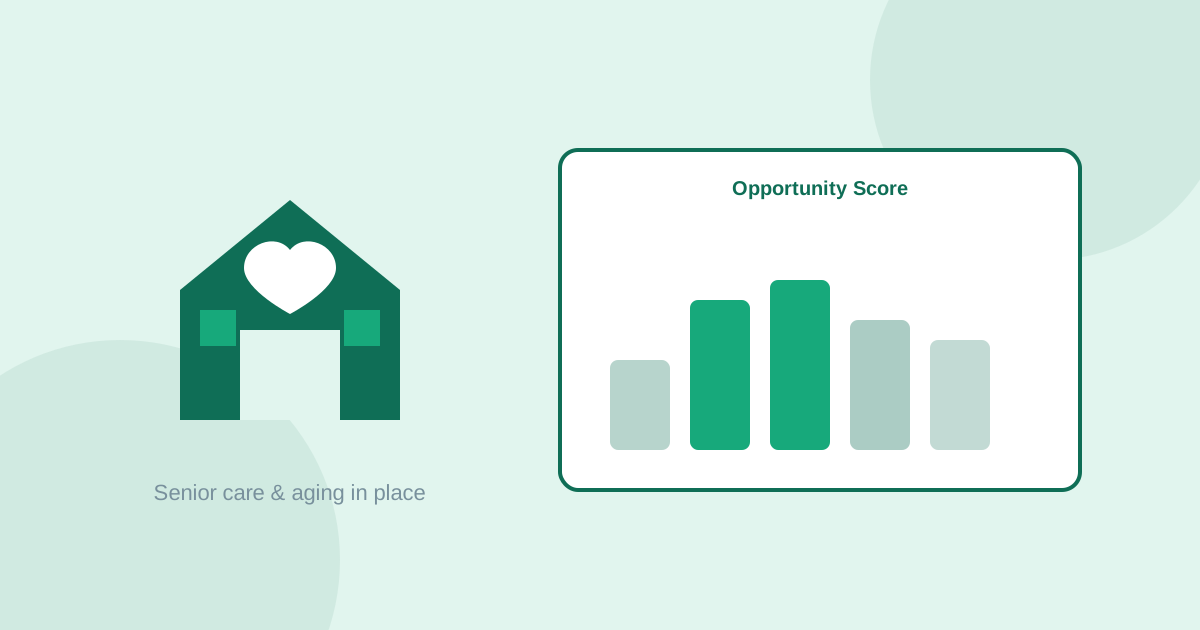
Comparing Opportunity Scores across these five themes, sibling care coordination and medication management score highest, both driven by high frequency, real safety stakes, and existing tools that solve the problem only partially. Long-distance caregiving visibility and honest home-modification guidance follow closely, each addressing a sharp, specific friction with light current competition built around the buyer's actual constraints. Medical alert adoption sits slightly behind, not because the pain is smaller, but because it is more of a design and dignity problem than a purely unmet feature gap.
The lesson for builders here mirrors what shows up in every caregiving-adjacent niche: the market is not underserved because nobody has built medical alerts, coordination apps or medication tools. It is underserved because most of what exists was designed around the anxious buyer rather than the older adult who has to use it every day, or around a single caregiver rather than the sibling group actually splitting the work. UserConcern lets you scan this kind of niche with evidence instead of assumptions, real quotes from both sides of the caregiving relationship. If you are exploring senior care, start with the complaint that shows up from both the caregiver and the person being cared for. That is usually where the real gap is.
Frequently asked questions
Is senior care and aging-in-place a good market to build a startup in right now?
The core product categories, medical alerts, medication management, home modifications and caregiving apps, already exist and are not short on competitors. The underserved gap is in how those categories are designed: most current products optimize for the anxious adult-child buyer rather than the older adult who has to use the product daily, which leaves real room for versions built around dignity and actual daily use.
Why do seniors stop using medical alert devices after buying them?
Reviews consistently point to the device feeling stigmatizing or overtly medical, combined with false alarms during normal movement and general daily annoyance. The purchase decision is usually made by an adult child managing their own anxiety, while the ongoing, daily decision to keep wearing the device belongs to the parent, and that mismatch is where adoption breaks down.
What is the biggest gap in caregiving coordination apps?
Families managing a parent's care across multiple adult siblings describe existing apps as either too clinical, built for paid professional caregivers, or too simple to handle shared, informal coordination among several unpaid family members. That specific middle ground, built for sibling groups rather than solo or professional caregivers, is where the clearest gap shows up.
How do I validate a senior care or aging-in-place product idea before building it?
Read caregiver communities on Reddit, Amazon reviews of adjacent existing products, and app store reviews of caregiving apps, looking for the same specific complaint appearing independently from both the caregiver's and the older adult's perspective. UserConcern automates that cross-checking across 8 sources in about 60 seconds and returns an opportunity score and a build-or-skip verdict.
Why does long-distance caregiving keep coming up as unsolved even with monitoring apps on the market?
Existing check-in and sensor-based monitoring products tend to solve for one side of the relationship at a time, giving the adult child visibility or respecting the parent's independence, but rarely both at once. Reviews from parents frequently describe feeling surveilled by the same products their adult children find reassuring, which is the unresolved tension keeping this pain point active.
More articles
 SaaS & Tech
How to Validate a SaaS Idea in 48 Hours (With Evidence, Not Opinions)
A step-by-step framework to validate a SaaS idea in one weekend using real customer complaints from 8 sources, with a worked example and a clear build-or-skip verdict.
Read article →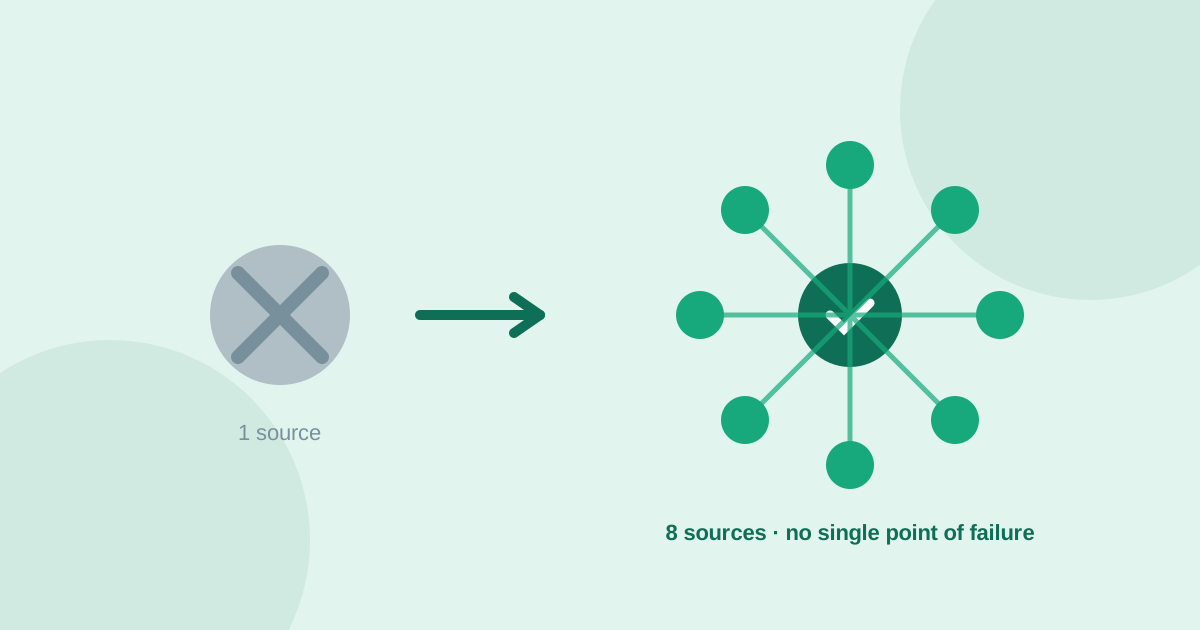 Market Research
Best GummySearch Alternatives in 2026 (Access Ends 30 November)
GummySearch closed to new customers in November 2025, and existing users lose access on 30 November 2026 with all data deleted the next day. Eight alternatives compared on real pricing, real sources, and which half of the job each one actually replaces.
Read article →