
Best Reddinbox Alternatives in 2026 (Multi-Platform Monitoring vs. Cross-Source Validation)
August 27, 2026 · 8 min read
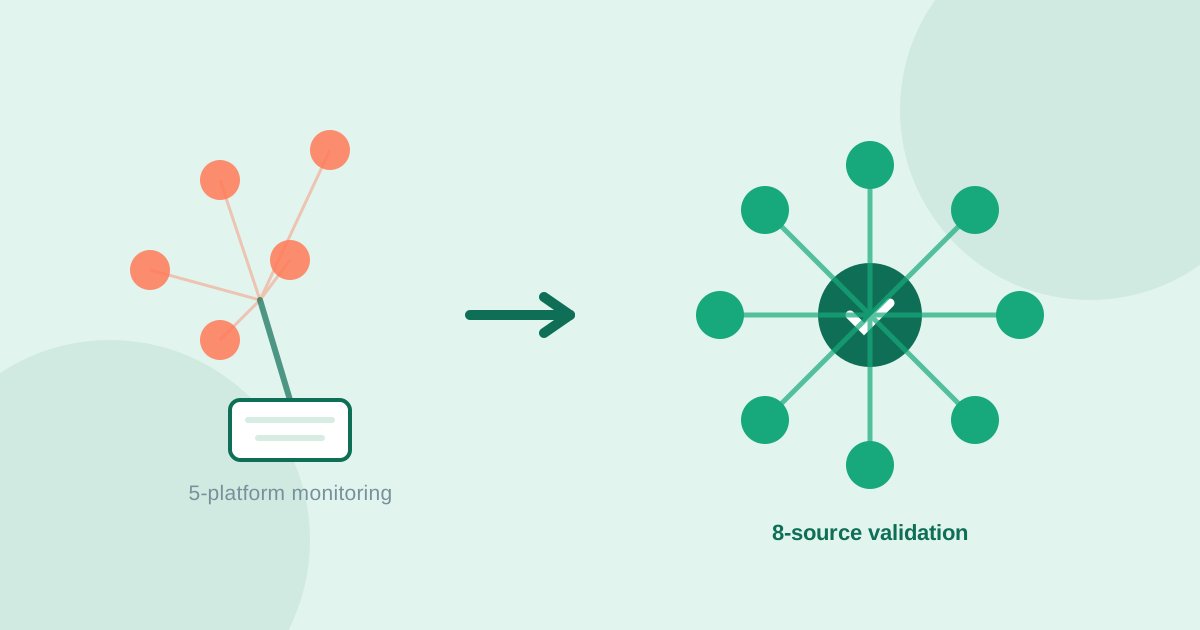
Reddinbox positions itself as an AI audience intelligence platform: ask a research question in plain language, and its agent searches across Reddit, X (Twitter), Bluesky, Hacker News and Facebook, filtering out spam, bots and AI-generated posts before the results reach you. Where a lot of pain-point tools lock onto Reddit alone, Reddinbox's pitch is breadth of social surface plus a standing research agent, not just a one-off scan.
This guide covers what Reddinbox actually includes, what its two pricing tiers unlock, where reading five social platforms at once is genuinely the right tool, and where multi-platform social monitoring still runs into the same wall every social-listening tool hits once the question changes from "what are people saying" to "should I build this."
What Reddinbox actually does
The core workflow is a natural-language research agent: you ask a question, and Reddinbox searches Reddit, X, Bluesky, Hacker News and Facebook for relevant posts and comments, groups the results by theme, and links back to the original source. A second mode runs continuous, always-on tracking of a community or topic rather than a single query, and the product leans on this distinction between one-off research and ongoing monitoring as its main framing. A stated feature across both modes is filtering: Reddinbox says it screens out spam, bots and AI-generated posts before they reach the results, which is a real and increasingly relevant problem as low-effort and AI-written filler spreads across forums and social feeds.
Pricing is a monthly subscription split into two tiers. Starter runs $39 a month for roughly 100 AI agent conversations, 3 Market Briefs, and Posts & Comments community monitoring across all five platforms. Pro runs $99 a month for roughly 266 conversations, 5 Market Briefs, and the same monitoring scope. Annual billing knocks off the equivalent of two months, and both tiers offer a free trial with no credit card required. Quora is listed on the site as a data source "coming soon," which means the current live coverage is Reddit, X, Bluesky, Hacker News and Facebook.
Where it's genuinely useful
For founders whose actual audience does not live on Reddit, Reddinbox's platform list is a real advantage. Hacker News carries a specific kind of developer-tool and infrastructure conversation Reddit rarely matches, and X and Bluesky carry fast-moving B2B, startup and creator-economy chatter that a Reddit-only tool structurally cannot see. Reading all five in one query, instead of running five separate manual searches, is a genuine time saver for anyone doing ongoing audience research rather than a single validation pass.
The spam, bot and AI-content filtering is also worth taking seriously on its own terms. Anyone who has manually searched Reddit or X for a niche topic recently has run into pages of low-effort, templated or AI-generated replies drowning out real opinions; a tool that explicitly screens for that before showing you results is solving a problem that did not exist to the same degree a few years ago. And the Market Briefs plus always-on monitoring mode suit a job that a one-time pain-point scan does not: tracking how a community's sentiment about a brand, competitor or topic shifts over weeks, not just capturing a single snapshot.
Where a monitoring tool hits a limit for validation
The platform list, while broader than a Reddit-only tool, still leaves out the sources where a large share of product complaints actually live: Amazon and other e-commerce reviews, YouTube comments, TikTok, Quora (until it ships), and Google Trends demand data. For a physical product, an Etsy listing, or a SaaS tool being compared against incumbents with public review pages, that gap matters, because some of the most specific and unfiltered pain-point language shows up in a three-star Amazon review or a YouTube comment reacting to a specific workflow, not in a Reddit thread or a tweet. A validation pass that never touches those sources can miss the exact evidence that would have separated a real gap from a social-media-only conversation.
The conversation-credit model is also worth flagging plainly. At roughly 100 to 266 AI agent conversations a month, Reddinbox is built for sustained, ongoing research on a chosen set of topics, not for rapidly testing a dozen different niche ideas in a single afternoon the way a pre-build validation pass often needs to. And because the product's own framing centers on audience intelligence and monitoring rather than a build-or-skip verdict, it does not score a pain point's severity against competition or output a recommendation; it hands you organized, sourced conversation data and leaves the judgment call to you.
What to use instead, depending on the job
If the job is ongoing social listening for an audience or brand you have already committed to, on the specific platforms where that audience actually talks, Reddinbox's multi-platform coverage and spam filtering make it a sensible, purpose-built choice. If the job is deciding whether an idea is worth building in the first place, that decision usually needs evidence from where people spend money and leave reviews, not only where they post opinions, which means review sites, e-commerce feedback and video comments belong in the mix alongside social chatter.
Where UserConcern fits
UserConcern is built for that second job. One search cross-checks 8 sources, including Reddit, Amazon reviews, YouTube, TikTok, Twitter/X, Quora, Google Trends and AI answers, in about 60 seconds, across 9 languages and 15 regions, and returns ranked pain points with the original quotes linked back to their source, an opportunity score, and a build-or-skip verdict. Where Reddinbox's strength is reading five social platforms continuously and filtering out the noise, UserConcern's strength is confirming whether the same complaint holds up outside social media entirely, in the reviews and videos where people describe problems they have already paid to try and fail to solve.
The honest way to choose: if your audience already lives on Reddit, X, Bluesky, Hacker News or Facebook and you want an ongoing read on what they are saying with spam filtered out, Reddinbox is well-matched to that job. If you are trying to decide whether to spend the next month building something, cross-source validation that includes review sites and video comments, not just social platforms, is the check that catches the gap a social-only search cannot see. Some founders reasonably use both in sequence: a cross-source search to confirm the pain point is real beyond social media, then ongoing monitoring on the platforms where the target audience actually gathers once the direction is set.
Frequently asked questions
What is Reddinbox?
Reddinbox is an AI audience intelligence platform that searches Reddit, X (Twitter), Bluesky, Hacker News and Facebook for relevant conversations, filters out spam, bots and AI-generated posts, and groups results by theme with linked sources. It offers both on-demand natural-language research and continuous, always-on monitoring of a topic or community.
How much does Reddinbox cost?
Reddinbox uses monthly subscription pricing: Starter is $39 a month for roughly 100 AI agent conversations and 3 Market Briefs, and Pro is $99 a month for roughly 266 conversations and 5 Market Briefs. Both tiers cover the same five platforms and include a free trial with no credit card required. Annual billing includes two months free.
Does Reddinbox cover Amazon reviews or YouTube comments?
No. Reddinbox's current data sources are Reddit, X, Bluesky, Hacker News and Facebook, with Quora listed as coming soon. It does not cover Amazon reviews, YouTube comments, TikTok or Google Trends, which means product complaints that live specifically in reviews or video comments are outside its reach.
What is the main difference between Reddinbox and UserConcern?
Reddinbox reads five social platforms continuously and filters out spam and bot content, built primarily for ongoing audience monitoring. UserConcern cross-checks 8 sources in a single search, including Reddit, Amazon reviews, YouTube, TikTok, Quora, X, Google Trends and AI answers, and returns an opportunity score and a build-or-skip verdict, built for deciding whether a specific idea is worth pursuing before you commit time to it.
Should I use a social-monitoring tool or a cross-source validation tool first?
Cross-source validation is the stronger first step when you are still deciding whether to build something, because it checks whether a pain point holds up beyond social media, in reviews and videos where people describe problems they already paid to solve. A social-monitoring tool like Reddinbox is a strong next step once the direction is set, for tracking ongoing sentiment on the specific platforms your audience actually uses.
More articles
 Market Research
Best GummySearch Alternatives in 2026 (Access Ends 30 November)
GummySearch closed to new customers in November 2025, and existing users lose access on 30 November 2026 with all data deleted the next day. Eight alternatives compared on real pricing, real sources, and which half of the job each one actually replaces.
Read article → Market Research
How to Identify Customer Pain Points: 7 Methods That Actually Work
Customer pain points are the raw material of every successful product. Here are 7 practical methods to find them, from free manual research to AI-powered analysis.
Read article →