
Best Reddily Alternatives in 2026 (Reddit-Only Analysis vs. Cross-Source Validation)
August 17, 2026 · 8 min read
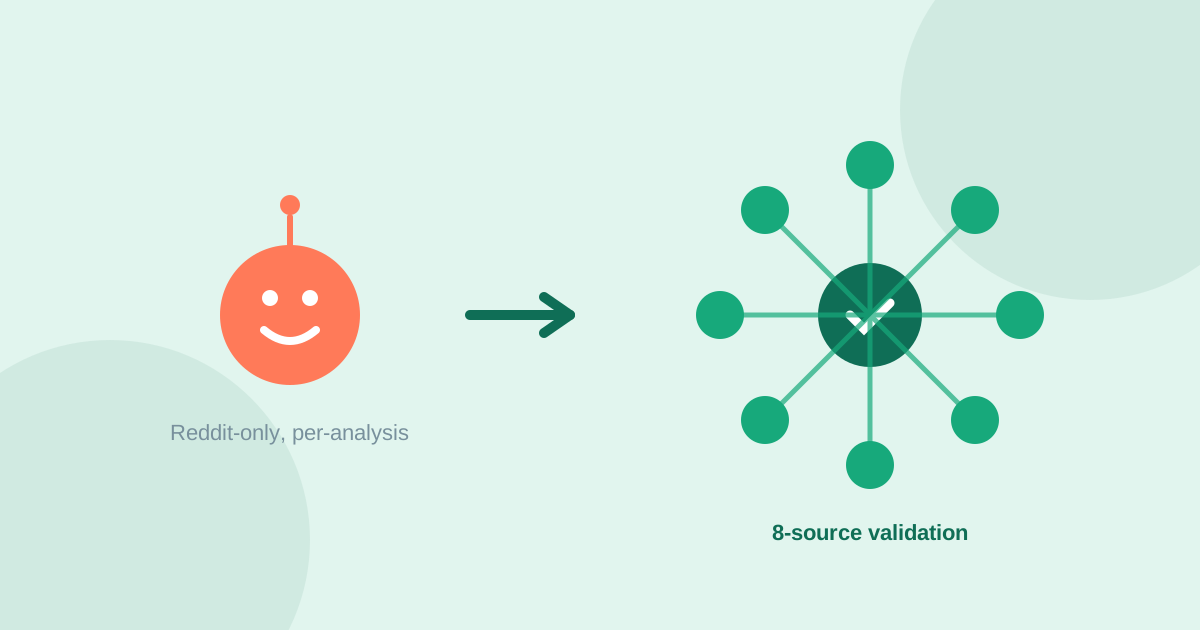
Reddily is one of the newer entrants in Reddit analysis, and its pitch is refreshingly narrow: point it at a subreddit, a keyword, or a specific thread, and it returns sentiment, pain points, feature requests and competitor mentions in under 30 seconds, priced per analysis instead of by subscription. That combination of speed and pay-as-you-go pricing makes it worth a closer look, especially for anyone who found GummySearch's shutdown or a competitor's monthly plan frustrating for different reasons.
This guide covers what Reddily actually does, where its Reddit-only, credit-based design is a genuine strength, and where the same design becomes a limitation the moment your question stops being about Reddit specifically and starts being about whether a pain point is a real market.
What Reddily actually does
Reddily is built around a single core action: feed it a subreddit, a keyword search, or a specific thread URL, and its AI extracts sentiment, pain points, feature requests, competitor mentions and supporting quotes, then automatically sorts the findings into themes such as feature requests, bug reports, usability issues, pricing concerns and positive experiences. Results are exportable to PDF. A batch analysis mode lets you search a keyword across Reddit, select the threads that look relevant, and get one combined report instead of running the tool thread by thread. A Chrome extension extends the same analysis to whatever Reddit thread you happen to be reading, which is a genuinely convenient touch for anyone who does a lot of ad hoc research while browsing rather than running planned searches.
Pricing is pay-per-analysis rather than a monthly subscription: new accounts get 5 free credits with no card required, and credit packs run from $2.99 for 10 credits up to $49.99 for 500, averaging out to roughly $0.10 to $0.30 per analysis depending on the pack size. Credits do not expire, and there is no subscription running in the background whether or not you use it that month.
Where it's genuinely useful
For anyone whose research question is specifically about Reddit, Reddily is a well-built, low-friction tool. The Chrome extension in particular solves a real workflow problem: most research tools require you to leave the page, copy a URL, and run a separate search, while Reddily lets you analyze a thread the moment you land on it. The theme auto-categorization (feature requests versus bug reports versus pricing concerns) is more structured than a raw list of quotes, and useful specifically for product teams triaging feedback about their own product rather than founders scouting a brand-new niche. The pay-per-analysis model is also a real advantage for infrequent or exploratory use: someone who wants to check in on a handful of subreddits once a month has no reason to carry a recurring subscription, and 5 free credits is enough to get a genuine feel for the output before spending anything.
Where a Reddit-only tool hits a ceiling
The limitation is the same one that applies to every Reddit-only research tool, regardless of how well it is built: Reddit is one platform, with one demographic skew, one culture, and one set of communities that self-select for a particular kind of user. A pain point that looks significant inside a subreddit's analysis can be a genuine market gap, or it can be an artifact of that specific community's obsessions, and a tool that only ever looks at Reddit has no way to tell you which. This is not a criticism unique to Reddily; it is the structural ceiling of single-platform research, the same one that made GummySearch's entire business vulnerable to one Reddit API pricing decision. Reddily's pay-per-analysis pricing insulates the founder from part of that risk (you are not locked into a subscription for a tool a platform change could hobble), but it does not insulate the research itself, because the underlying data source is still exactly one platform.
GummySearch users still logged in should read which tools replace GummySearch before 30 November 2026, when remaining accounts are closed and the stored data is deleted.
There is a second, more practical limitation for early-stage validation specifically: Reddily's workflow assumes you already know which subreddit, keyword or thread to analyze. That is an efficient way to go deep once you have a hypothesis, but it does not help much at the earlier stage of deciding which niche or which pain point to investigate in the first place, when you are still casting a wide net rather than confirming a specific thread you already found.
What to use instead, depending on the job
If your job is monitoring your own product's Reddit mentions, triaging feedback threads into feature requests versus bug reports, or doing a quick, one-off sentiment check on a specific subreddit before a launch, Reddily's speed, Chrome extension and pay-per-analysis pricing make it a sensible, low-commitment choice for exactly that job.
If your job is deciding whether a pain point is a real, buildable market before you spend weeks or months on it, a single platform's sentiment, however well-analyzed, is not enough evidence on its own. What that job needs is the same complaint checked against Reddit and several structurally independent sources, so a subreddit's obsession and a genuine cross-market pattern stop looking identical.
Where UserConcern fits
UserConcern is built for that second job. One search cross-checks 8 sources, including Reddit, Amazon reviews, YouTube, TikTok, Twitter/X, Quora, Google Trends and AI answers, in about 60 seconds, in 9 languages across 16 regions, and returns ranked pain points with the original quotes linked back to their source, an opportunity score, and a build-or-skip verdict. Where Reddily's strength is fast, structured, low-cost analysis of a Reddit thread or subreddit you already have your eye on, UserConcern's strength is confirming whether a pain point survives outside Reddit altogether, which is the question that actually determines whether an idea is worth building.
The honest way to choose: if you are monitoring or triaging feedback about something that already exists on Reddit, or want a fast, cheap sentiment check on a specific thread, Reddily's Reddit-only, pay-per-analysis approach is well-matched to that job. If you are deciding whether to build something in the first place, cross-source validation is the step that has to happen before a single-platform deep dive, not instead of it. Many founders reasonably use both in sequence: a broad cross-source search to find and confirm the opportunity, then a focused Reddit-only tool like Reddily once you know exactly which thread or community you want to watch.
Frequently asked questions
What is Reddily?
Reddily is an AI-powered Reddit analysis tool that extracts sentiment, pain points, feature requests, competitor mentions and quotes from a subreddit, keyword search, or specific thread in under 30 seconds. It includes a Chrome extension for analyzing threads while browsing, a batch mode for combining multiple threads into one report, and automatic categorization into themes like feature requests, bug reports and pricing concerns.
How much does Reddily cost?
Reddily uses pay-per-analysis pricing rather than a subscription: 5 free credits on signup with no card required, then credit packs from $2.99 for 10 credits up to $49.99 for 500, averaging roughly $0.10 to $0.30 per analysis. Credits do not expire and there is no recurring charge.
Is Reddily only for Reddit, like GummySearch was?
Yes. Reddily analyzes Reddit exclusively, the same single-platform architecture that made GummySearch vulnerable when Reddit's API pricing changed. Reddily's pay-per-analysis pricing reduces the financial risk of that dependency for the user, but it does not change the underlying research limitation: a pain point it surfaces could be a genuine market gap or a Reddit-specific quirk, and the tool cannot tell you which because it only ever looks at one platform.
What is the main difference between Reddily and UserConcern?
Reddily runs fast, structured sentiment and pain-point analysis on a Reddit thread, subreddit or keyword you already have in mind, priced per analysis. UserConcern cross-checks 8 sources, including Reddit, Amazon reviews, YouTube, TikTok, Quora, X, Google Trends and AI answers, in 9 languages, and is built for the earlier question of whether a pain point is a real market at all, not just what a specific Reddit thread says about it.
More articles
 Market Research
Best GummySearch Alternatives in 2026 (Access Ends 30 November)
GummySearch closed to new customers in November 2025, and existing users lose access on 30 November 2026 with all data deleted the next day. Eight alternatives compared on real pricing, real sources, and which half of the job each one actually replaces.
Read article → Market Research
How to Identify Customer Pain Points: 7 Methods That Actually Work
Customer pain points are the raw material of every successful product. Here are 7 practical methods to find them, from free manual research to AI-powered analysis.
Read article →