
Best Preuve AI Alternatives in 2026 (One-Time Viability Report vs. Ongoing Cross-Source Research)
September 17, 2026 · 9 min read
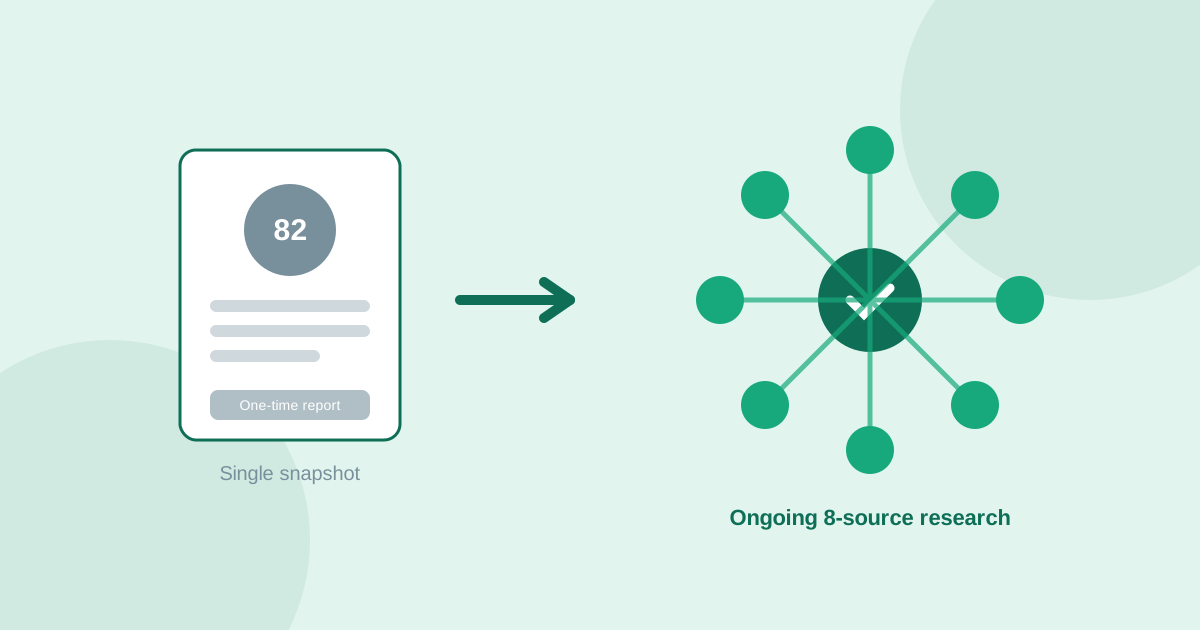
If you're comparing Preuve AI against other validation tools, you're likely trying to answer one of two things: how strong is this specific idea on paper, scored and benchmarked against comparable startups, or is there a real, underserved pain point here at all, described in the actual words of the people who have it. Preuve AI is built specifically for the first question, and it does that job with more source breadth than most tools in the category. It's worth understanding exactly what the report contains before deciding whether it also answers the second question.
What Preuve AI actually does
Preuve AI generates a startup viability report by running automated research across a claimed 60+ live data sources, spanning source families like Reddit and Hacker News for community sentiment, SEC EDGAR and funding databases for capital and regulatory context, and market research firms and trade publications for sizing. Every claim in the report links back to the source it came from, which is a genuinely useful trust feature in a category where AI-generated market analysis often reads confidently and cites nothing.
The free Reality Check tier returns a viability score, a market size overview and two competitor previews in about 60 seconds, no card required. The paid Founder Report is $29 one-time for an 18-section analysis: up to 15 mapped competitors with pricing detail, a go-to-market plan, demand signals, source-linked evidence throughout, three AI-generated pivot directions, and unlimited follow-up starter scans. Multi-report packs bring the per-report cost down, 5 reports for $95 or 10 for $159, and a Radar Pro subscription at $19/month adds monthly competitive re-scans so a report doesn't go stale the week after you buy it. An Investor-Ready Package at $499 one-time adds a pitch deck, an investment memo and a financial model, and Lifetime Pro ($499) and Lifetime Business ($999) plans exist for people who expect to run this kind of analysis repeatedly across multiple ideas.
Where it's genuinely useful
The source-linking is the standout feature. Most AI idea-validation tools produce a confident paragraph and nothing you can check. Preuve AI's model of citing SEC filings, funding databases and named publications alongside Reddit threads means a founder can actually click through and verify a claim before repeating it to an investor. The competitor mapping with real pricing and funding detail is also a genuinely useful shortcut, since manually building a competitor set with funding history normally takes hours of separate Crunchbase and Google searching. For a founder who wants a single, structured document to sanity-check an idea before pitching it to a co-founder, an accelerator, or an early investor, the Founder Report is a fast, well-evidenced starting point.
Where the one-time report model hits a ceiling
The limitation isn't the source count, which is broad. It's the format. A viability report is a snapshot: you describe your idea to the tool, it researches around that description, and it hands back a score and a document. That works well when you already have a specific idea articulated well enough to summarize in a prompt. It works less well for the earlier, messier stage of validation, where the job isn't scoring an idea you've already written down, it's discovering which pain point is worth writing down in the first place by reading how real people describe their frustration, unprompted, in their own words.
There's also a coverage gap on the consumer side. Preuve AI's source families lean toward business and market intelligence, funding data, regulatory filings, trade publications, plus Reddit, Hacker News, Product Hunt and G2 for community and software-review sentiment. That's a strong footprint for SaaS and startup-shaped ideas, but it's thin for a physical product or a consumer app, where the real complaint density lives in Amazon reviews, YouTube comments and TikTok comments, sources a B2B-leaning research stack typically doesn't reach. The product also doesn't publish claims about multilingual or multi-region coverage, so validation outside English-speaking markets is unlikely to be well represented in a generated report.
What to use instead, depending on the job
If the job is producing a structured, source-linked document to evaluate or pitch an idea you've already defined, with real competitor and funding data behind it, Preuve AI's report format is a well-built, purpose-made choice. If the job is the step before that, figuring out which pain point is real, common and underserved enough to define an idea around in the first place, a scored report generated from a short description isn't the right instrument, because it starts from your hypothesis rather than testing whether the hypothesis exists in the wild at all.
Where UserConcern fits
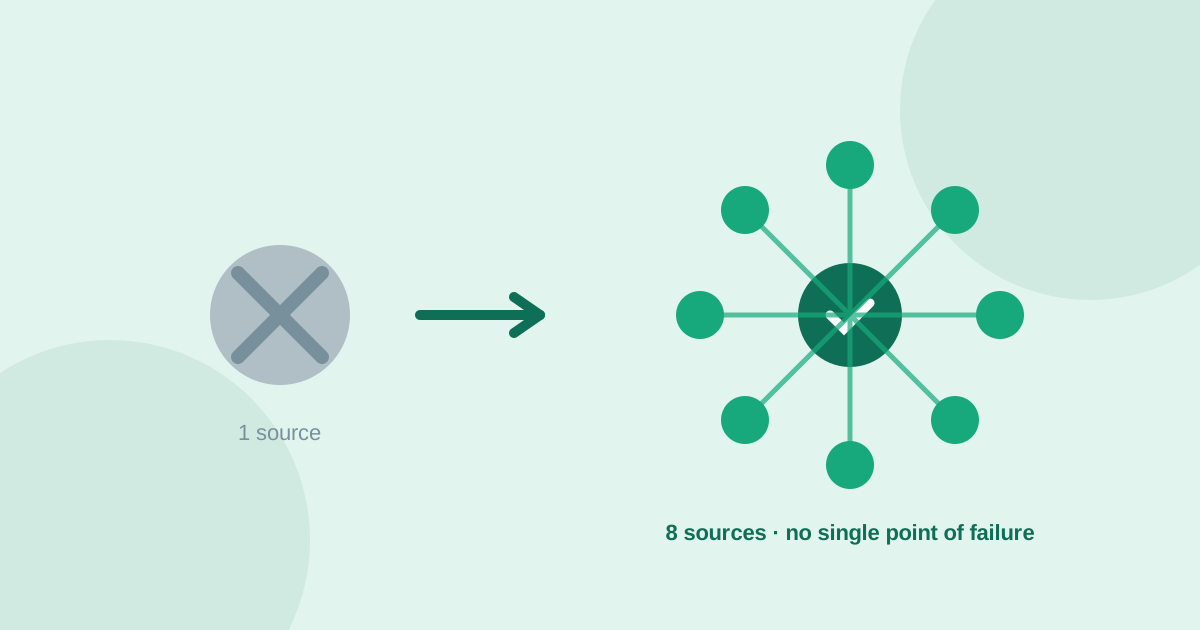
UserConcern is built for that earlier job. One search cross-checks 8 sources, Reddit, Amazon reviews, YouTube, TikTok, Twitter/X, Quora, Google Trends and AI answers, in about 60 seconds, in 9 languages across 16 regions, and returns ranked pain points with the original quotes linked back to their source, an opportunity score, and a build-or-skip verdict. It deliberately includes the consumer-facing, review-and-video sources a business-intelligence-leaning research stack tends to skip, because that's where unprompted product-level frustration, not funding history or market sizing, actually lives.
The honest way to choose: if you already have an idea defined and want a structured, evidence-linked report with competitor and funding detail to sanity-check or pitch it, Preuve AI is built for exactly that. If you're still working out which pain point is real enough to build an idea around, cross-source complaint research is the step that comes first, and the two tools slot into sequence well, mine for the pain point with one, then score the resulting idea with the other.
Frequently asked questions
What is Preuve AI?
Preuve AI is a startup idea validation tool that generates a scored viability report from a short description of your idea, researching across a claimed 60+ live data sources including Reddit, Hacker News, SEC filings, funding databases and market research publications, with every claim linked back to its source. A free Reality Check gives a quick score; the $29 one-time Founder Report adds an 18-section analysis with competitor mapping and pivot suggestions.
Is Preuve AI good for finding a pain point before I have an idea?
It's built for a later step: scoring and researching around an idea you can already describe in a prompt. It isn't designed to surface unprompted, real-world complaint language the way a search across Reddit threads, Amazon reviews and YouTube comments does, which is the raw material for discovering a pain point in the first place rather than validating one you've already defined.
What is the main difference between Preuve AI and UserConcern?
Preuve AI takes a short description of an idea you already have and returns a scored, source-linked report drawing on business and funding data alongside community sentiment. UserConcern cross-checks 8 sources, including consumer-facing platforms like Amazon reviews, YouTube and TikTok that a business-intelligence-leaning stack doesn't reach, to surface and validate a pain point before you've written the idea down.
Can I use both an AI report tool and a pain-point research tool?
Yes, and the sequence matters: research the raw complaint data first to find a pain point that's real, common and underserved, then use a report-generation tool to score, benchmark and document the resulting idea once it's specific enough to summarize. Using a scoring tool first risks scoring a hypothesis nobody actually described.
More articles
 Market Research
Best GummySearch Alternatives in 2026 (Access Ends 30 November)
GummySearch closed to new customers in November 2025, and existing users lose access on 30 November 2026 with all data deleted the next day. Eight alternatives compared on real pricing, real sources, and which half of the job each one actually replaces.
Read article → Market Research
How to Identify Customer Pain Points: 7 Methods That Actually Work
Customer pain points are the raw material of every successful product. Here are 7 practical methods to find them, from free manual research to AI-powered analysis.
Read article →