
How to Mine Pinterest for Real Customer Pain Points (Step-by-Step Guide)
October 15, 2026 · 7 min read

Pinterest does not look like a complaint platform. There are no one-star reviews, no angry threads and barely any comments on most pins. What it has instead is something most pain-point research ignores: millions of people typing exactly what they are trying to solve into a search bar, then saving the pins that promise a fix. That search behavior is a demand signal in its own right, separate from the sentiment-based signals Reddit or Amazon reviews give you.
This guide covers how to read Pinterest for product opportunities and pain points, where the rare direct complaints actually live, and why this platform tells you what people want before they can describe what is wrong with the thing they currently have.
Step 1: read search suggestions as an unmet-need map
Open Pinterest search and type a broad category term, then stop and read the autocomplete suggestions and the related-search pills that appear below the results. These are generated from what millions of users actually typed, and they skew toward problems rather than products: small bathroom storage ideas for renters, meal prep for picky toddlers, desk setup for small bedroom. A suggestion that pairs a product category with a constraint (small, renter-friendly, budget, for beginners) is a founder describing a segment for free. Note which constrained searches return mostly generic, unhelpful pins; that gap between search volume and pin quality is itself a signal.
Step 2: mine board names and pin titles for the workaround language
Because Pinterest users curate boards for their future selves, board names tend to be blunt about the problem behind them: small kitchen hacks, tiny closet organization, things that actually work for oily skin. Scroll the pins saved to a popular board in your niche and read the pin titles and descriptions people wrote themselves, not the ones a brand published. DIY and hack-style pins are the richest source, because someone only builds a workaround and photographs it when no product on the market already does the job. A recurring DIY fix for the same underlying problem is a louder signal than a single Amazon review saying the same thing, because it proves multiple people independently decided to solve it themselves.
Step 3: read the rare comments closely, they are self-selected for strong opinions
Most pins get zero comments. The pins that do get comments tend to attract them because something about the pin provoked a strong reaction: does this actually work, where do you get this because the linked page is gone, this looks nice but mine fell apart in a week. Because commenting at all is unusual on this platform, a comment thread with more than a handful of replies is worth reading in full. Pay attention to dead or redirected links mentioned in comments; a popular pin whose linked product or tutorial has disappeared is indirect evidence that whatever it promised never shipped at scale, which can itself be the opportunity.
Step 4: check seasonal and trend timing against Pinterest Trends
Pinterest's own Trends tool shows rising search terms months ahead of when they peak, because users plan holidays, renovations and purchases on this platform well in advance of buying. A term climbing in Pinterest Trends three to six months before a relevant season is a useful early read on what demand is about to look like, but it should never stand alone. Treat a rising Pinterest search term as a hypothesis to confirm elsewhere, not as proof of a market, since search curiosity and purchase intent are not the same thing on a platform built around inspiration rather than transactions.
The trap: aspiration without friction
Pinterest's single biggest distortion is that it is a platform for the life someone wants, not the life they have, so pins and boards systematically under-represent friction, cost and the step where the plan falls apart. A board full of saved pins for a home gym setup tells you what people want to build, not what stopped them from building it yet, and that missing half is usually where the real opportunity sits. Treat every Pinterest signal as the top of a funnel: it tells you what people are dreaming about and searching for, and you still need a source where people describe what went wrong once they tried.
Putting it together
Pinterest earns its place in a validation process as an early-stage search and intent signal, not as a complaint source like Reddit or Amazon reviews. Use it to find constrained search phrases and recurring DIY workarounds, then check whether the same underlying frustration shows up as an explicit complaint on Amazon, Reddit or YouTube once people have actually bought and tried to use something. A need that shows up as aspiration on Pinterest and as a specific, worded complaint somewhere else is a stronger bet than either signal alone. UserConcern runs that cross-check automatically across Reddit, Amazon reviews, YouTube, TikTok, X, Quora, Google Trends and AI answers in about 60 seconds, so a pin board full of wishful thinking gets checked against what buyers actually say once the product is in their hands.
Frequently asked questions
Is Pinterest useful for finding customer pain points?
It is useful for finding unmet needs and search intent rather than direct complaints, since comments are rare and most content skews aspirational. The strongest signals are constrained search suggestions, recurring DIY workaround pins, and the handful of comment threads that do form, which tend to concentrate strong opinions.
Where on Pinterest should I look first?
Start with autocomplete and related-search suggestions for your broad category, since they reflect what millions of users actually typed. Then read board names and pin titles inside the most-saved boards in your niche, focusing on DIY and hack-style pins, which only get made when no existing product solves the problem.
Why does Pinterest research need a second source to confirm it?
Pinterest is built around aspiration, so it systematically under-represents friction, cost and the point where a plan falls apart. A search term or board trending on Pinterest tells you what people want, not what is wrong with what they already tried, so it needs to be checked against a complaint-based source like Amazon reviews or Reddit before you treat it as validated demand.
How do I confirm a Pinterest trend is a real opportunity?
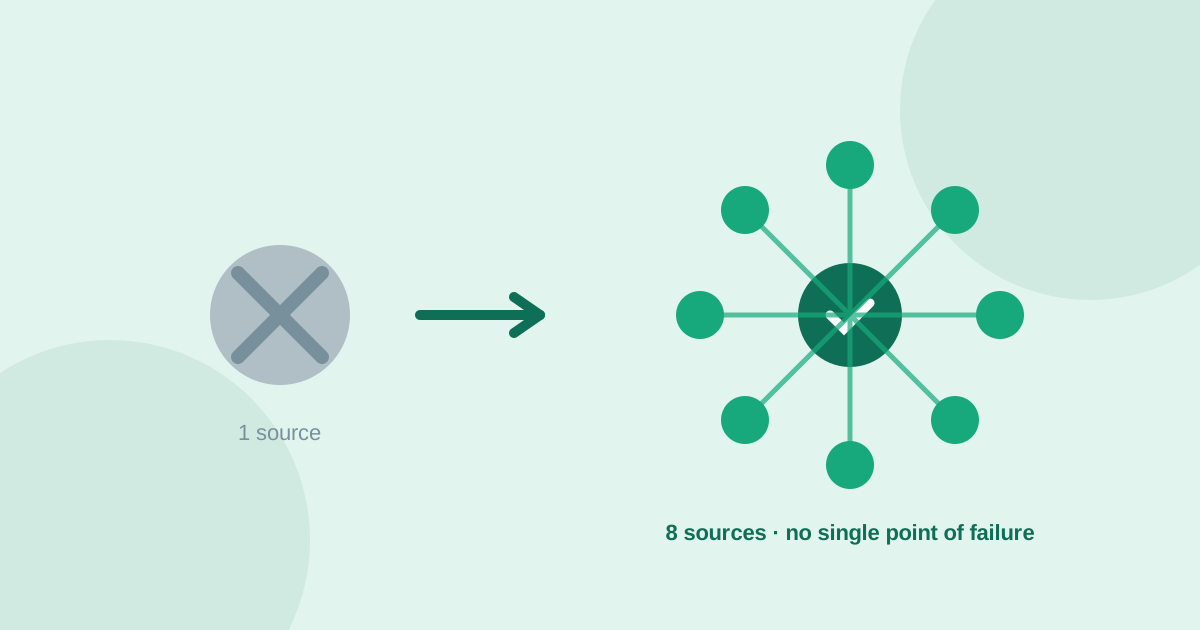
Check whether the same underlying need shows up as a specific, worded complaint on at least one other platform once people have actually bought or tried something in that category. UserConcern automates this cross-check across 8 sources in about 60 seconds, so a rising Pinterest search term only ranks highly when real buyer frustration backs it up elsewhere.
More articles
 Market Research
Best GummySearch Alternatives in 2026 (Access Ends 30 November)
GummySearch closed to new customers in November 2025, and existing users lose access on 30 November 2026 with all data deleted the next day. Eight alternatives compared on real pricing, real sources, and which half of the job each one actually replaces.
Read article → Market Research
How to Identify Customer Pain Points: 7 Methods That Actually Work
Customer pain points are the raw material of every successful product. Here are 7 practical methods to find them, from free manual research to AI-powered analysis.
Read article →