
Best PainMap Alternatives in 2026 (Two Multi-Source Tools, Different Jobs)
August 13, 2026 · 8 min read
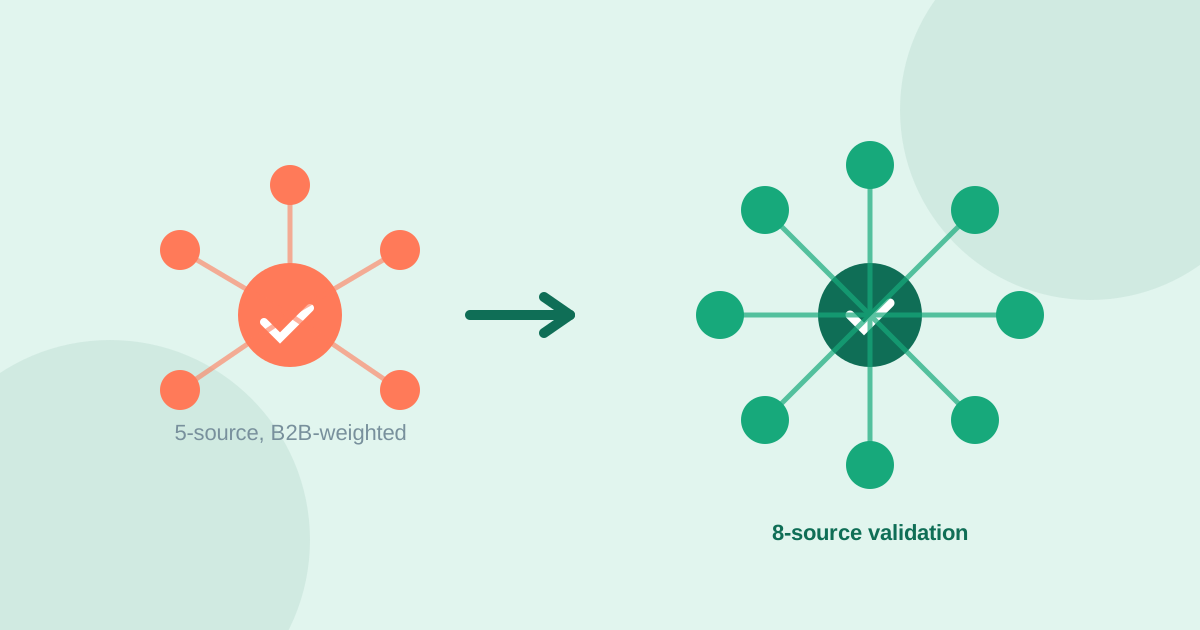
Most comparisons in this category are easy: a single-platform tool built entirely on Reddit versus a tool that checks several sources. PainMap is a more interesting comparison, because it is not a single-source tool either. It analyzes Reddit, X, G2, Capterra and Trustpilot in parallel, and it packages the output into a complete go-to-market brief rather than just a list of quotes. That makes this comparison less about single-source risk and more about two different multi-source products built around different jobs and different pricing philosophies.
This guide explains what PainMap actually does, where its five-source, credit-based, brief-generating approach is a genuine strength, and where its scope and pricing model differ from a broader, subscription-based cross-source search like UserConcern.
What PainMap actually does
PainMap is a market validation platform built around a single workflow: submit a product concept, and it runs parallel research across five platforms — Reddit, X, G2, Capterra and Trustpilot — rather than examining one source at a time. From that research it produces a competitor gap analysis, extracting patterns specifically from low-star reviews to surface unmet needs, and a willingness-to-pay pricing recommendation derived from real conversations about cost and value. The output is packaged as a complete brief: feature prioritization, a pricing strategy, and landing page copy described as ready to publish. Pricing is credit-based rather than a subscription: a Starter tier is $29 for 3 credits, a Builder tier (labeled the most popular option) is $79, and a Studio tier is $199 for 10 credits. Credits are a shared currency usable across analysis runs, MVP briefs, or landing page copy generation, and the site states they never expire.
Where it's genuinely useful
For anyone validating a B2B software idea specifically, PainMap's source mix is a real advantage over a Reddit-only competitor: G2, Capterra and Trustpilot are review platforms built entirely around people who already pay for software and are specific about which feature let them down, which is a different and often more actionable complaint than a general forum post. Pairing that with X for real-time sentiment and Reddit for open discussion gives PainMap a genuinely broad base for the B2B SaaS use case in particular. The output format is also a real differentiator: most tools in this category stop at a ranked list of pain points, while PainMap continues on to a pricing recommendation and landing page copy, which shortens the distance between research and a first draft you could actually ship. For founders who dislike recurring subscriptions, the one-time, non-expiring credit model is a genuine point in its favor over a monthly plan that runs whether or not you used it.
Where a five-source, credit-based tool hits a ceiling
The gap is not architecture, which is genuinely multi-source and therefore not exposed to the single-platform risk that ended GummySearch. It is coverage and scope. PainMap's five sources are weighted toward B2B software and X sentiment; none of Reddit, X, G2, Capterra or Trustpilot is where consumers describe frustration with a physical product's packaging, an app's onboarding flow, or a purchase they regretted the way Amazon reviews, YouTube comments, TikTok comments and Quora questions routinely do. A founder validating a consumer product, an e-commerce niche, a content business or a service brand will find comparatively thin signal in PainMap's source mix, because that is largely not where those buyers complain. The site does not make claims about multilingual or multi-region coverage either, so a non-English-speaking market is unlikely to be well represented in what it surfaces.
If GummySearch was your starting point, these eight replacements are the current field, including the free ones and where each falls short.
The credit-based pricing is a genuine strength for someone who wants to run one deep, one-time analysis on a single idea. It is a weaker fit for the earlier, more exploratory stage of research, where a founder is still comparing several candidate niches and wants to run several quick searches before committing credits to a full brief; at $29 for three credits, casually testing five or six loose ideas costs more, and behaves differently, than a plan built around a free recurring search.
What to use instead, depending on the job
If your job is validating a specific B2B software idea and you want a single, thorough pass that ends in a pricing recommendation and landing page copy you can publish, PainMap's combination of software-review sources and brief-generation is a well-built, purpose-made choice, and its one-time pricing suits a founder who wants to pay once for one serious analysis. If your job is validating a consumer product, an e-commerce niche, a service business, or an idea in a market that is not English-speaking, or if you are still comparing several candidate niches before committing to one, a broader source mix and a model built for repeated, lower-friction searches fits that earlier stage better.
Where UserConcern fits
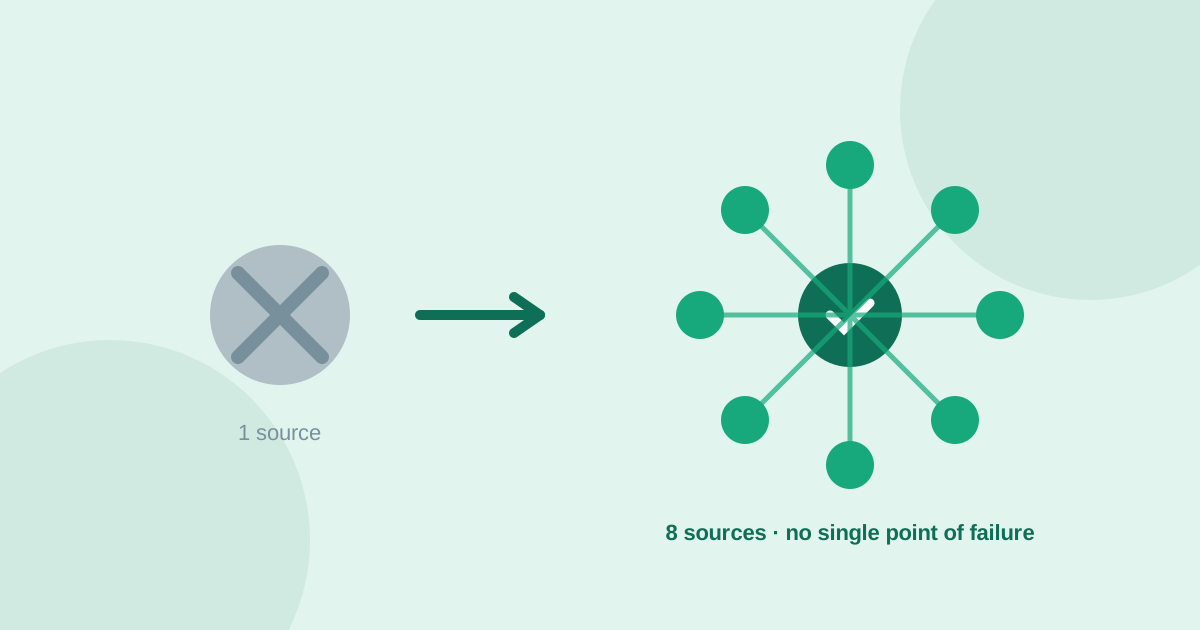
UserConcern cross-checks 8 sources — Reddit, Amazon reviews, YouTube, TikTok, Twitter/X, Quora, Google Trends and AI answers — in about 60 seconds, in 9 languages across 16 regions, and returns ranked pain points with the original quotes linked back to their source, an opportunity score, and a build-or-skip verdict. Where PainMap's strength is a deep, brief-generating pass weighted toward B2B software and X, UserConcern's strength is broader coverage across consumer and B2B sources alike, plus a free plan with one full search per month, which suits the earlier stage of comparing candidate niches before spending on a deep, one-time analysis of the one you pick.
The honest way to choose: if you already know your idea is B2B software and you want one thorough, one-time pass that ends in pricing and landing page copy, PainMap's approach is well-built for exactly that. If you are still deciding which niche to pursue, or your idea is consumer-facing, e-commerce, or aimed at a non-English market, a broader cross-source search is the better fit for that stage. Some founders reasonably use both in sequence: a broad cross-source search to find and narrow down the idea, then a deeper, brief-generating pass once the niche is chosen.
Frequently asked questions
What is PainMap?
PainMap is a market validation platform that analyzes Reddit, X, G2, Capterra and Trustpilot in parallel to produce a competitor gap analysis, a willingness-to-pay pricing recommendation, and a complete brief including feature prioritization and landing page copy. Pricing is credit-based rather than subscription: $29 for 3 credits (Starter), $79 (Builder), or $199 for 10 credits (Studio), with credits that never expire.
Is PainMap only for Reddit, like other pain-point tools?
No. Unlike Reddit-only tools, PainMap draws from five platforms, including B2B software review sites like G2, Capterra and Trustpilot alongside Reddit and X, which is a genuine strength for validating B2B SaaS ideas specifically. It is not built for consumer-facing sources like YouTube, TikTok or Quora, so it carries less signal for consumer products, e-commerce or service businesses.
What is the main difference between PainMap and UserConcern?
PainMap runs a deep, one-time credit-based analysis across five sources weighted toward B2B software review platforms, and outputs a full brief with pricing and landing page copy. UserConcern cross-checks 8 sources including consumer-facing platforms like YouTube, TikTok and Quora that PainMap does not draw from, in 9 languages across 16 regions, with a free monthly search suited to comparing several candidate niches before committing to one.
Should I use PainMap or a broader cross-source tool?
If you already know your idea is B2B software and want one thorough pass that ends in pricing and ready-to-publish landing page copy, PainMap's focused approach is a strong fit. If you are still comparing candidate niches, validating a consumer or e-commerce idea, or researching a non-English-speaking market, a broader source mix with a lower-friction, repeatable search fits that earlier stage better.
More articles
 Market Research
Best GummySearch Alternatives in 2026 (Access Ends 30 November)
GummySearch closed to new customers in November 2025, and existing users lose access on 30 November 2026 with all data deleted the next day. Eight alternatives compared on real pricing, real sources, and which half of the job each one actually replaces.
Read article → Market Research
How to Identify Customer Pain Points: 7 Methods That Actually Work
Customer pain points are the raw material of every successful product. Here are 7 practical methods to find them, from free manual research to AI-powered analysis.
Read article →