
Best PainBase Alternatives in 2026 (3-Platform Gap Scoring vs. Cross-Source Validation)
September 3, 2026 · 8 min read
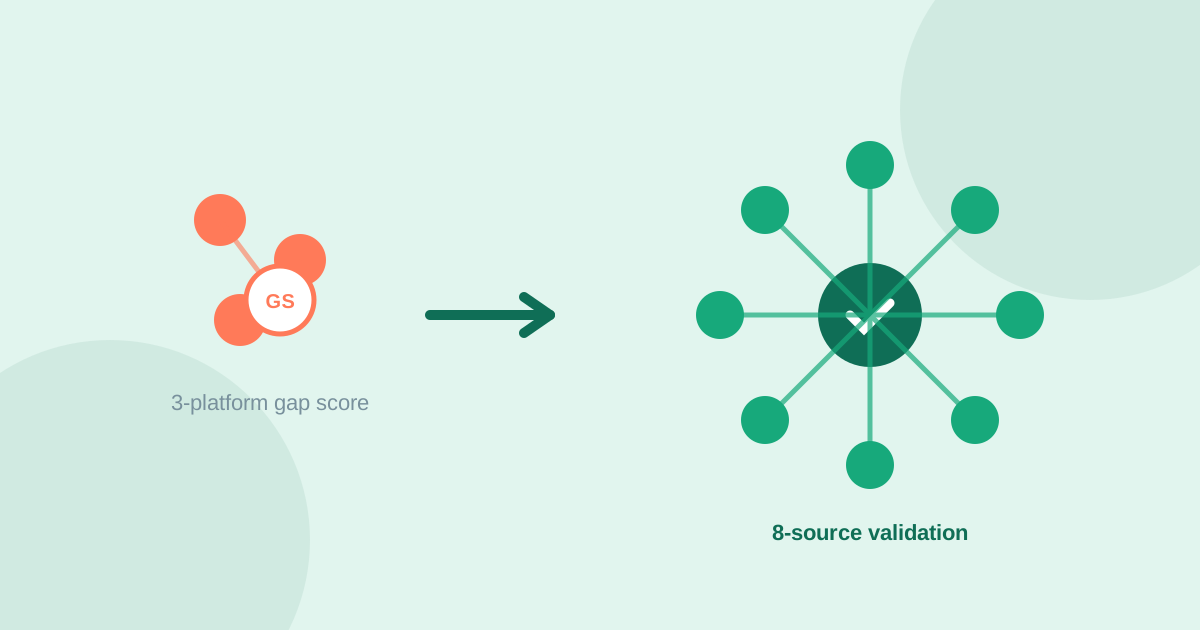
PainBase has carved out a specific pitch in the pain-point-research category: instead of just handing you a feed of complaints, it scores each one with a proprietary Gap Score, roughly the severity and urgency of a complaint multiplied by how scarce the existing solutions are, and then offers to turn a promising gap directly into a one-click MVP page: headline, feature list, pricing and visuals generated on the spot. It is a genuinely different angle from most Reddit-scanning tools, which stop at the complaint and leave you to write the landing page yourself.
If you are comparing PainBase against other options, the decision usually comes down to one question: how much do you trust a gap score built from three platforms, and is your idea the kind that lives mostly on those three platforms in the first place. This guide covers what PainBase does well, where the model runs into a structural ceiling, and what to check before you commit a research cycle to it.
What PainBase actually does
PainBase positions itself as real-time pain point intelligence for SaaS founders. It crawls Reddit, X (Twitter) and Product Hunt continuously, surfacing complaints, frustrations and feature requests as they appear, then scores each one with its Gap Score system. The pitch is speed and specificity: instead of a static report, you get a live feed you can check daily, and instead of a raw complaint count, you get a single number meant to represent opportunity size. The one-click MVP builder is the most distinctive piece, generating a shippable landing page draft from a validated gap, which shortens the gap between finding a problem and testing whether anyone will sign up for the fix.
For a specific kind of founder, pre-product, targeting an audience that is genuinely active on Reddit, X and Product Hunt, and wanting to move from signal to a testable landing page fast, that combination is a real time-saver. Indie hackers and early-stage SaaS builders who already live in those three communities get a workflow that matches how they actually work.
Where the three-platform model runs into a ceiling
The limitation is the same one every single-cluster tool eventually hits: the Gap Score is only as representative as the platforms feeding it. Reddit, X and Product Hunt share an overlapping audience, builders, early adopters, and terminally-online tech enthusiasts, which is exactly the audience most likely to complain publicly about SaaS tools and least representative of, say, Etsy buyers, Amazon shoppers, parents researching baby gear, or non-English-speaking markets. A complaint that scores high across those three platforms could be a genuine broad market gap, or it could be a Product Hunt community's pet peeve echoed on Reddit and restated on X by the same overlapping few thousand people. The Gap Score cannot tell the difference between those two situations, because it never checks a source outside that cluster.
This matters most for ideas that are not pure developer-tool SaaS. A B2B tool for accountants, a physical product idea, a consumer app, or anything targeting a market that does not hang out on Product Hunt will show a thinner, less reliable signal in a three-platform system than it would in one that also reads Amazon reviews, YouTube comments, TikTok, Quora and Google Trends. The tool is not wrong to focus where it focuses; it is upfront about being built for SaaS founders. The risk is treating a high Gap Score as proof of a broad market when it may only be proof that one particular internet subculture is annoyed.
Where UserConcern fits
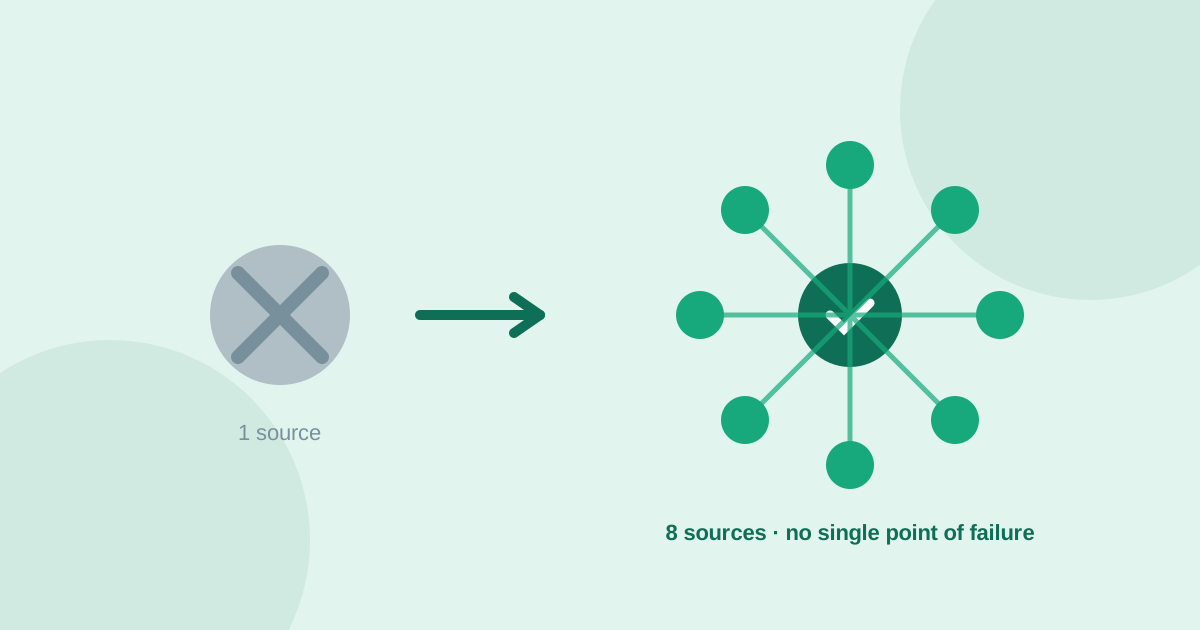
UserConcern is built to answer the question a three-platform score cannot: does this pain point hold up outside the cluster it was first spotted in. One search cross-checks 8 sources, Reddit, Amazon reviews, YouTube, TikTok, Twitter/X, Quora, Google Trends and AI answers, in about 60 seconds, and returns ranked pain points with the original quotes linked back to their source, an opportunity score, and a build-or-skip verdict, in 9 languages across 16 regions. Where PainBase's Gap Score answers how urgent and scarce is this within Reddit, X and Product Hunt, UserConcern's opportunity score answers does this pain point actually show up independently across unrelated audiences, which is a meaningfully different and, for most ideas outside pure dev-tool SaaS, more reliable question.
The honest way to decide: if your idea is SaaS aimed squarely at the Reddit-X-Product Hunt crowd and you want a fast live feed plus a quick MVP page to test, PainBase's focused model is a reasonable fit for that specific workflow. If your idea targets a broader consumer market, a non-English-speaking region, or any audience that does not cluster around those three platforms, cross-source validation catches gaps a three-platform score structurally cannot see. Some founders use both in sequence: a wide cross-source search first to confirm the pain is real beyond one internet cluster, then a focused tool for daily monitoring once the idea is already validated.
Frequently asked questions
What platforms does PainBase pull data from?
PainBase crawls Reddit, X (Twitter) and Product Hunt in real time and scores complaints with its Gap Score system, which combines the severity and urgency of a complaint with the scarcity of existing solutions.
Is a high PainBase Gap Score enough to validate an idea?
A high Gap Score tells you a complaint is severe, urgent and under-served within Reddit, X and Product Hunt specifically. It does not confirm the pain exists outside that overlapping, tech-heavy audience. Cross-checking the same complaint against sources like Amazon reviews, YouTube or Quora is the step that separates a genuine broad market gap from a niche community's pet peeve.
Is PainBase a good fit for non-SaaS product ideas?
It is optimized for SaaS founders and audiences active on Reddit, X and Product Hunt. Ideas targeting ecommerce buyers, parents, non-English-speaking markets, or other audiences that do not cluster on those three platforms will generally show a thinner, less reliable signal there than in a tool that also reads sources like Amazon reviews, YouTube and TikTok.
What is the main difference between PainBase and UserConcern?
PainBase scores live complaints from three overlapping tech-community platforms and can generate a one-click MVP page from a validated gap. UserConcern cross-checks a pain point across 8 independent sources, including consumer platforms PainBase does not cover, in 9 languages, and returns an opportunity score plus a build-or-skip verdict aimed specifically at confirming demand beyond any single community.
Can I use both a focused tool and a cross-source validation tool?
Yes. A common workflow is to validate broadly first, confirming the pain point holds up across unrelated audiences and platforms, then switch to a focused, real-time tool for ongoing monitoring once you know the idea is worth watching daily.
More articles
 Market Research
Best GummySearch Alternatives in 2026 (Access Ends 30 November)
GummySearch closed to new customers in November 2025, and existing users lose access on 30 November 2026 with all data deleted the next day. Eight alternatives compared on real pricing, real sources, and which half of the job each one actually replaces.
Read article → Market Research
How to Identify Customer Pain Points: 7 Methods That Actually Work
Customer pain points are the raw material of every successful product. Here are 7 practical methods to find them, from free manual research to AI-powered analysis.
Read article →