
What Outdoor and Camping Gear Buyers Are Really Complaining About in 2026 (Review Mining Analysis)
September 17, 2026 · 8 min read

Outdoor and camping gear looks like a mature, well-served category on the surface: established brands, decades of product iteration, and no shortage of gear reviewers on YouTube comparing tents and packs feature by feature. Reading the actual complaints tells a different story. Buyers are not short on choice, they are short on gear that performs the way its spec sheet claims once it's actually in the field, in real weather, after real use.
We ran a UserConcern analysis across outdoor and camping subreddits, Amazon and retailer reviews of tents, packs, sleeping bags and footwear, YouTube gear-review and field-test comments, and TikTok comment sections under camping content, to see what buyers keep describing once a product has spent a season outside the store. Five patterns stood out clearly enough to be worth sharing.
Pain point one: ratings that don't survive real conditions
The most repeated complaint in this niche is that printed performance numbers, a sleeping bag's comfort temperature, a jacket's waterproof rating, a cooler's ice-retention claim, describe a lab condition nobody camps in. Reviewers describe being cold in a bag rated well below the actual overnight temperature, a jacket wetting through in sustained rain despite a waterproof-rated shell, or a cooler's marketed multi-day ice retention collapsing to under 24 hours once it's opened a few times in the heat. The pattern isn't that the numbers are fabricated, it's that they're measured under conditions optimistic enough to be functionally meaningless for planning an actual trip.
Pain point two: ultralight marketing that hides a durability tradeoff
Weight is the single most marketed spec in backpacking gear, and reviewers increasingly call out that the tradeoff behind a lighter number is rarely stated up front. Tent floors described as ultralight puncture on the first rocky pitch, trekking poles bend under normal use, pack fabric abrades through after one thru-hike season. The complaint isn't that lightweight gear exists, it's that buyers have to learn the durability cost through a failed trip rather than through anything on the product page, and experienced hikers describe maintaining a mental tax, of roughly how many seasons a given weight class of gear tends to survive, that no brand publishes for them.
Pain point three: waterproofing claims that fail exactly when it matters
Tents, boots and shells all carry waterproof or water-resistant claims, and reviews describe those claims failing specifically under sustained, real rain rather than a quick shower, seams that were fine on a dry-weather trip leaking on a wet one, a boot's waterproof liner failing after repeated wet-dry cycles rather than on day one. The recurring theme is that waterproofing is treated by buyers as binary, works or doesn't, when reviewers describe it as a curve that degrades with use, weather severity and time, information that's almost never on the listing and that they only learn by getting wet.
Pain point four: proprietary parts that turn a small failure into a full replacement
A bent tent pole segment, a broken pack buckle, a stove's proprietary fuel valve, these are individually minor failures that reviewers describe becoming major ones because the part can't be sourced or repaired without buying a full replacement product or hunting down a discontinued spare from the original manufacturer. Comments describe frustration less with the failure itself, gear breaks, and more with the design choice that made a five-dollar part unavailable on its own, turning what should be a repair into a full repurchase.
Pain point five: capacity and sizing that overstate real-world fit
Tent capacity ratings, pack torso-length sizing and footwear width options draw the same complaint across the niche: the number on the label describes a theoretical fit, not a usable one. A "4-person" tent reviewers describe as workable for two adults with gear, a pack's torso sizing that doesn't match how the same size actually loads once it's full, footwear width options that don't reflect how a boot actually breaks in. The gap between the labeled spec and the lived fit is consistent enough that experienced buyers describe discounting capacity numbers by a fixed amount as a matter of habit before ever reading a single review.
Reading the pattern across all five gaps
Every one of these complaints traces back to the same root cause: a spec sheet number that was measured honestly under a condition no buyer will actually encounter, with no reliable way to translate it into what will happen on a real trip. Temperature and waterproof ratings, weight claims and capacity numbers are all, at bottom, lab conditions presented as field promises, and the durability and repairability complaints are what happens when that gap meets months of actual use.
Comparing Opportunity Scores across these five themes, real-world-conditions rating transparency ranks highest, since it sits upstream of the waterproofing and temperature-rating complaints and no major brand currently publishes anything close to it voluntarily. Repairable, non-proprietary hardware follows closely, a sharp, specific frustration in a category that otherwise competes almost entirely on weight and price. Capacity-and-sizing honesty trails slightly behind, real and recurring, but partially addressed already by a handful of newer direct-to-consumer brands that publish more detailed field-test data than the legacy players.
The lesson here isn't that outdoor gear needs another tent or another sleeping bag, that shelf is as full as it gets. It's that almost nothing in the category closes the gap between a lab-measured spec and what a buyer can expect to happen on an actual trip. UserConcern lets you scan a niche like this with evidence instead of assumptions, real quotes from buyers describing exactly where the spec-to-field gap cost them a cold night or a failed repair. If you're exploring the outdoor space, start with the complaint that shows up in a gear subreddit, a retailer review and a YouTube field-test comment section at once. That's usually where the real gap is.
Frequently asked questions
Is outdoor and camping gear too crowded a market for a new brand or tool?
The core category, selling tents, packs and sleeping bags, is well established with decades of iteration. The clearer opportunity is not another gear brand but the trust gap almost every brand leaves open: real-world-conditions rating transparency, repairable non-proprietary hardware, and capacity or sizing numbers that hold up outside a lab test.
Why do sleeping bag and jacket ratings feel unreliable in the field?
Comfort temperature and waterproof ratings are typically measured under controlled, optimistic lab conditions rather than sustained real-world weather. Reviewers consistently describe being colder or wetter than the label implied, not because the number is false, but because it doesn't translate to how the gear performs on an actual multi-day trip.
What's the biggest hidden cost in ultralight camping gear?
Durability. Reviewers describe ultralight tent floors, poles and pack fabric failing faster than heavier alternatives, a tradeoff that's rarely stated on the product page. Buyers typically only learn the real lifespan of a weight class of gear through a failed trip, not through anything published by the brand.
How do I validate an outdoor gear product idea before investing in inventory?
Read outdoor and camping subreddits, reviews of comparable gear across price tiers, and YouTube field-test comments, looking for the same specific complaint, about ratings, durability, waterproofing or sizing, appearing independently across more than one source. UserConcern automates that cross-check across 8 sources in about 60 seconds and returns an opportunity score and a build-or-skip verdict.
More articles
 SaaS & Tech
How to Validate a SaaS Idea in 48 Hours (With Evidence, Not Opinions)
A step-by-step framework to validate a SaaS idea in one weekend using real customer complaints from 8 sources, with a worked example and a clear build-or-skip verdict.
Read article →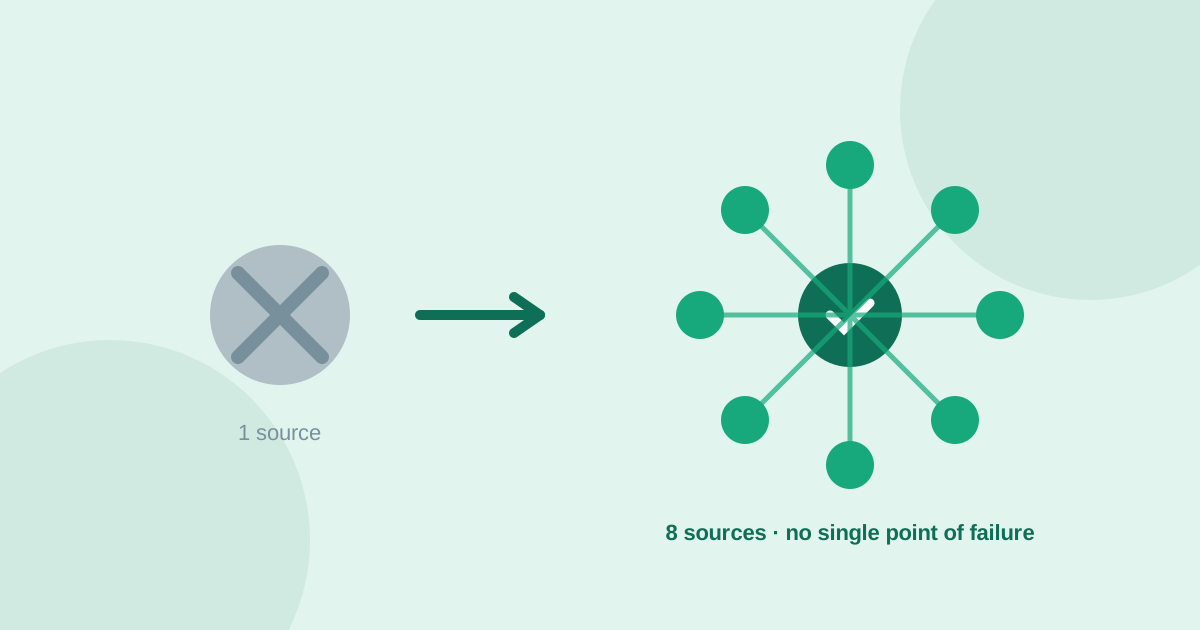 Market Research
Best GummySearch Alternatives in 2026 (Access Ends 30 November)
GummySearch closed to new customers in November 2025, and existing users lose access on 30 November 2026 with all data deleted the next day. Eight alternatives compared on real pricing, real sources, and which half of the job each one actually replaces.
Read article →