
What Insurance Customers Are Really Complaining About in 2026 (Insurtech Market Analysis)
October 22, 2026 · 8 min read

Insurance and insurtech apps get reviewed constantly on the app stores, on Trustpilot, in insurance subreddits, and under YouTube claims-walkthrough videos, and the reviews read less like a product complaint and more like a specific list of moments a customer needed the policy to work and it did not. Most of a policyholder's experience with an insurer happens exactly twice: at signup and at renewal. Everything in between, the actual claim, is where trust is won or lost, and it is almost entirely absent from how most insurers design their product.
We ran a UserConcern analysis across app store reviews of auto, home, renters, pet and travel insurance apps, Trustpilot reviews of insurers, Reddit communities about insurance, and YouTube comments under claims-walkthrough and comparison videos, to see what policyholders keep describing once a claim, a renewal or a cancellation forces them to actually use the product they pay for every month. Five patterns stood out clearly enough to be worth sharing.
Pain point one: claims tracked nowhere, confirmed by no one
Reviewers across home, auto, renters and travel insurance describe submitting a claim and then losing all visibility into what happens next: no status page that updates in real time, no estimated timeline, and a support line that can only read back the same vague still under review status the customer already saw in the app. The complaint is rarely about the claim being denied, it is about the complete absence of a feedback loop while a customer waits, often while the damage itself, a flooded basement, a totaled car, a canceled trip, is actively costing them money.
Pain point two: AI and chatbot denials with no visible path to a human
A fast-growing cluster of complaints targets claims handled partly or fully by an automated system that issues a denial or a lowball offer with no explanation beyond a form letter, and no obvious way to escalate to a person who can actually review the specific case. Reviewers describe a denial citing a policy clause with no context, and describe spending longer finding the right phone number or email to contest the decision than they spent filing the original claim.
Pain point three: coverage gaps surfaced only at the moment of the claim
A recurring and especially bitter complaint describes discovering a coverage limit, an exclusion, or an insurance-to-value shortfall only after a claim has already been filed, meaning the customer paid premiums for months or years under a false sense of security. Reviewers describe feeling that the sales and renewal process actively avoids surfacing this risk, since a clearer warning at signup or renewal would have let them adjust coverage before it mattered, not after.
Pain point four: renewal price increases with no explanation and a hard cancellation path
Reviewers frequently describe a renewal premium jumping significantly with zero claims filed and no stated reason, alongside a cancellation process that requires a phone call, hold time, and a retention pitch, in sharp contrast to how easily the original policy was purchased online in minutes. The asymmetry itself, instant signup, difficult exit, is called out explicitly and repeatedly as a trust-eroding pattern independent of the price increase itself.
Pain point five: photo and document based claims that fail silently
Mobile claims flows that ask customers to photograph damage or upload documents draw a specific, recurring complaint: an upload that appears to succeed in the app but never reaches a human reviewer, discovered only when the customer calls to check status and is told nothing was received. Reviewers describe re-uploading the same documents three or four times across different channels, with no confirmation receipt or reference number that would let them prove what was sent and when.
Reading the pattern across all five gaps
Every one of these complaints describes the same underlying failure: insurance products optimized for the moment of purchase, a fast quote, an easy signup, a clean app experience, and under-invested in the moment that actually matters to a policyholder, the claim. Claims visibility, human escalation paths, upfront coverage clarity, renewal transparency and reliable document handling are all, at bottom, communication and process problems that sit downstream of underwriting and pricing, which is exactly why they persist across supposedly modern insurtech apps as much as traditional insurers.
Comparing Opportunity Scores across these five themes, real-time claims status and tracking ranks highest, since it is a discrete, buildable product layer that sits on top of an insurer's existing claims system rather than requiring a change to underwriting itself, and the frustration behind it shows up unprompted in nearly every claims-related review. Human escalation paths for AI-handled denials follow closely, particularly as more insurers move claims triage to automated systems without building an equally fast path back to a person. Coverage gap disclosure and renewal transparency trail slightly behind in urgency but carry real regulatory and trust tailwinds, the kind of problem an incumbent is structurally reluctant to fix on its own, since more clarity at signup can mean a harder sale.
The lesson here is not that the insurance market needs another full-stack insurer, that is an enormously capital-intensive bet with a long regulatory runway. It is that the layers around the policy, claims communication, escalation and renewal transparency, are where trust quietly erodes long after the sale, and where a focused tool or workflow can plug a gap an insurer has little incentive to close itself. UserConcern lets you scan a niche like this with evidence instead of assumptions, real quotes from policyholders describing exactly where the product failed them when it mattered. If you are exploring this space, start with the complaint that shows up on Trustpilot, in app store reviews and on Reddit at once. That is usually where the real gap is.
Frequently asked questions
Is the insurance market too regulated for a new insurtech product to break into?
Building a full, licensed insurer is capital-intensive and heavily regulated, but the clearer opportunity sits in the layers around the policy, claims visibility, escalation tools and renewal transparency, that do not require becoming a carrier yourself. Many of the strongest complaints point at process and communication gaps an insurer could license a tool for rather than build in house.
Why do AI and chatbot claims denials generate so many complaints?
Reviewers describe a denial or lowball offer arriving with no context beyond a form letter and no obvious way to reach a human who can look at the specific case. As more insurers automate claims triage, the complaint is less about the automation itself and more about the missing, equally fast escalation path back to a person.
What is the most common complaint about insurance apps?
The complete absence of real-time claims status and tracking. Reviewers rarely complain first about a claim being denied, they complain about having no visibility into what is happening while they wait, often while the underlying damage or loss is actively costing them money.
How do I validate an insurtech product idea before building it?
Read app store reviews of comparable insurance apps, Trustpilot reviews of insurers in the same category, insurance-focused Reddit communities, and YouTube comments under claims and comparison videos, looking for the same specific complaint, about claims visibility, escalation, coverage clarity or renewal transparency, appearing independently across more than one source. UserConcern automates that cross-check across 8 sources in about 60 seconds and returns an opportunity score and a build-or-skip verdict.
More articles
 SaaS & Tech
How to Validate a SaaS Idea in 48 Hours (With Evidence, Not Opinions)
A step-by-step framework to validate a SaaS idea in one weekend using real customer complaints from 8 sources, with a worked example and a clear build-or-skip verdict.
Read article →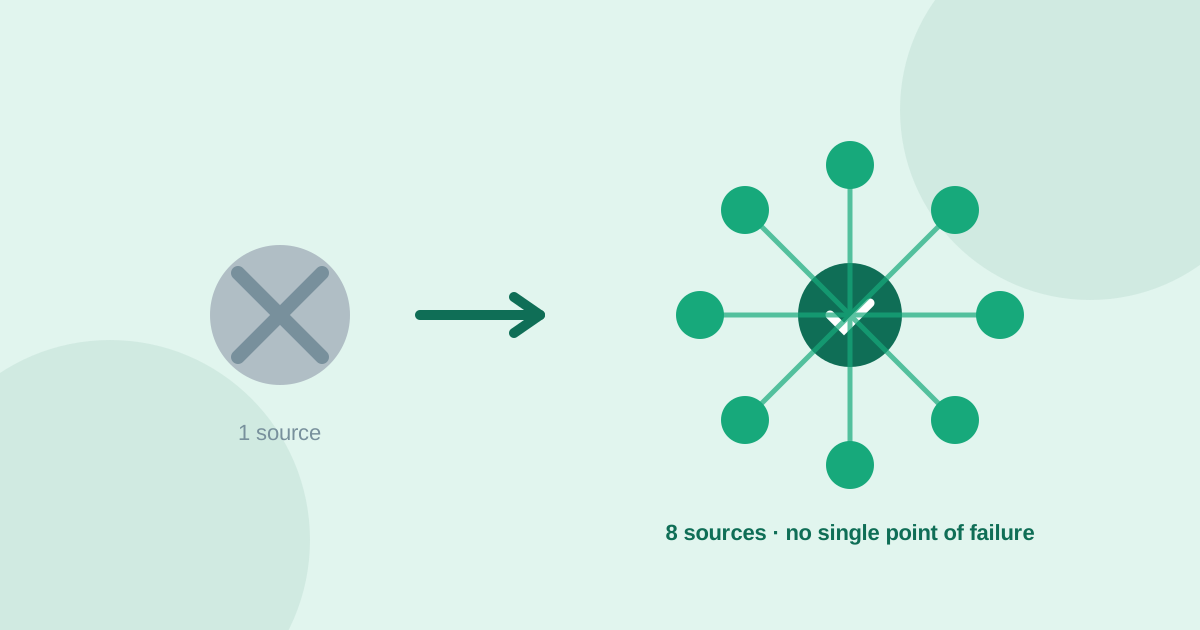 Market Research
Best GummySearch Alternatives in 2026 (Access Ends 30 November)
GummySearch closed to new customers in November 2025, and existing users lose access on 30 November 2026 with all data deleted the next day. Eight alternatives compared on real pricing, real sources, and which half of the job each one actually replaces.
Read article →