
How to Mine Instagram for Real Customer Pain Points (Step-by-Step Guide)
October 12, 2026 · 7 min read
Instagram looks like the worst place to find pain points. It is built around curated photos, filtered lighting and captions written to flatter, not complain. Scroll the feed itself and you will mostly see what brands and creators want you to see. The complaints live one layer down, in the comments, in the captions of unboxing and before-and-after posts, and in the replies under influencer recommendations, where real buyers show up to ask questions the brand would rather not answer in public.
This guide covers where to look, which comment patterns actually carry pain signal, and the specific bias that makes Instagram research misleading if you read it the way you would read Reddit.
Step 1: find the right accounts, not the biggest ones
Start with three account types for any niche: the brand accounts selling into it, the micro-influencers reviewing it (5,000 to 50,000 followers tend to have more candid comment sections than accounts with millions), and the hashtag or location pages people use to vent (for example #skincareproblems, #momlife, #smallbusinessowner). Micro-influencer accounts are the highest-yield source because their audience trusts them enough to ask real questions and admit real failures in the comments, rather than just dropping emoji.
Step 2: read captions as complaint bait, then mine the replies
Captions on before-and-after posts, product review Reels and unboxing videos routinely say some version of I tried everything before this, or nothing else worked until. That sentence is a signpost, not the pain point itself. The actual pain point is in the replies underneath it, where followers list what they tried that failed, ask whether it works for their specific skin type, body shape, kitchen size or budget, and occasionally argue with each other about whether the product lives up to the caption. Read past the first ten comments; the candid ones tend to appear once the thread stops being about the original poster and starts being a conversation between strangers.
Step 3: mine comments with pain language, not praise language
Search patterns that work on Reddit mostly work here too, with Instagram's own dialect added: does this actually work for, I wish this came in, waste of money because, returned mine after, anyone else have this problem with. Ignore comment counts and like counts; a post with 40 comments where half are genuine troubleshooting questions is worth more than a viral post with 4,000 comments that are mostly heart emoji. Save by exact wording and the post link, the same discipline that makes a Reddit quote bank useful later as landing page copy and outreach material.
Step 4: check Stories highlights and Reels comments for live reactions
Brand Stories highlights, especially ones labeled FAQ, Reviews or Shipping, are curated by the brand and will skew positive, but the questions saved into them (even when the brand answers favorably) tell you what buyers were worried about before purchasing. Reels comments move faster and skew more off-the-cuff than static post comments, which makes them a decent source for immediate, unfiltered reactions to a product reveal, including the first wave of skepticism before anyone has actually used it.
The trap: influencer bias and bot noise
Instagram has two distortions that Reddit mostly does not. First, influencer bias: an audience that followed someone because they like that creator's taste will often defend a product the creator promoted, even in the same comment section where they admit it did not work for them. Read for the admission buried inside the defense, not the headline sentiment. Second, bot and incentivized comments are common, especially under giveaway or contest posts, and they produce generic praise that looks like engagement but carries no pain signal at all. Discount any comment that reads like it could have been copy-pasted onto a different product's post unchanged.
Putting it together
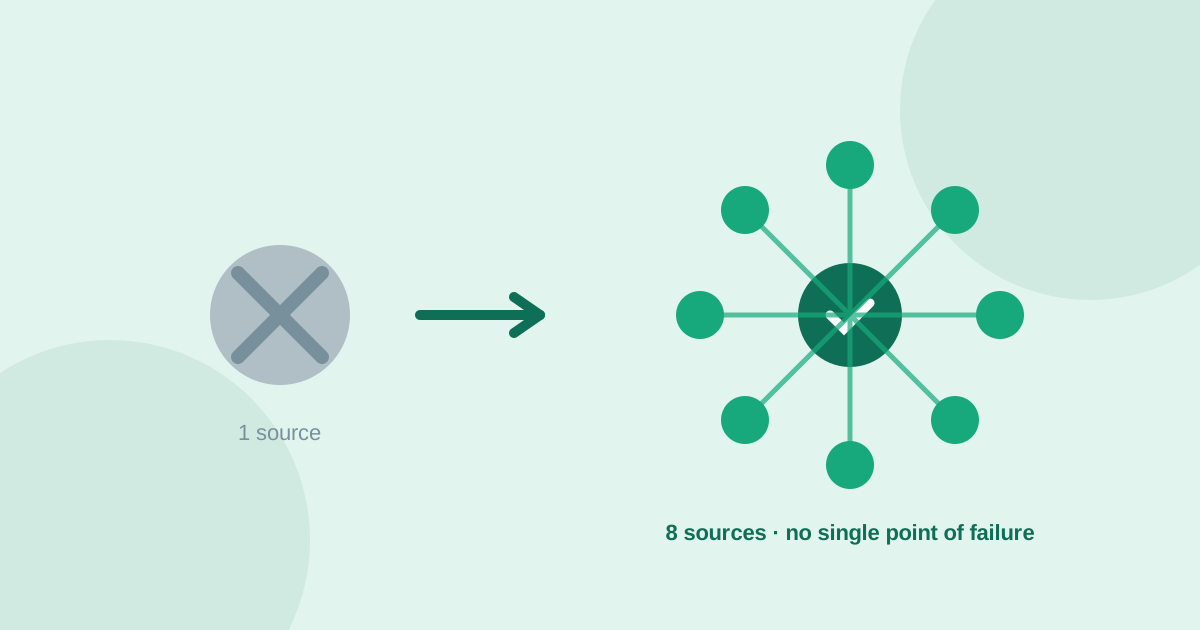
Because of these two distortions, Instagram should never be your only source. The method that works: pull candidate pain points from Instagram comments and captions, then check whether the same specific complaint shows up independently in Amazon reviews, YouTube comments or Reddit threads for the same category. A frustration that survives that check is real; one that only exists on Instagram may just be an artifact of parasocial loyalty to whichever creator posted about it. UserConcern runs that cross-check automatically, scanning Instagram-adjacent social signal alongside Reddit, Amazon reviews, YouTube, TikTok, X, Quora, Google Trends and AI answers in one search, so a visually appealing product with a quietly unhappy comment section cannot hide behind its own photos.
Frequently asked questions
Is Instagram useful for finding customer pain points?
Yes, but mostly one layer below the surface. The captions and photos are curated to look good, so the real complaints live in the comment replies, in troubleshooting questions under reviews, and in the gap between what a caption promises and what commenters say actually happened when they tried the product.
Where on Instagram should I look first?
Micro-influencer accounts with 5,000 to 50,000 followers tend to have the most candid comment sections, because their audience trusts them enough to ask honest questions. Niche hashtags and before-and-after or unboxing posts are the next best source, since their comment threads are built around people comparing real results.
Why does Instagram research skew more biased than Reddit?
Two reasons. Followers often defend a product because they like the creator who promoted it, even while admitting it did not fully work for them, and giveaway or contest posts attract bot and incentivized comments that read as generic praise with no real signal. Both distortions make single-source Instagram research risky.
How do I confirm an Instagram pain point is real?
Check whether the same specific complaint appears independently on at least one other platform, such as Amazon reviews, YouTube comments or Reddit. UserConcern automates this cross-check across 8 sources in about 60 seconds, so a pain point only ranks highly when it shows up in more than one place in the market's own words.
More articles
 Market Research
Best GummySearch Alternatives in 2026 (Access Ends 30 November)
GummySearch closed to new customers in November 2025, and existing users lose access on 30 November 2026 with all data deleted the next day. Eight alternatives compared on real pricing, real sources, and which half of the job each one actually replaces.
Read article → Market Research
How to Identify Customer Pain Points: 7 Methods That Actually Work
Customer pain points are the raw material of every successful product. Here are 7 practical methods to find them, from free manual research to AI-powered analysis.
Read article →