
Best IdeaBrowser Alternatives in 2026 (Curated Idea Catalog vs. Live Cross-Source Validation)
September 7, 2026 · 8 min read
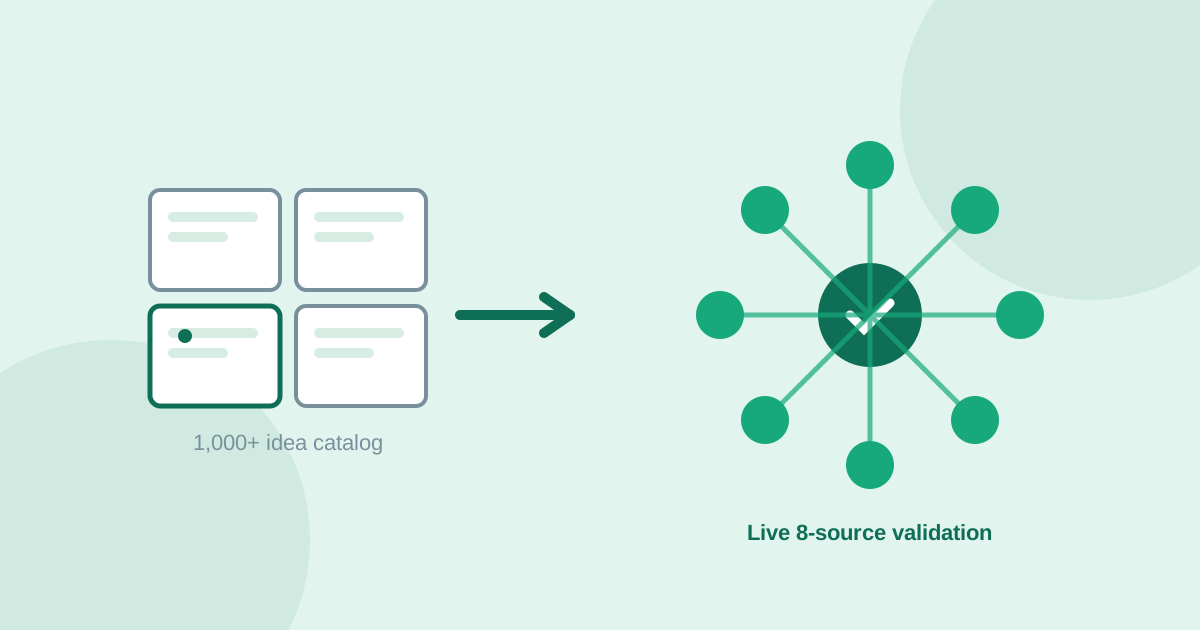
IdeaBrowser occupies an unusual spot in the idea-research category. Most tools here ask you to bring your own idea and search for evidence about it. IdeaBrowser flips that: it hands you a browsable catalog of already-researched ideas and lets you pick one, or use it as a jumping-off point for your own variation. Built by Greg Isenberg and positioned as much around trend spotting and a builder community as around raw research, it is less a validation tool and more a curated idea feed with a research engine attached.
That makes it a genuinely different comparison than most "alternatives" posts in this space. This guide covers what IdeaBrowser actually does, what it costs, where its catalog model is a real advantage, and where it answers a different question than confirming whether the specific idea you already have is worth building.
What IdeaBrowser actually does
IdeaBrowser is built around a database of more than 1,000 pre-researched startup ideas, each packaged with market sizing, competitor context, an execution outline and trend signals, so instead of reading raw complaints yourself, you are reading a finished writeup. The entry-level Starter plan, priced at $499 per year, gives access to the browsable catalog plus 20 AI-generated ideas per month. The Pro plan, at $1,499 per year, adds an AI Research Agent that takes an idea you bring, rather than one from the catalog, and runs a multi-step analysis against it, with a cap of 3 of those reports per month. The top Empire tier, at $2,999 per year, raises those limits substantially (500 AI ideas per month, 40 research-agent runs per year, 300 chat sessions per month) and bundles in extras that have little to do with research itself: weekly coaching calls, monthly AMAs with Greg Isenberg and guest experts, a vibe-coding course, a builder community, in-person events and a claimed $50,000-plus in partner tool deals. All three tiers bill annually with a 14-day refund window.
Where the catalog model is genuinely useful
For someone who does not yet have an idea and wants a fast, high-quality starting point, IdeaBrowser's catalog is a real shortcut. Reading through 1,000+ ideas that already have market sizing and competitor context attached is faster than doing that research from scratch for even one idea, and the trend-signal layer means the catalog updates with what is currently gaining traction rather than sitting static. The Pro and Empire tiers' Research Agent extends that same engine to an idea you already have, which is a meaningful feature if you want AI-assisted research depth rather than raw source quotes. The community, coaching and events layer, while not research in the strict sense, is a real part of what buyers are paying for at the higher tiers, and for someone who values a builder network and access to Isenberg's own thinking, that is a legitimate part of the value, not padding.
Where the model runs into a ceiling
The core limitation is structural, not a quality issue: a catalog of pre-researched ideas, no matter how well done, is answering "what has someone else's research already turned up," not "is the specific idea I am building, for the specific audience and price point I have in mind, validated right now." Two ideas that look identical in a catalog entry can have very different real-world demand once you get specific about geography, niche audience or product angle, and a catalog entry, refreshed on IdeaBrowser's own schedule rather than the moment you need an answer, cannot know which version you are actually building. Even the Research Agent on the Pro and Empire tiers is rate-limited to a handful of runs a month, which works fine for occasionally pressure-testing a big decision but is a poor fit for the fast, iterative loop of checking several angles on an idea in the same afternoon.
There is also a straightforward cost and access question. At $499 to $2,999 per year, billed upfront, IdeaBrowser is priced well above most single-purpose validation tools in this category, and a meaningful share of that price, particularly at the Empire tier, is going toward coaching, community and events rather than incremental research capability. That is a reasonable trade for someone who wants the community as much as the data, and a poor one for a founder who just wants to know whether a specific pain point holds up before writing code.
Where UserConcern fits
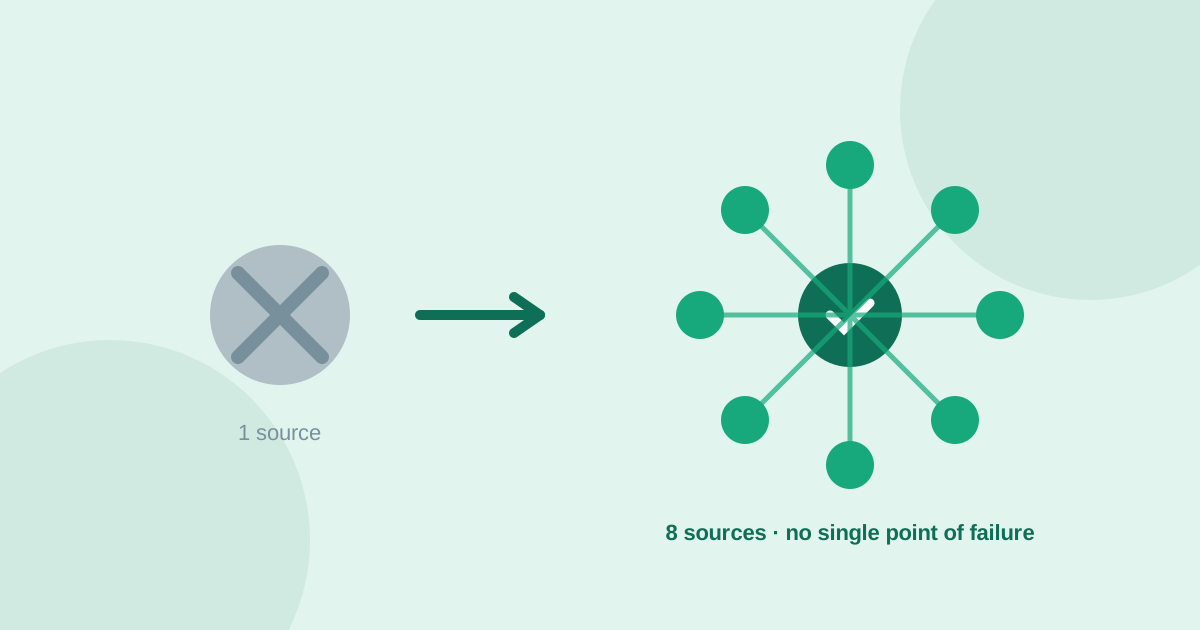
UserConcern is built for the question IdeaBrowser's catalog structurally cannot answer on demand: does the specific idea you already have, in your specific niche, hold up against real complaints right now. One search cross-checks 8 sources, Reddit, Amazon reviews, YouTube, TikTok, Twitter/X, Quora, Google Trends and AI answers, in about 60 seconds, and returns ranked pain points with the original quotes linked back to their source, an opportunity score, and a build-or-skip verdict, in 9 languages across 16 regions. There is no monthly run cap and no annual commitment required to start; you bring your own idea and get a fresh answer every time, rather than reading a catalog entry that may have been written before you thought of it.
The honest way to choose: if you do not yet have an idea and want a fast, well-organized starting point built from someone else's research, plus a builder community and coaching around it, IdeaBrowser's catalog is a strong fit for that specific job, and the annual price reflects more than just the database. If you already have an idea, in any niche, and need to know whether the evidence supports it before you commit real time to building, a live, per-search cross-source validation answers that more directly, more often, and without a rate limit. Some founders use both: browse IdeaBrowser for a starting shortlist, then validate the one they actually want to build with fresh, live evidence.
Frequently asked questions
What is IdeaBrowser?
IdeaBrowser is a startup idea platform built by Greg Isenberg, centered on a browsable catalog of 1,000+ pre-researched ideas with market sizing, competitor context and trend signals attached. Paid tiers add an AI Research Agent for ideas you bring yourself, plus a builder community, coaching and events at the higher price points.
How much does IdeaBrowser cost?
IdeaBrowser is priced in three annual tiers: Starter at $499 per year (catalog access plus 20 AI-generated ideas per month), Pro at $1,499 per year (adds an AI Research Agent capped at 3 reports per month on your own idea), and Empire at $2,999 per year (higher limits plus coaching, community and events). All tiers include a 14-day refund window.
Is IdeaBrowser a validation tool?
Not primarily. IdeaBrowser is built around a catalog of already-researched ideas rather than validating a specific idea you bring on demand. Its Pro and Empire tiers include a Research Agent that can analyze your own idea, but it is rate-limited to a handful of runs per month, which suits occasional deep checks better than fast, iterative validation.
What is the main difference between IdeaBrowser and UserConcern?
IdeaBrowser is a browsable catalog of pre-researched ideas, refreshed on its own schedule, with community and coaching bundled into its higher tiers. UserConcern runs a live, unlimited search against whatever specific idea you bring, cross-checking 8 sources including Reddit, Amazon reviews and YouTube in about 60 seconds, in 9 languages, without an annual commitment.
Should I use IdeaBrowser if I already have a startup idea?
If your goal is inspiration or a starting shortlist, IdeaBrowser's catalog is well-suited to that. If you already have a specific idea and need to know whether real demand supports it, a live cross-source search built for validating a specific idea on demand, without a monthly run cap, answers that question more directly.
More articles
 Market Research
Best GummySearch Alternatives in 2026 (Access Ends 30 November)
GummySearch closed to new customers in November 2025, and existing users lose access on 30 November 2026 with all data deleted the next day. Eight alternatives compared on real pricing, real sources, and which half of the job each one actually replaces.
Read article → Market Research
How to Identify Customer Pain Points: 7 Methods That Actually Work
Customer pain points are the raw material of every successful product. Here are 7 practical methods to find them, from free manual research to AI-powered analysis.
Read article →