
What Fashion and Apparel Shoppers Are Really Complaining About in 2026 (Review Mining Analysis)
September 14, 2026 · 8 min read
Clothing is one of the most reviewed, most returned, and most complained-about product categories online, and also one of the most crowded, which makes it tempting to write off as fully explored. Reading the actual complaints tells a different story: shoppers are not tired of clothes, they are tired of a handful of specific, repeated failures that every major retailer, fast fashion and premium alike, keeps making in roughly the same way.
We ran a UserConcern analysis across apparel subreddits, Amazon and retailer reviews of clothing across price tiers, YouTube haul and try-on comments, and TikTok comment sections under fashion review videos, to see what shoppers keep describing once the unboxing excitement wears off. Five patterns stood out clearly enough to be worth sharing.
Pain point one: sizing that means nothing across brands
The single most repeated complaint in apparel is that a size label is not a reliable promise of anything. Shoppers describe ordering their usual size from three different brands and receiving three different fits, then ordering two sizes of the same item just to guarantee one will work, with the other destined for a return. Size charts exist, but reviewers describe them as inconsistent with the actual garment often enough that many shoppers no longer trust them at all, defaulting instead to reading reviews specifically for comments about true-to-size fit before ordering anything.
Pain point two: fabric and construction that do not match the photos
Reviews across price tiers describe a gap between the product photo and the item that arrives: fabric that looks structured in the listing but drapes thin and see-through in hand, a knit that pills within a few washes, a seam that comes loose after light wear. This complaint is not limited to the cheapest fast fashion tier, mid-range and premium brands draw the same language often enough that reviewers describe treating any online clothing photo as aspirational rather than accurate, and specifically searching reviews for words like thin, cheap or itchy before trusting a listing photo at all.
Pain point three: returns that function as a hidden cost of shopping online
Because sizing and fabric are both unreliable from a listing alone, many shoppers describe ordering multiple sizes or colors of the same item as their default strategy, planning to return most of it. Reviews and forum threads describe the return process itself as a second layer of friction on top of that: restocking fees that were not obvious at checkout, return windows that close before an item this hard to size can be confidently evaluated, and store credit offered in place of a refund. The complaint is less about any single return policy and more about the fact that ordering apparel online now assumes a return step by default, which shoppers experience as a tax on every purchase rather than a convenience.
Pain point four: sustainability claims nobody can verify
Terms like eco-friendly, sustainable and ethically made appear on product listings constantly, and reviewers increasingly call this out directly, asking what the claim is actually based on and finding no clear answer on the product page itself. Comments describe wanting a specific, checkable fact, the percentage of recycled material, the actual factory conditions, rather than a label with no citation behind it, and describe defaulting to distrust of any sustainability claim that cannot be traced to a specific certification or supply chain detail.
Pain point five: extended sizing treated as an afterthought
Shoppers outside a narrow standard size range, petite, tall, and especially plus sizes, describe a consistent pattern across brands: the extended range arrives later, in fewer styles, cut differently from the core line rather than genuinely scaled from it, and often priced higher for more fabric despite using the same base pattern. Reviews describe having to guess whether a style will translate to their size at all, since photos and reviews for extended sizes are far sparser than for the core range, leaving exactly the shoppers with the least reliable sizing information to work with the least evidence to work from.
Reading the pattern across all five gaps
Every one of these complaints traces back to the same root cause: a trust gap between what a listing promises and what a shopper actually receives, with no reliable way to check the claim before buying. Sizing, fabric quality and sustainability claims are all, at bottom, a promise the customer cannot verify until the box arrives, and the return process exists as the industry's way of letting shoppers check afterward instead of fixing the information gap beforehand. Extended sizing is the same trust gap compounding on itself, since the shoppers most affected by unreliable sizing have the least review data available to compensate for it.
Comparing Opportunity Scores across these five themes, verified fit and fabric information rank highest, since they sit upstream of both the returns problem and the extended-sizing problem, and no dominant player has solved either convincingly. Verifiable sustainability claims follow closely, a sharp, specific frustration inside a crowded category that mostly responds with marketing rather than evidence. Return-cost transparency and extended-size parity trail slightly behind, both real and recurring, but partially addressed already by a handful of newer, size-inclusive brands and by retailers experimenting with fit-prediction tools.
The lesson here is not that fashion needs another clothing brand, that category is as crowded as it gets. It is that almost nothing in the category closes the gap between a listing's claim and a shopper's ability to verify it before paying and waiting for a delivery. UserConcern lets you scan a niche like this with evidence instead of assumptions, real quotes from shoppers describing exactly where the trust gap costs them money or a wasted return. If you are exploring the fashion space, start with the complaint that shows up across a subreddit, a retailer review and a TikTok comment section at once. That is usually where the real gap is.
Frequently asked questions
Is fashion and apparel too crowded a market for a new brand or tool?
The core category, selling clothing itself, is extremely crowded. The clearer opportunity is not another brand but the trust gap every brand leaves open: verified fit and fabric information, checkable sustainability claims, and extended sizing treated as a first-class product rather than an afterthought.
What is the biggest driver of apparel returns?
Unreliable sizing and fabric information at the point of purchase. Since shoppers cannot trust a size chart or a product photo to accurately predict fit and material, many order multiple sizes or colors by default, planning to return most of them, which turns returns into an expected step in buying clothes online rather than an exception.
Do shoppers actually care about sustainability claims in fashion?
Reviews and comments show shoppers increasingly questioning vague sustainability claims rather than accepting them at face value, specifically asking what a label like eco-friendly is based on. The gap is not interest, it is verification: shoppers want a specific, checkable fact rather than an unsupported claim on a product page.
How do I validate a fashion or apparel product idea before ordering inventory?
Read apparel subreddits, reviews of similar products across price tiers, YouTube haul comments and TikTok comment sections, looking for the same specific complaint, about fit, fabric, returns or sizing, appearing independently across more than one source. UserConcern automates that cross-check across 8 sources in about 60 seconds and returns an opportunity score and a build-or-skip verdict.
More articles
 SaaS & Tech
How to Validate a SaaS Idea in 48 Hours (With Evidence, Not Opinions)
A step-by-step framework to validate a SaaS idea in one weekend using real customer complaints from 8 sources, with a worked example and a clear build-or-skip verdict.
Read article →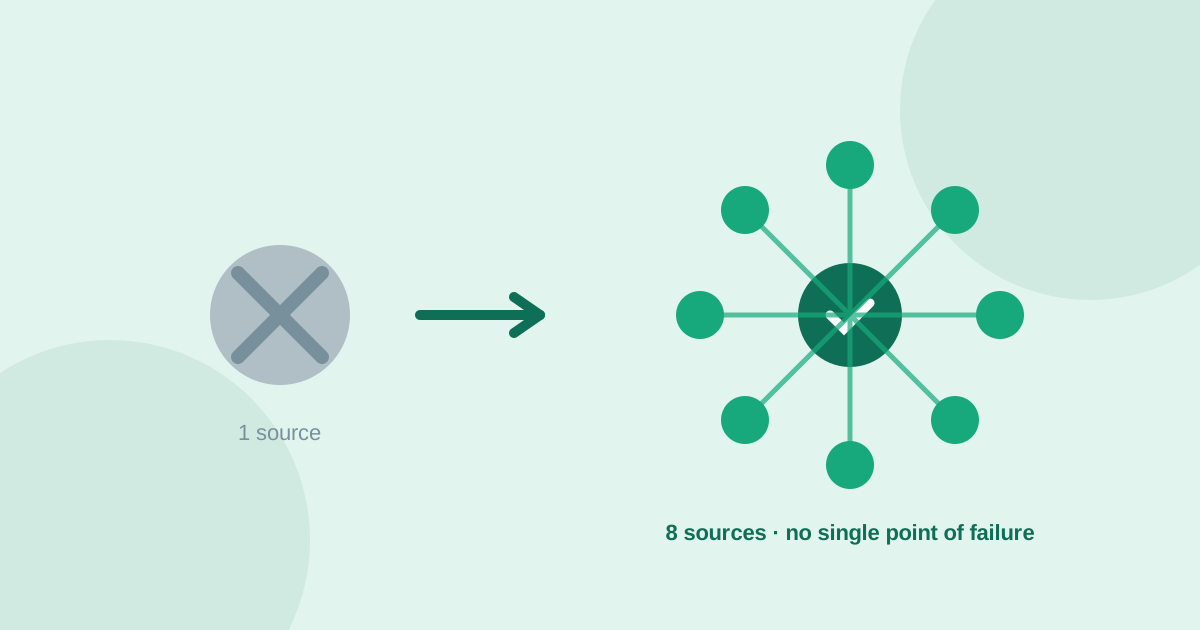 Market Research
Best GummySearch Alternatives in 2026 (Access Ends 30 November)
GummySearch closed to new customers in November 2025, and existing users lose access on 30 November 2026 with all data deleted the next day. Eight alternatives compared on real pricing, real sources, and which half of the job each one actually replaces.
Read article →