
How to Mine Stack Overflow, GitHub Issues and Hacker News for Developer Tool Pain Points
October 20, 2026 · 9 min read

Reddit, Amazon reviews and YouTube comments get most of the attention in pain-point research guides, and they deserve it for consumer products. They systematically under-represent one group, though: the people who build software for other developers. API clients, CLI tools, dev platforms, infrastructure products and internal tooling live or die on a narrower, more technical complaint trail that rarely shows up on consumer-facing platforms at all. If your idea serves developers, DevOps teams or technical founders, the real pain points are sitting in Stack Overflow questions, GitHub Issues threads and Hacker News comment sections, written by people who are unusually precise about naming exactly what is broken.
This guide covers why developer-facing platforms surface a different, often sharper kind of complaint than consumer review sites, how to read Stack Overflow questions and GitHub Issues like a researcher instead of a developer hunting for an answer, what Hacker News threads are actually good for, a worked example, and how to fold what you find into a validation process rather than treating one frustrated thread as proof of a market.
Why developer platforms surface a sharper kind of complaint
Developers complaining in public tend to be unusually precise, because imprecision gets a question closed or an issue ignored. A Stack Overflow question includes a minimal reproducible example. A GitHub issue includes a stack trace, a version number and exact steps to reproduce. That precision is a gift to a researcher, since it means the complaint is rarely vague annoyance, it is a specific, well-documented failure that other developers can confirm or reject just as precisely. The other advantage is permanence: a question or an issue stays open and searchable for years, collecting votes, duplicate reports and workaround comments long after the original poster has moved on, which turns a single complaint into a visible, dated record of how widely it actually spread.
Reading Stack Overflow questions like a product researcher
Search for phrasing that signals an unmet need rather than a solvable bug: is there a library that, workaround for, best way to avoid, or alternative to. Questions using that language are usually not asking how to fix their own code, they are asking whether a tool exists to remove an entire category of manual work, and an absence of a clean accepted answer is itself a signal. Pay close attention to questions with high view counts and many upvotes but no accepted answer, or with an accepted answer that is itself a workaround rather than a real fix. That combination, lots of people finding the question, nobody finding a satisfying answer, is close to a direct measurement of unaddressed demand. Duplicate versions of the same question appearing across several years under different tags is an even stronger signal, since it means the underlying tooling gap has survived multiple waves of new developers hitting the same wall.
GitHub Issues and Discussions: the paper trail a maintainer cannot hide
Open-source maintainers cannot quietly bury a complaint the way a company can ignore a support ticket. An issue stays visible, with a reaction count, a comment thread and a status, which makes a project's issue tracker one of the most honest records of unmet demand available. Sort a popular repository's issues by thumbs-up reactions rather than recency, and the complaints that rise to the top are the ones the widest number of users independently care about, not just the loudest single voice. An issue that has stayed open for years with dozens of plus-one comments and no maintainer response is a specific kind of gap: the problem is real and acknowledged, but deprioritized, usually because fixing it does not fit the maintainer's roadmap, their business model, or their available time. That gap, a real pain the people closest to the problem will not or cannot fix, is exactly the shape of opportunity worth building a company around. The Discussions tab, where many projects now route feature requests separately from bug reports, is worth the same treatment, and issues explicitly closed as wontfix are worth reading closely, since the maintainer's stated reason often tells you whether the gap is structural or just not yet scheduled.
Hacker News: where developers argue about tools at length
Hacker News comment threads are less structured than Stack Overflow or GitHub, but they make up for it with length and honesty. A Show HN launch attracts comments from people who tried the tool minutes after it appeared, and their first reactions, what is missing compared to, why didn't you just use, I switched away from X because, are unusually candid because the commenter has nothing to sell and no relationship to protect. Ask HN threads about tool choices, what do you use for, are you happy with your, work the same way from the other direction, surfacing a long list of developers naming the specific limitation that made them switch away from an incumbent. The signal to look for is repetition: the same specific limitation named independently by several commenters across different threads, months or years apart, rather than a single heated argument in one thread.
Telling a real recurring pain from a one-off edge case
Not every frustrated GitHub issue or Stack Overflow question describes a market. Some describe a genuinely rare edge case that affects almost nobody, dressed up in the same precise, technical language as a widespread problem. The filter is cross-repository and cross-platform repetition: does the same complaint appear in issues filed against more than one unrelated project, in more than one Stack Overflow question tagged differently, and in at least one Hacker News thread discussing the broader category rather than a single tool. A complaint confined to one small library's issue tracker is a bug report. The same complaint appearing against three unrelated libraries that all solve a similar problem is a gap in the category, not a flaw in any one implementation.
A worked example: local environment variable and secrets management
Searching GitHub Issues across several popular web frameworks turns up a recurring complaint with nearly identical phrasing each time: developers accidentally commit a .env file containing real credentials, discover it days or weeks later, and describe the scramble to rotate every exposed secret. Stack Overflow carries dozens of questions asking how to prevent this specific mistake, many with accepted answers that amount to be more careful rather than a tooling fix. Hacker News threads about secrets management repeatedly surface the same frustration from a different angle, developers describing existing secrets managers as too heavyweight to set up for a side project or a small team, which leaves exactly the people most likely to make this mistake without a lightweight option. The same pain, phrased with the same specificity, across three structurally different sources, each from people who are precise by professional habit, is a far stronger signal than any single frustrated issue thread on its own.
The build-or-skip rule for developer tools
Before committing engineering time, answer four questions with evidence. One: did the same specific complaint appear independently across GitHub issues on more than one unrelated project, not just one maintainer's backlog? Two: does at least one source include workaround language, a script someone wrote to patch the gap, a manual checklist, a paid tool bolted on, rather than a request for a nice-to-have? Three: can you name a structural reason the obvious maintainer has not fixed it, a business model mismatch, a scope decision, limited maintainer time, rather than assuming it is simply overlooked? Four: does the complaint concentrate in a specific, nameable segment of developers, solo builders, a particular framework's users, a particular deployment pattern, rather than developers in general? Three or four yes answers justify a narrow, focused build. Fewer than that usually means the pain is real but too diffuse, or too likely to be closed by the next release of an existing tool, to justify building a company around it yet.
Putting it together
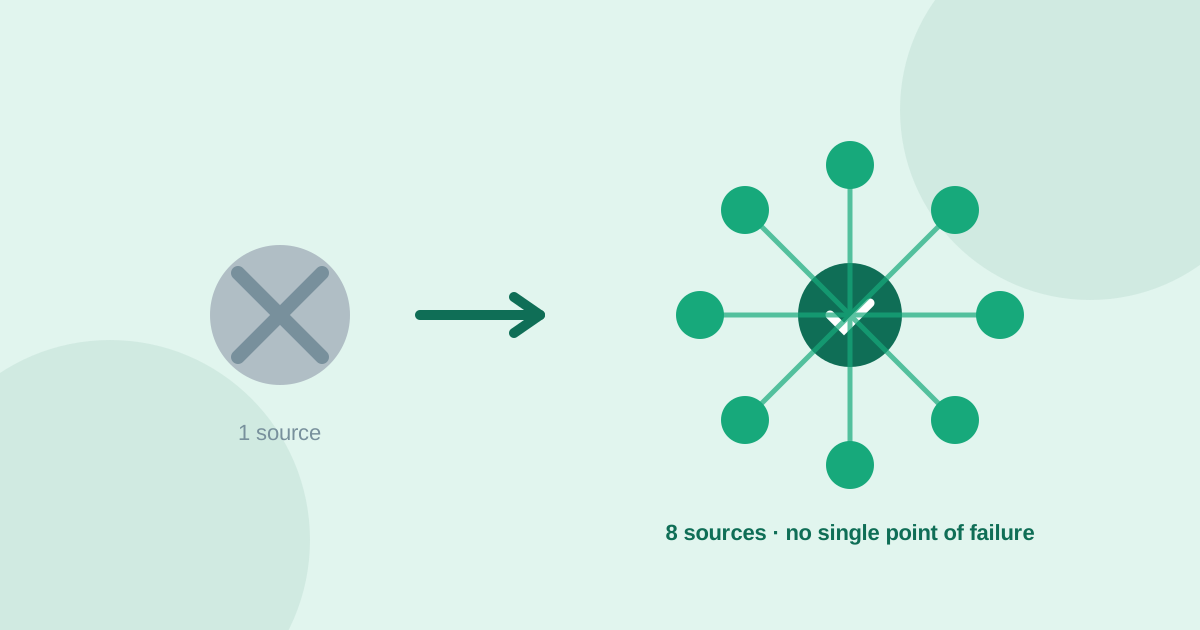
Developer-facing platforms will not tell you everything. They skew toward people who are already comfortable filing a detailed bug report, which under-represents less technical users of the same tools, and they skew toward popular, already well-maintained projects, which makes smaller or abandoned tools harder to research this way. Use Stack Overflow, GitHub Issues and Hacker News to generate a sharply worded hypothesis, then cross-check it against broader developer communities like r/programming, r/devops or relevant Discord servers before committing real time. UserConcern cross-checks a candidate pain point across 8 sources in about 60 seconds, which turns a pattern you first spotted in a GitHub issue thread into a verdict backed by evidence from well outside the repository where you found it.
Frequently asked questions
Why should I research Stack Overflow and GitHub Issues instead of just Reddit for a developer tool idea?
Developers complaining on Stack Overflow or in GitHub Issues tend to be unusually precise, since imprecision gets a question closed or an issue ignored. That precision makes the complaints easier to verify and cross-check than the more general frustration typically found on Reddit, and issue trackers stay searchable for years, which turns a single complaint into a dated, visible record of how widely it spread.
What should I search for on GitHub to find real developer pain points?
Sort a relevant repository's issues by reaction count rather than recency, and look for issues that have stayed open for a long time with many thumbs-up reactions and no maintainer response. That combination usually means the problem is real and acknowledged but deprioritized, which is a stronger signal of an underserved gap than a brand-new issue with a single comment.
Are Hacker News comments a reliable source for validating a developer tool?
They are useful for spotting repetition, not for a single heated thread. Look for the same specific limitation named independently by different commenters across more than one Show HN or Ask HN thread, months or years apart, rather than treating one argument in one thread as proof of demand.
How do I know if a GitHub issue reflects a real market gap or just a rare edge case?
Check whether the same complaint shows up in issues filed against more than one unrelated project solving a similar problem, and in at least one Stack Overflow question or Hacker News thread discussing the broader category. A complaint confined to a single small library's tracker is usually a bug report, not a market gap.
More articles
 Market Research
Best GummySearch Alternatives in 2026 (Access Ends 30 November)
GummySearch closed to new customers in November 2025, and existing users lose access on 30 November 2026 with all data deleted the next day. Eight alternatives compared on real pricing, real sources, and which half of the job each one actually replaces.
Read article → Market Research
How to Identify Customer Pain Points: 7 Methods That Actually Work
Customer pain points are the raw material of every successful product. Here are 7 practical methods to find them, from free manual research to AI-powered analysis.
Read article →