
How to Mine Better Business Bureau Complaints for Real Customer Pain Points (Step-by-Step Guide)
October 29, 2026 · 8 min read
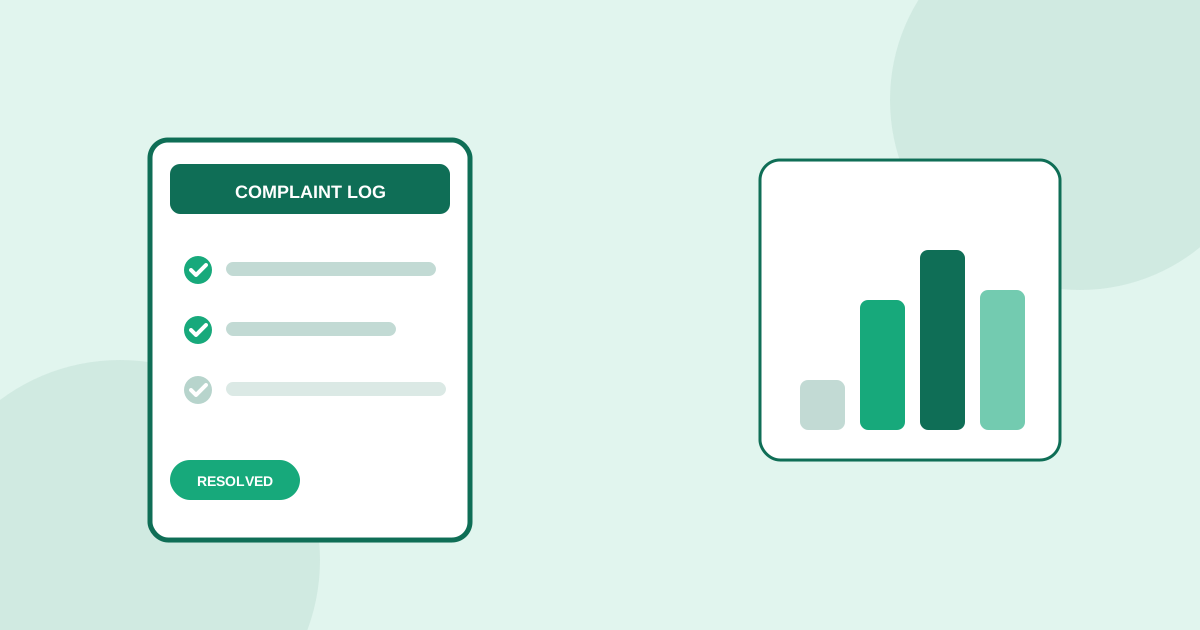
The Better Business Bureau looks like a relic from before online reviews existed, a logo stuck in a website footer next to a copyright date. Founders skip it because it feels slow, formal, and unlikely to hold anything a Reddit thread or an Amazon review section does not already cover faster. That instinct misses what BBB complaints actually are: a formal paper trail that a business is contacted about and asked to respond to on the record, written by customers who have usually already tried the normal channels and been ignored.
This guide covers how to read BBB complaints as research instead of as a trust badge: what the structured complaint categories reveal about an entire industry, how to use a business's own response as a second data source, how to tell an isolated billing dispute from a pattern worth building a product around, and why BBB skews toward exactly the kind of high-friction, high-stakes purchases that founders most need validated pain points for.
Why BBB complaints read differently than other sources
Reddit threads and Amazon reviews happen because someone is annoyed enough to type into a box with no obligation attached. A BBB complaint happens because someone has already tried customer service, a refund request or a support ticket, hit a wall, and is now filing something formal enough that the business is contacted directly and asked to respond on the record. That extra friction filters out casual venting and concentrates the complaints that reach BBB around genuinely unresolved problems: billing disputes, undelivered services, contracts the customer feels misled into, and warranty or refund promises that were not honored. If a complaint made it to BBB, the easy channels already failed first.
Step 1: start with the complaint category breakdown, not the star rating
Every BBB business profile lists a breakdown of complaints by category, things like billing or collection issues, problems with product or service, delivery issues, and guarantee or warranty issues, over whatever window BBB is tracking, usually the last three years. Before reading a single complaint in full, look at that breakdown across five or six competitors in the same category. A category where billing disputes dominate points at a pricing or subscription transparency problem across the whole industry. A category where delivery issues dominate points at a fulfillment or logistics gap instead. The shape of the breakdown tells you where to focus before you have read a single sentence of complaint text.
Step 2: read the business's response, not just the complaint
BBB requires the business to respond to each complaint, and that response is published alongside it. Most researchers skip straight past it to the next complaint, which wastes half the available signal. A response that blames the customer, offers a boilerplate apology with no specific fix, or repeats a policy the customer is already disputing tells you the company has no real resolution process for that problem, only a script. A response that shows a company caught off guard by something simple and fixable, a feature that does not do what was promised, a renewal nobody could find a way to stop, is sometimes the clearest evidence you will find that an incumbent has never built the tool a customer actually needed.
Step 3: separate one-time service failures from structural complaints
Some BBB complaints describe a single bad experience: one technician who was rude, one order that shipped late because of a storm. Others describe something built into how the company operates: a free trial that auto-renews into a plan nobody remembers signing up for, a cancellation flow that requires a phone call during narrow business hours, a warranty claim process that always seems to end in a form nobody can reach a human about. Tag every complaint as one or the other as you read. Structural complaints repeat in nearly identical language across dozens of unrelated customers and are where a real product opportunity lives. One-time failures are just evidence that a specific employee had a bad day.
Step 4: compare complaint volume against company size, not in isolation
A business with three complaints and a business with three hundred complaints are not equally alarming on their own, since complaint counts scale loosely with how many customers a company has. What matters for research is the ratio of a specific complaint type to the company's rough size, and the same ratio across its direct competitors. If every competitor in a category shows the same cluster of billing or cancellation complaints regardless of size, that is not one company's customer service problem, it is the category's structural blind spot, and blind spots shared by every incumbent are exactly where a focused new product can win trust fast.
Step 5: use BBB accreditation and resolution rates as a secondary filter, not a verdict
BBB assigns letter grades and tracks whether a business pays for accreditation, which is a weaker signal than it looks, since accreditation is a paid membership rather than a quality certification. Do not use the grade itself as a verdict on the business. Do use the resolution rate, how many complaints were marked resolved to the customer's satisfaction versus closed with no resolution, as a rough proxy for how seriously an entire category tends to take customer escalations once the easy support channels have already failed.
Step 6: confirm outside BBB before calling a pattern validated
BBB complaint filers skew toward older, more process-oriented customers willing to file something formal, and skew heavily toward categories with a history of consumer disputes: home improvement, auto services, debt and credit, travel, and subscription billing. A pattern that only shows up on BBB deserves the same caution as a pattern from any single source. Check whether the same specific complaint, about cancellation difficulty, billing clarity or warranty follow-through, shows up independently in app store reviews, on Trustpilot, or in a Reddit thread about the same company or category.
Putting it together
A focused BBB research session looks like this: pull the complaint category breakdown for five or six competitors in one category, read every company response in full rather than skipping to the next complaint, and tag each complaint as structural or one-time as you go. Compare the ratio of a specific complaint type against competitors of a similar size, and treat accreditation grades as background noise rather than a verdict. Then confirm the strongest pattern outside BBB before treating it as a market-wide gap. UserConcern automates that last cross-check across Reddit, Amazon reviews, YouTube, TikTok, Quora, X, Google Trends and AI answers, so a pattern that survives BBB and a second independent source counts as a validated opportunity, not just one formal complaints log.
Frequently asked questions
Is the Better Business Bureau still useful for market research in 2026?
Yes, particularly for high-friction categories like home improvement, auto services, debt and credit, travel and subscription billing. The extra effort required to file a BBB complaint filters out casual venting and concentrates genuinely unresolved problems, which makes the signal sharper, even if it is lower in volume than Reddit or Amazon reviews.
What is the most valuable part of a BBB complaint to read?
The business's published response, not just the complaint itself. A boilerplate or customer-blaming response shows the company has no real resolution process for that problem. A response that shows the company caught off guard by something simple and fixable is often the clearest evidence that an incumbent never built the tool its customers actually needed.
How do I know if a complaint pattern on BBB is a real market gap?
Check whether the same specific complaint type shows up at a similar rate across multiple competitors regardless of their size, which points at a shared structural blind spot rather than one company's customer service failure. Then confirm the pattern outside BBB, in app store reviews, on Trustpilot, or on Reddit, before treating it as market-wide.
Which industries generate the most useful BBB complaints?
Home improvement and contracting, auto sales and repair, debt and credit services, travel and timeshares, and subscription billing across almost any category tend to generate the richest, most structural complaint patterns on BBB, since these are exactly the high-stakes, high-friction purchases where customers escalate past normal support channels.
More articles
 Market Research
Best GummySearch Alternatives in 2026 (Access Ends 30 November)
GummySearch closed to new customers in November 2025, and existing users lose access on 30 November 2026 with all data deleted the next day. Eight alternatives compared on real pricing, real sources, and which half of the job each one actually replaces.
Read article → Market Research
How to Identify Customer Pain Points: 7 Methods That Actually Work
Customer pain points are the raw material of every successful product. Here are 7 practical methods to find them, from free manual research to AI-powered analysis.
Read article →