
What Baby and Parenting Product Buyers Are Really Complaining About in 2026 (Review Mining Analysis)
August 27, 2026 · 8 min read
Few purchase decisions carry as much anxiety as buying for a baby. New parents are sleep-deprived, researching at 3 a.m., and choosing between products where the stakes feel higher than the price tag suggests, safety, development, and a nagging fear of getting it wrong. That combination produces some of the most detailed and emotionally charged product feedback online, in parenting subreddits, Amazon reviews, and the comment sections under baby gear review videos.
We ran a UserConcern analysis across parenting communities on Reddit, Amazon reviews for baby gear and feeding products, and YouTube comment threads under stroller, car seat, and feeding review channels, to see what parents keep complaining about once the registry excitement wears off. Five patterns stood out clearly enough to be worth sharing.
Pain point one: registries built for the first six months, not the next two years
Parents repeatedly describe a registry that peaked too early: gear perfectly suited to a newborn that becomes useless, unsafe, or outgrown within months, followed by a second wave of purchases nobody warned them about, sizes up, transition products, and toddler-specific gear bought in a rush without the same research the first round got. Comments describe feeling blindsided by how fast a supposedly complete registry became incomplete. A product or guide built explicitly around the second wave, not the newborn stage everyone already targets, addresses a gap that is obvious once you read past the first few months of complaints.
Pain point two: sizing and fit inconsistency across baby clothing and gear
Sizing complaints run through baby clothing, car seats, and carriers alike. Parents describe a 6-month label fitting a 3-month-old in one brand and a 9-month-old in another, with no reliable way to predict fit before buying, which is especially costly for gear bought once and expected to last, like car seats and carriers. Reviews frequently ask for a real, cross-brand sizing reference rather than each brand's own chart, since parents have learned individual brand charts cannot be trusted in isolation.
Pain point three: sleep products that promise more than pediatric guidance supports
Sleep is the single most searched, most emotionally loaded parenting topic, and reviews of sleep aids, sound machines, and swaddle products show a repeating tension: marketing copy implying a product will fix sleep, followed by reviews describing disappointment when it does not, alongside a smaller but vocal group of parents specifically asking for products that stay within current pediatric safety guidance rather than chasing the next viral sleep gadget. The gap here is less about a new invention and more about honest positioning: parents want to trust that a sleep product will not require them to later learn it was recalled or discouraged by pediatricians.
Pain point four: feeding gear that ignores real-world mess and cleanup time
Bottles, breast pumps, and baby food gear draw constant complaints about parts count and cleaning time, not core function. Reviewers describe pump parts with too many small pieces to sanitize daily, bottles with valves that trap milk and mold, and feeding sets that look good in product photos but add minutes of cleanup to every single feeding, multiplied many times a day. This complaint keeps recurring across otherwise well-reviewed products, which suggests cleanup time is an underweighted design factor across the whole category, not a flaw specific to one brand.
Pain point five: conflicting advice with no way to filter by what actually applies
Parents describe drowning in advice, from apps, books, family members, and social media, that frequently contradicts itself, with no easy way to filter recommendations by their baby's actual age, temperament, or specific situation. Comments ask for guidance that acknowledges nuance instead of universal rules, and several describe abandoning parenting apps entirely once the generic daily tips stopped matching their real week. This points to an opportunity in personalization and honest uncertainty, not in producing yet another one-size-fits-all schedule or milestone tracker.
What the Opportunity Scores suggest
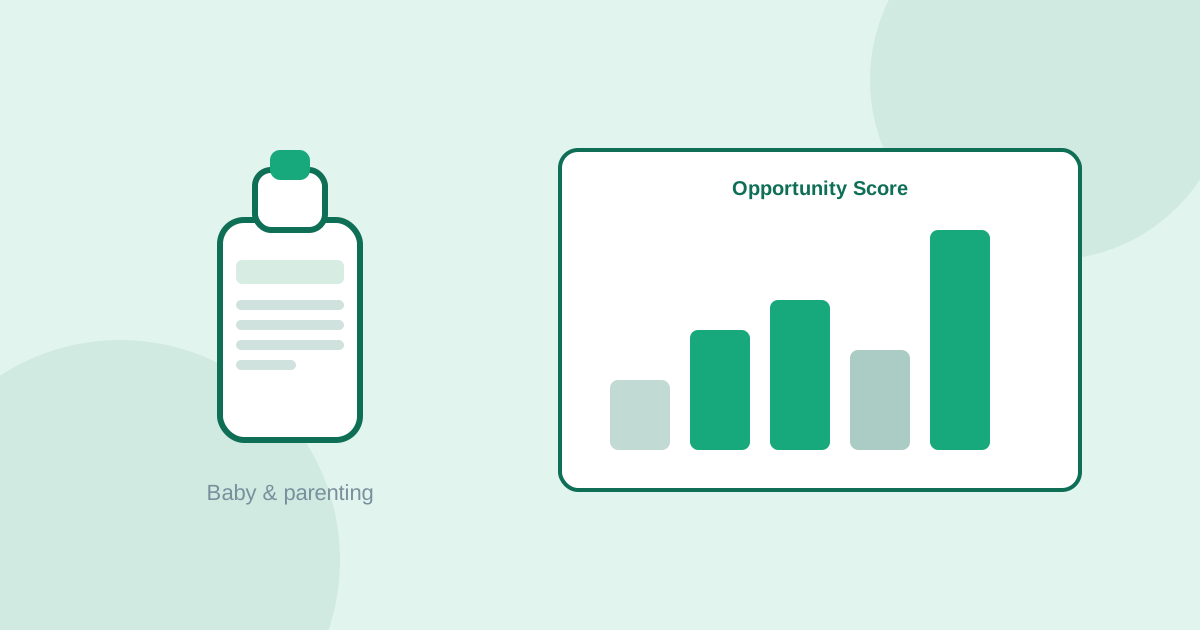
Second-wave registry gaps and feeding cleanup complaints score highest in our analysis, combining high recurrence across brands with a clear absence of anyone addressing the complaint directly. Sizing inconsistency and sleep-product overpromising follow closely, both held back slightly by more existing competition attempting partial fixes. Conflicting-advice fatigue is the most interesting case: demand for guidance is enormous, but the opportunity sits specifically in acknowledging nuance and uncertainty, not in producing a louder, more confident app.
The takeaway for builders
Baby and parenting products look fully saturated from the outside, another stroller, another sleep gadget, another subscription box. Read the complaints instead of the marketing and a narrower picture appears: parents are tired of being blindsided by what comes after the newborn stage, tired of sizing charts they cannot trust, and tired of cleanup time nobody designed for. None of those gaps require inventing new baby gear. They require paying attention to the parts of the parenting journey the existing market already assumes are solved.
Frequently asked questions
What is the biggest complaint in the baby and parenting products market right now?
Across our analysis, the most consistently underserved complaints center on the second wave of needs after the newborn stage, and on feeding gear cleanup time. Both are recurring, specific, and largely unaddressed by existing products, which makes them stronger signals than a trending gadget or a one-off bad review.
Is the baby and parenting products market too saturated to enter?
The market is crowded on product volume, especially for newborn-stage gear, but the complaint data shows specific, recurring gaps around post-newborn transitions, cross-brand sizing trust, and honest sleep-product positioning that most incumbents have not addressed. High competition and high unmet pain can coexist in the same category, which is exactly what the Opportunity Score is designed to surface.
How do I validate a baby product idea before manufacturing it?
Read reviews for adjacent products on Amazon, parenting communities on Reddit, and comment sections under relevant baby gear review videos on YouTube, looking for the same specific complaint appearing independently across at least two or three sources. UserConcern automates that cross-checking across 8 sources in about 60 seconds and returns an opportunity score and build-or-skip verdict.
Why do sleep products show up as a pain point instead of a strength?
Parents are not rejecting sleep products altogether; they are reacting to marketing that implies a fix beyond what current pediatric guidance supports. Reviews repeatedly ask for products that stay within recognized safety guidance rather than chasing the next viral claim, which means the opportunity is in honest positioning, not in abandoning the sleep category.
More articles
 SaaS & Tech
How to Validate a SaaS Idea in 48 Hours (With Evidence, Not Opinions)
A step-by-step framework to validate a SaaS idea in one weekend using real customer complaints from 8 sources, with a worked example and a clear build-or-skip verdict.
Read article →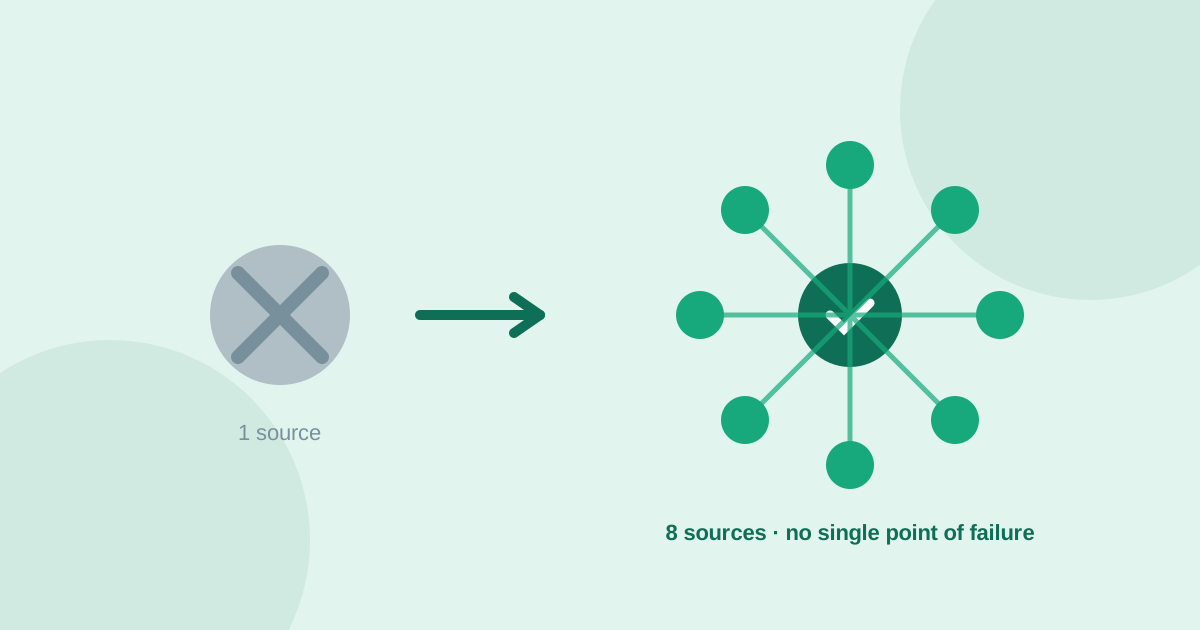 Market Research
Best GummySearch Alternatives in 2026 (Access Ends 30 November)
GummySearch closed to new customers in November 2025, and existing users lose access on 30 November 2026 with all data deleted the next day. Eight alternatives compared on real pricing, real sources, and which half of the job each one actually replaces.
Read article →