
What Car Owners Are Really Complaining About in 2026 (Automotive Aftermarket Analysis)
September 10, 2026 · 8 min read

Owning a car creates a strange kind of dependency: almost everyone needs one working reliably, almost nobody who is not a mechanic understands what is actually happening under the hood, and the gap between those two facts gets exploited constantly, sometimes fairly and sometimes not. That asymmetry shows up everywhere car owners gather online, not as a single complaint but as a recurring feeling of being talked past rather than talked to.
We ran a UserConcern analysis across car repair subreddits, Amazon reviews of diagnostic and maintenance products, YouTube comments on repair and buying-guide channels, and owner forums, to see what car owners keep describing once the initial relief of getting the car running again wears off. Five patterns stood out clearly enough to be worth sharing.
Pain point one: repair quotes nobody can verify
Threads describe the same recurring anxiety: a shop names a repair and a price, and the owner has no independent way to check whether the diagnosis is accurate or the price is fair, short of paying a second shop for a second opinion. Owners describe feeling forced to trust a stranger with an information advantage over a decision that can cost thousands of dollars, and describe searching online for the exact phrase the mechanic used just to see if it sounds plausible. This is not distrust of all mechanics, it is the absence of any tool that lets an owner sanity check a quote before authorizing the work.
Pain point two: diagnostic codes that explain nothing
Cheap OBD scanners and their companion apps are common now, but reviews describe the same limitation repeatedly: the app reports a code and a manufacturer's terse description, and stops there, leaving the owner to search the code number on a forum to find out what it actually means for their specific car and what it will cost to fix. Owners want the next layer down, plain language explanation, likely cause, and a rough repair cost range for their exact make and model, not just the raw code a mechanic would already recognize.
Pain point three: extended warranty offers nobody trusts anymore
Years of aggressive robocalls and mailers about your car's warranty is about to expire have poisoned the entire category, to the point where reviews and forum posts describe owners assuming any extended warranty or vehicle service contract is a scam, including the legitimate ones. That blanket distrust means real, reasonably priced coverage struggles to get a fair hearing, and owners describe wanting an independent way to check whether a specific contract and provider is legitimate and what it actually covers, in language a legal team did not write.
Pain point four: maintenance guidance that ignores the specific trim and year
Generic YouTube tutorials for changing a part on a popular model routinely miss trim-specific or year-specific differences: a slightly different bolt pattern, a part that moved locations after a mid-cycle refresh, a torque spec that changed between model years. Comments under these videos are full of owners reporting that the tutorial did not match their exact car, and describing the extra time or damage that resulted from following slightly wrong instructions. The demand is not for more tutorials, it is for tutorials and part lookups precise enough to trust for a specific VIN, not just a model name.
Pain point five: recalls and service bulletins owners never hear about
Owners describe learning about a recall or a technical service bulletin affecting their exact car by accident, often from a forum post or a chance mention at a dealership, rather than from any system that proactively told them. Official recall lookup tools exist but require an owner to remember to check them, and technical service bulletins, which cover known issues that are not safety recalls, are even less visible to a typical owner despite often describing the exact intermittent problem they have been unable to diagnose for months.
Reading the pattern across all five gaps
A single theme connects all five complaints: the owner is on the wrong side of an information gap, and no tool currently closes it in language built for them rather than for a technician or a legal department. Repair quotes assume the owner cannot verify anything. Diagnostic codes assume the owner already knows what a code means. Warranty offers arrive in language indistinguishable from a scam. Tutorials assume all cars of a model are the same car. Recalls and bulletins assume the owner is checking a government database on their own initiative. Every gap is a translation problem as much as a product gap.
Comparing Opportunity Scores across these five themes, repair quote verification and proactive recall or bulletin tracking rank highest, both tied to real financial and safety stakes with no dominant existing solution. Diagnostic code translation and warranty trust follow closely, each addressing a sharp, specific frustration inside a category that already has products, just not ones solving this exact layer of the problem. Trim-specific maintenance guidance sits slightly behind, a real and recurring complaint, but one increasingly addressed piecemeal by dedicated model forums and creators, even if no single tool has consolidated it.
The lesson for builders here is not that the automotive aftermarket needs another OBD scanner or another warranty company, both categories are already crowded. It is that the products currently in those categories stop at the data and leave the translation to the owner. UserConcern lets you scan a niche like this with evidence instead of assumptions, real quotes from owners describing exactly where the information gap costs them money or time. If you are exploring the automotive space, start with the complaint that shows up across a repair subreddit, a product review and a forum post at once. That is usually where the real gap is.
Frequently asked questions
Is the automotive aftermarket a good market to build a startup in right now?
The core categories, diagnostic tools, extended warranties, maintenance content, already have established players, so a generic new entrant faces real competition. The clearer opportunities are in the translation layer those categories leave unsolved: turning a diagnostic code, a repair quote or a warranty contract into something a non-mechanic owner can actually verify and trust.
Why do car owners distrust repair shops and warranty offers so much?
Owners have no independent way to verify a repair diagnosis or price before authorizing work, and years of aggressive scam calls about vehicle warranties have made owners suspicious of legitimate coverage too. Both complaints come from the same root cause: an information gap that leaves the owner unable to tell a fair offer from an unfair one without outside help.
What is the biggest gap in car diagnostic apps and OBD scanners?
Most scanner apps report the raw diagnostic code and a terse manufacturer description, then stop, leaving owners to search forums to find out what the code means for their specific car and what it will cost to fix. The gap is plain language translation and a realistic cost range, not the code itself.
How do I validate an automotive product or service idea before building it?
Read car repair subreddits, Amazon reviews of diagnostic and maintenance products, YouTube comments on repair channels, and owner forums, looking for the same specific frustration appearing independently across more than one source. UserConcern automates that cross-checking across 8 sources in about 60 seconds and returns an opportunity score and a build-or-skip verdict.
More articles
 SaaS & Tech
How to Validate a SaaS Idea in 48 Hours (With Evidence, Not Opinions)
A step-by-step framework to validate a SaaS idea in one weekend using real customer complaints from 8 sources, with a worked example and a clear build-or-skip verdict.
Read article →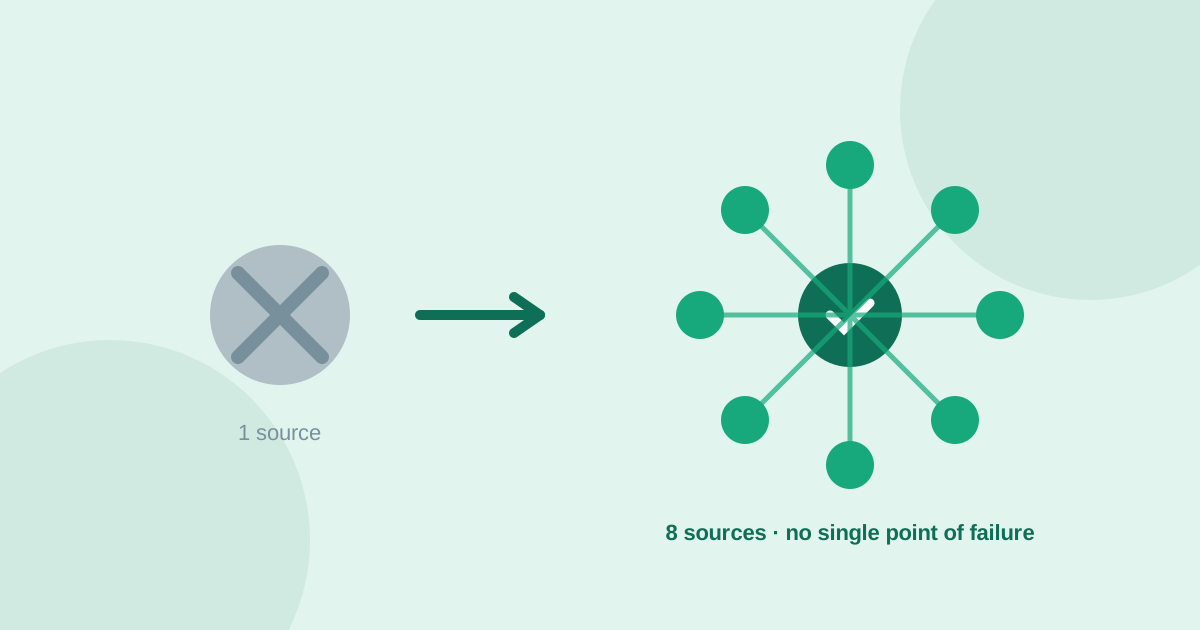 Market Research
Best GummySearch Alternatives in 2026 (Access Ends 30 November)
GummySearch closed to new customers in November 2025, and existing users lose access on 30 November 2026 with all data deleted the next day. Eight alternatives compared on real pricing, real sources, and which half of the job each one actually replaces.
Read article →